
User-generated content (UGC) leverages authentic customer experiences to boost trust, engagement, and conversions. By encouraging, curating, and integrating UGC across social media, websites, and ads—while ensuring legal compliance—brands can enhance credibility, reach, and marketing ROI.
User-generated content (UGC) has emerged as one of the most powerful tools in the modern marketer’s toolkit. Gone are the days when brands could rely solely on polished corporate ads to build trust with consumers. Today’s audiences crave authenticity, peer perspectives, and real-life experiences. In fact, 79% of people say UGC highly impacts their purchasing decisions, and UGC-driven campaigns often see click-through rates four times higher than traditional ads. By strategically encouraging, curating, and showcasing UGC, brands can amplify reach, build social proof, and drive conversions. In this complete guide, we’ll explore what UGC is, why it matters for product promotion, the various formats you can leverage, tactical strategies to spark contributions, and how to integrate UGC across your marketing channels.
What Is User-Generated Content?
User-generated content encompasses any form of content created by individuals—not brands—who share their authentic experiences with a product or service. This includes written reviews, social media posts, images, videos, blog comments, and even forum discussions. Unlike branded content, UGC reflects genuine customer opinions and motivations. Because it originates from real users, UGC carries an inherent level of credibility that branded messages often lack. Understanding the full spectrum of UGC and its various channels is the first step toward weaving genuine customer voices into your product promotion strategy.
Why UGC Matters for Product Promotion

Trust and authenticity lie at the heart of effective product promotion. Today’s consumers are adept at filtering out overt advertising and crave real stories from peers. As a result, UGC provides social proof that can significantly boost engagement and conversions. According to Nielsen, 92% of consumers trust recommendations from friends and family over any other type of advertising. Additionally, incorporating UGC into your marketing mix can improve SEO, as fresh, unique customer content signals relevance to search engines. Overall, UGC can expand organic reach, improve brand perception, and optimize advertising ROI.
Types of UGC to Amplify Your Marketing
- Written Reviews and Testimonials: These can appear on your product pages, third-party review sites, and even in paid ad copy to add credibility.
- Social Media Mentions: Photos, videos, Stories, and Reels featuring your product in everyday use, tagged with your brand handle or hashtag.
- Unboxing and Testimonial Videos: Engaging video content where customers share their first-hand experiences with your product.
- Hashtag Campaigns: Branded hashtags that encourage users to share themed content, which you can curate into social galleries.
- Contests and Challenges: Interactive campaigns where participants create content around a prompt, increasing both engagement and visibility.
Strategies to Encourage UGC
To spark user contributions, start with clear calls to action and incentives. Offer discounts, exclusive early access, or entry into contests for users who submit photos, videos, or reviews. Simplify the submission process by providing direct links, forms, or branded hashtags. Engage with contributors by liking, commenting, and resharing their posts to show appreciation. Building a UGC community hub—such as a dedicated webpage or social media highlight—can also foster a sense of belonging and motivate more users to participate.
Creating Incentive Programs to Encourage UGC

To consistently generate high-quality UGC, brands must motivate users to contribute. Incentive programs turn content creation into a rewarding experience for customers.
Effective Incentives Include:
- Discounts and Coupons: Offer a percentage off future purchases when users submit content.
- Exclusive Access: Provide early access to new products or limited editions in exchange for contributions.
- Recognition: Feature top contributors on your website, social media, or newsletters.
- Contest Rewards: Run monthly or seasonal competitions with prizes like gift cards, free products, or event tickets.
Steps to Launch a UGC Incentive Program:
- Define clear objectives: Increase social engagement, collect testimonials, or boost conversions.
- Decide the reward structure: Monetary, product-based, or recognition-focused.
- Promote the program: Use email, social media, and on-site banners to announce opportunities.
- Monitor participation and results: Track submissions, engagement metrics, and conversion rates.
Example Table: Incentive Program Ideas for UGC
| Incentive Type | Goal | Example Implementation | Key Benefit |
|---|---|---|---|
| Discounts | Increase submissions | 10% off next purchase for a photo post | Boosts repeat sales |
| Contest Rewards | Engagement | Monthly winner receives $100 gift card | Encourages high-quality content |
| Early Access | Product Launch | Contributors get early access to new products | Drives excitement & exclusivity |
| Recognition | Brand Loyalty | Feature top user on social channels | Builds community & trust |
Leveraging Social Media Platforms
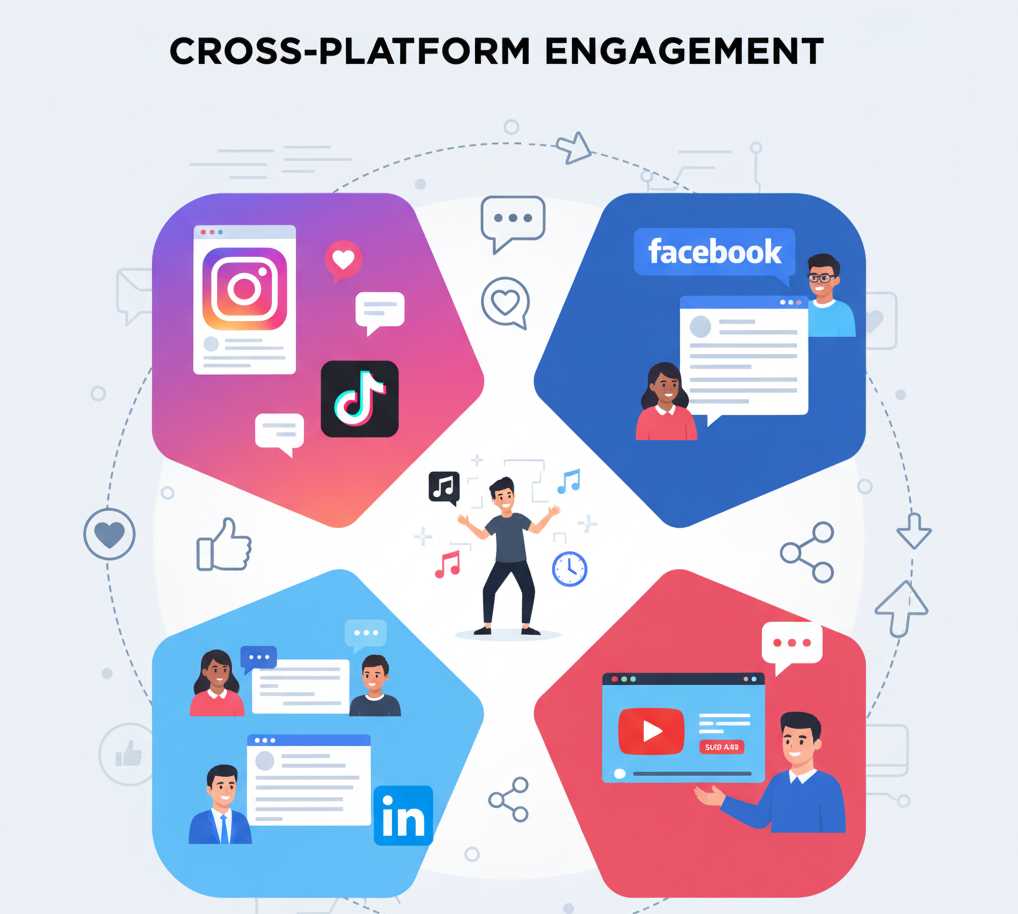
Each social media platform has unique strengths for UGC campaigns. Instagram’s visual format and interactive features like Stories stickers and Reels are ideal for photo and short-video content. TikTok’s algorithm thrives on creative challenges and trends, making it perfect for viral UGC. On Facebook, community groups can spark in-depth discussions and photo-sharing among brand enthusiasts. LinkedIn UGC can highlight professional use cases, and YouTube remains the go-to for long-form unboxing and tutorial videos.
Product Marketing on Reddit also offers a unique opportunity for brands. Subreddits related to your niche allow you to engage directly with communities, showcase user-generated stories, and gather authentic feedback. By contributing thoughtfully rather than overtly selling, brands can encourage UGC in a space where peer perspectives are highly valued, creating both trust and organic reach. Tailor your approach to each channel’s audience and content style to maximize reach and engagement.
Best Practices for Curating and Showcasing UGC
Once you start receiving user-generated content, curating it effectively is key to maintaining authenticity and maximizing impact. Not all UGC is created equal—quality, relevance, and alignment with your brand values should guide what you showcase.
Curating UGC: Key Steps
- Set Clear Criteria: Only feature content that aligns with your brand message, visual identity, and quality standards.
- Diversity Matters: Showcase a variety of users, use cases, and product applications to appeal to a broader audience.
- Moderate Submissions: Filter out offensive, irrelevant, or misleading content to protect your brand reputation.
Showcasing UGC: Strategies
- Social Galleries: Create a dedicated page on your website highlighting user posts, photos, and videos.
- Shoppable Posts: Turn user photos into clickable links that lead directly to product pages.
- Feature in Emails: Include testimonials or images in newsletters to encourage engagement and conversions.
- Repurpose Across Channels: Share UGC in paid ads, social posts, blog content, and presentations.
Example Table: UGC Display Options Across Platforms
| Platform/Channel | Type of UGC | Best Use Case | Tips |
|---|---|---|---|
| Website Gallery | Photos, Videos | Show product in real life | Highlight seasonal or trending content |
| Instagram Feed | Images, Reels | Brand storytelling | Use branded hashtags |
| Email Campaigns | Testimonials | Drive conversions | Personalize with customer names |
| Paid Ads | Photos, Quotes | Boost ad performance | Always credit the creator |
| YouTube | Tutorial/Unboxing Videos | Educate & inspire | Include CTAs to your site |
Integrating UGC into Your Website and Ads
Embedding UGC across your website can boost credibility and drive higher conversions. Feature customer photos and testimonials on product pages, create a dedicated UGC gallery, or add real-time social feeds. Many e-commerce platforms offer plugins to automate this process. For paid campaigns, use authentic user photos or quotes in ad creatives to increase engagement. Advertisers who include UGC in ads often see cost-per-click reductions of up to 50%. Always link back to the original creator to maintain transparency and encourage more contributions.
Optimizing UGC for SEO and Content Marketing
UGC doesn’t just boost engagement—it can also enhance your search engine visibility and content strategy. Search engines value fresh, authentic content, and UGC provides exactly that. Brands that focus on SEO in product marketing content can leverage user-generated reviews, comments, and videos to rank higher in search results, capture long-tail keywords, and improve overall organic traffic.
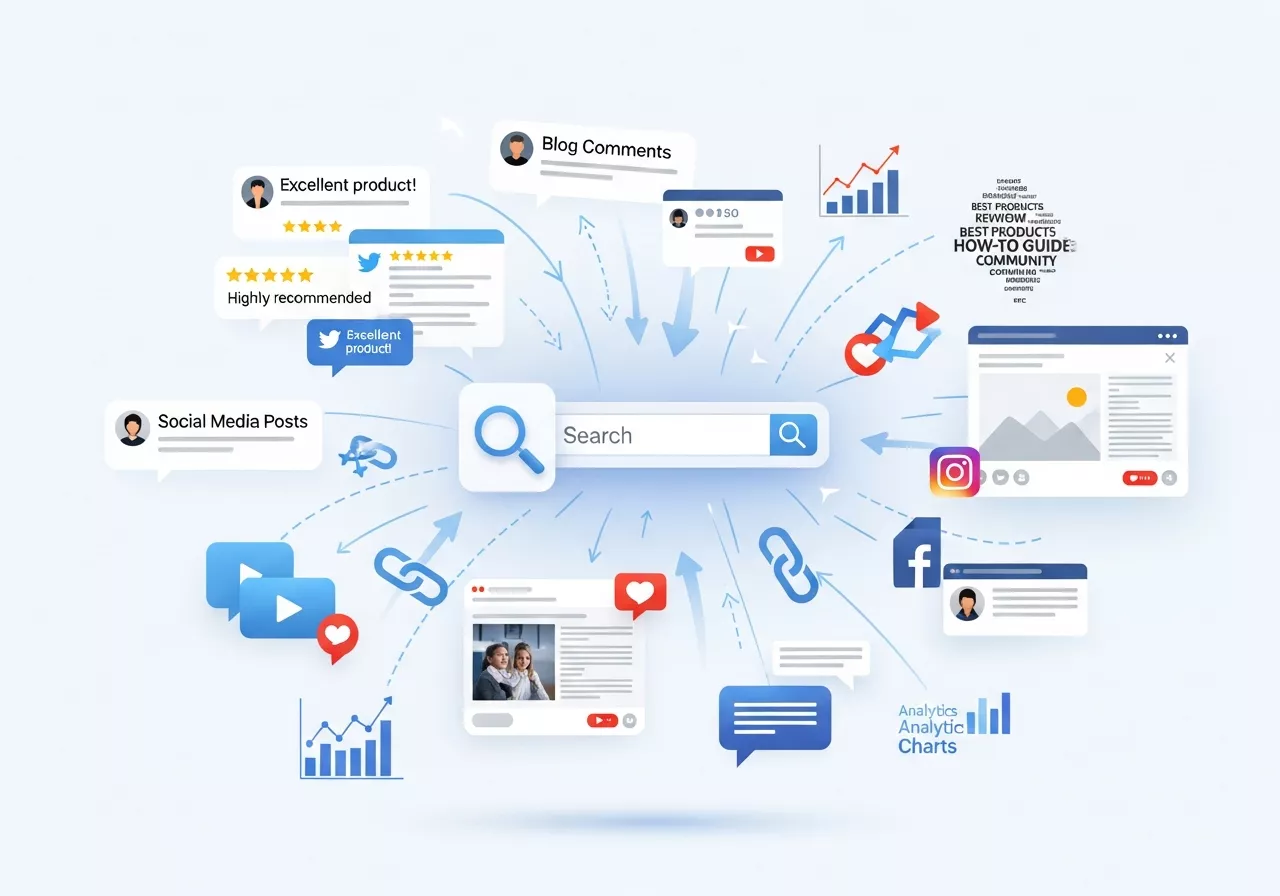
SEO Benefits of UGC:
- Fresh Content: User reviews, comments, and posts create constantly updated content that search engines love.
- Long-Tail Keywords: UGC often includes natural phrases and keywords customers use, improving organic search relevance.
- Backlinks and Shares: High-quality UGC encourages sharing and link-building, boosting domain authority.
Content Marketing Integration:
- Blogs & Case Studies: Incorporate testimonials and user stories to enrich content and demonstrate real-world product use.
- Email Marketing: Share UGC-driven stories in newsletters to inspire action.
- Social Proof Widgets: Embed review snippets and images on landing pages to increase trust and conversions.
Tips for Optimizing UGC for SEO:
- Moderate submissions to ensure quality and relevance.
- Include user-generated keywords in metadata and alt tags.
- Encourage reviews and ratings that answer common customer queries.
- Use structured data markup for reviews to display rich snippets in search results.
Example Table: SEO-Friendly UGC Practices
| UGC Type | SEO Advantage | Optimization Tip |
|---|---|---|
| Reviews | Keywords & fresh content | Encourage detailed reviews with target phrases |
| Social Posts | Backlinks & shares | Include links to your product pages |
| Videos | Engagement & dwell time | Add transcripts and captions |
| Blog Comments | User interaction | Moderate for relevance and keyword usage |
Maximizing UGC Through Cross-Channel Marketing
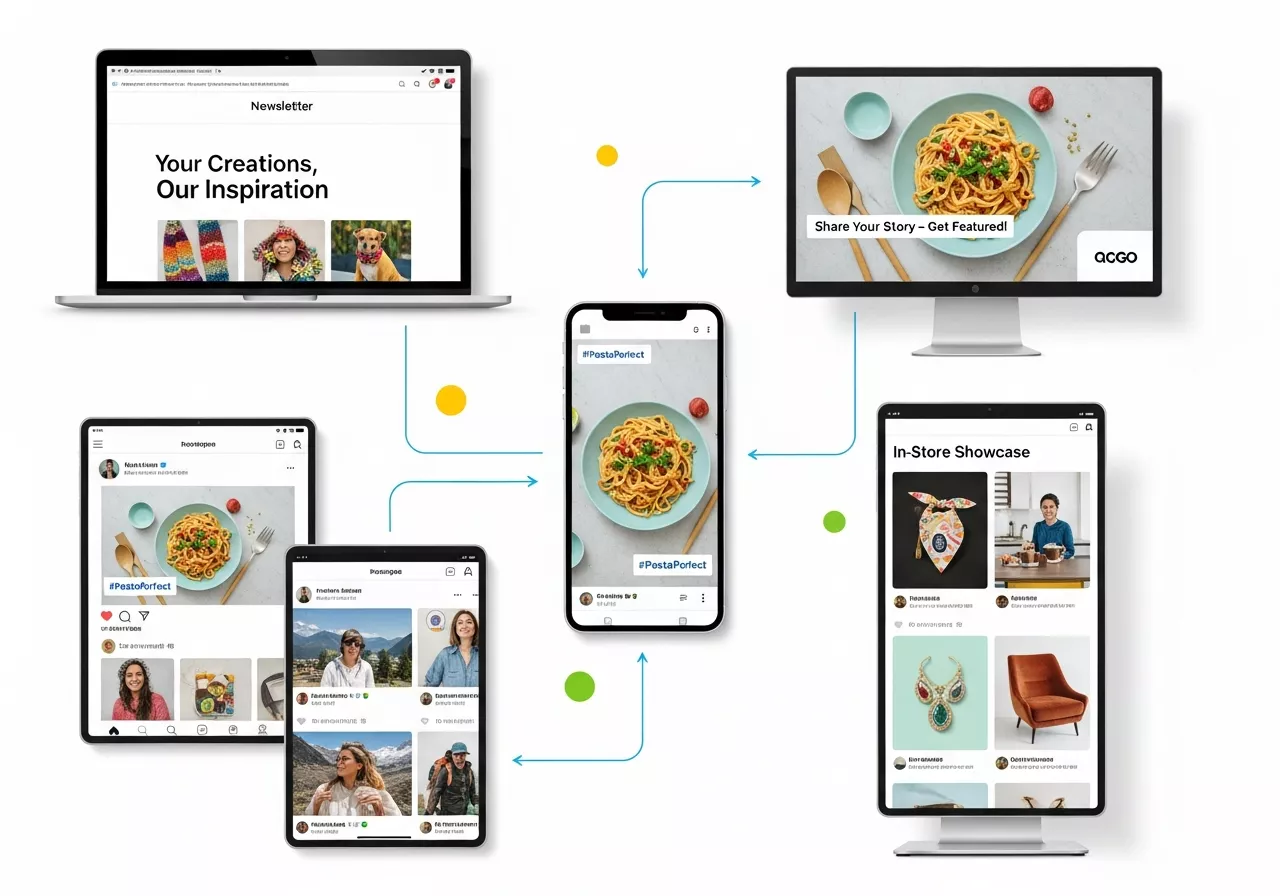
Cross-channel marketing ensures your user-generated content reaches audiences wherever they are. By strategically distributing UGC across email, social media, paid ads, and offline campaigns, brands can reinforce messaging, increase engagement, and drive conversions consistently. Each channel may require slight adjustments to UGC format, but the authenticity of the content remains the core driver of trust and influence.
Key Points:
- Email Marketing: Embed customer photos, testimonials, or video reviews in newsletters to boost click-through rates and conversions.
- Paid Advertising: Use high-performing UGC in ad creatives to increase engagement and lower cost-per-click.
- Social Media Cross-Promotion: Share content across Instagram, Facebook, TikTok, and LinkedIn, tailoring the format to each platform’s strengths.
- Offline Marketing: Incorporate UGC in in-store displays, packaging, brochures, or event signage to create tangible social proof.
Example Table:
| Channel | UGC Format Example | Key Benefit |
|---|---|---|
| Customer photo or testimonial | Higher engagement and click-through | |
| Social Media | Hashtag posts, Reels, Stories | Increased reach and virality |
| Paid Ads | Customer video or quote | Lower CPC, improved conversions |
| Offline / Retail | In-store displays, packaging | Builds trust at the point of purchase |
Pro Tip:
Repurpose high-performing content across channels, but ensure each platform respects the user’s privacy and original content format. A single powerful UGC video can fuel multiple touchpoints, saving resources while maintaining authenticity.
Legal and Ethical Considerations
While UGC is powerful, it’s essential to navigate legal and ethical guidelines to protect both your brand and your customers. Obtain clear permission before using any user-submitted content—ideally through automated opt-in forms or terms and conditions on your submission page. Always credit the original creator and respect privacy laws, especially for minors. Be transparent about how user data and content will be used, and allow users to revoke consent at any time. These practices will foster trust and safeguard your brand’s reputation.
Measuring the Impact of UGC
Track key metrics to evaluate your UGC campaigns’ effectiveness. Engagement rate (likes, shares, comments) indicates how well content resonates with your audience. Conversion lift measures the percentage increase in purchases or sign-ups associated with UGC-driven pages or ads. Monitor average order value and return on ad spend to understand revenue impact. Social listening tools can help you gauge brand sentiment and reach. By analyzing these KPIs, you can refine your UGC strategy and allocate resources to the most effective tactics.
Case Studies: Brands Winning with UGC
Brands across industries have leveraged UGC to remarkable effect. Glossier’s #BoyBrow campaign showcased real users styling their brows, generating over 40,000 tagged posts and boosting product sales by 200%. GoPro’s video contests encourage users to submit high-action footage shot on GoPro cameras, creating a vast library of captivating visuals that fuels marketing efforts at virtually no additional cost. Airbnb’s #LiveThere campaign featured genuine host photos and guest stories, inspiring trust and boosting booking rates in targeted regions.
Conclusion
User-generated content offers an unbeatable blend of authenticity, engagement, and cost-efficiency. By understanding the types of UGC, implementing strategic incentives, and integrating contributions across your marketing channels, you can create a sustainable engine for product promotion. Remember to navigate legal considerations with care and track performance to continuously optimize your approach. Start building your UGC strategy today, and watch as genuine customer voices transform your brand’s reach, credibility, and bottom line.
FAQ: Harnessing User-Generated Content for Product Promotion
1. What is user-generated content (UGC)?
User-generated content (UGC) refers to any content—such as reviews, photos, videos, social media posts, or blog comments—created by customers or users, rather than the brand, sharing their authentic experiences.
2. Why is UGC important for product promotion?
UGC builds trust and authenticity, acting as social proof. Consumers are more likely to engage with content created by real users than traditional brand ads, leading to higher engagement, conversions, and brand loyalty.
3. What types of UGC can brands leverage?
- Written reviews and testimonials
- Social media mentions and tagged posts
- Unboxing or testimonial videos
- Hashtag campaigns
- Contests and challenges
4. How can brands encourage more UGC?
- Run contests or challenges with incentives
- Simplify submission via hashtags, links, or forms
- Engage and acknowledge contributors
- Create dedicated UGC hubs or highlight reels
5. Which platforms are best for UGC campaigns?
- Instagram & TikTok: Short videos, photos, reels, and challenges
- Facebook: Community engagement and photo sharing
- LinkedIn: Professional testimonials and case studies
- YouTube: Long-form tutorials and unboxing videos
6. Can UGC be used in paid advertising?
Yes! Incorporating authentic UGC in ad creatives can increase engagement, lower cost-per-click, and improve conversion rates. Always credit the original creator.
7. How do I measure the effectiveness of UGC campaigns?
Track metrics such as:
- Engagement rates (likes, shares, comments)
- Conversion lift or sales increase
- Return on ad spend (ROAS)
- Average order value
- Brand sentiment via social listening
8. Are there legal considerations when using UGC?
Yes. Always:
- Obtain clear permission from the creator
- Credit the original content source
- Respect privacy laws, especially for minors
- Be transparent about how content and data will be used
9. How can UGC help with SEO?
Fresh, authentic user content signals relevance to search engines. Reviews, blog comments, and social media posts can increase organic visibility and drive traffic to your site.
10. How do I integrate UGC into my overall marketing strategy?
UGC can be embedded across websites, emails, social media, paid ads, and offline campaigns, providing consistent social proof, building trust, and reinforcing brand messaging across all touchpoints.
Learn more about: Mastering Omni-Channel Product Promotion: A Comprehensive Guide