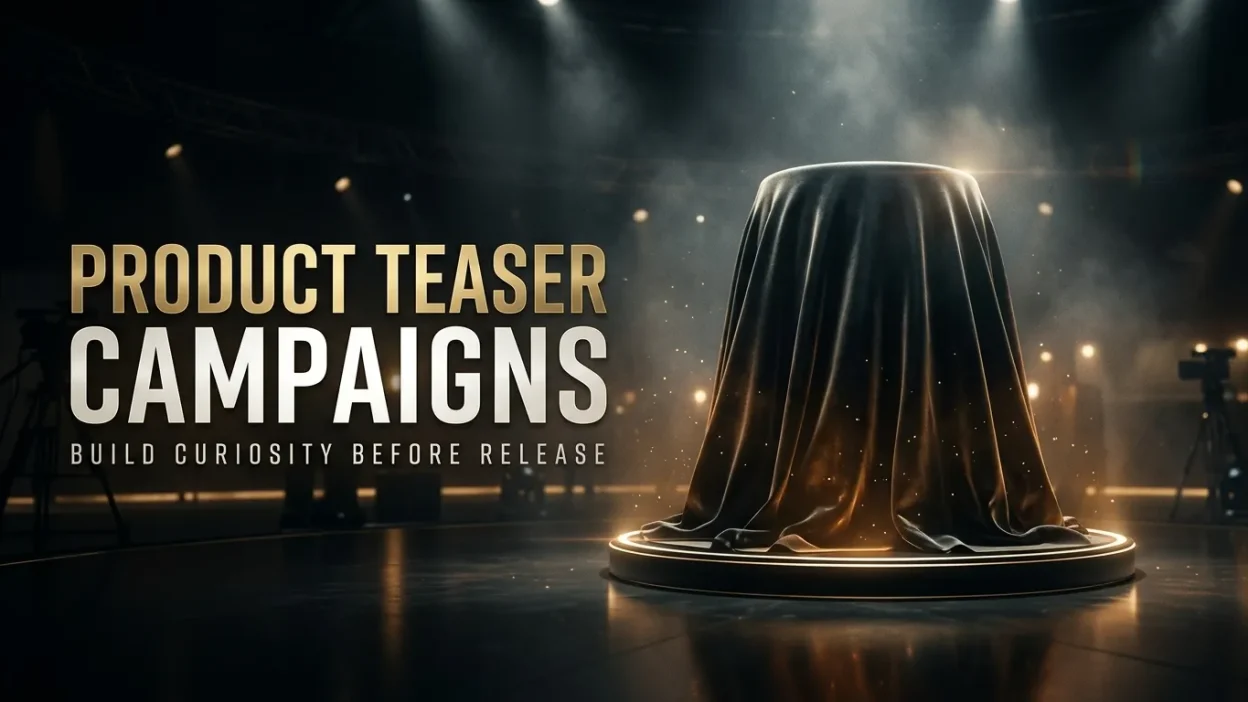
Product Teaser Campaigns build anticipation before release by revealing value gradually, inviting audience participation, collecting early interest, and preparing customers to act when availability begins.
Launching a new product is not simply about announcing that something is available to buy. Before customers make a purchasing decision, they need a reason to pay attention, understand the potential value, and become interested in what a business is preparing to offer. This is where Product Teaser Campaigns become an important part of modern marketing.
Consumers encounter countless advertisements, promotional messages, product announcements, and branded content every day. As a result, simply publishing a product image or announcing a release date rarely guarantees meaningful attention. Businesses need to create an experience that encourages potential customers to become curious before the actual product becomes available.
Curiosity changes how people interact with information. When a brand introduces an intriguing idea without immediately revealing every detail, audiences may become more interested in discovering what comes next. A carefully planned teaser can encourage social engagement, conversations, email subscriptions, website visits, and early purchasing interest.
However, Product Teaser Campaigns should not depend on mystery alone. An audience may become curious about an announcement but lose interest if the eventual product does not offer something relevant. Successful campaigns connect curiosity with a meaningful customer benefit, making each reveal contribute to a larger commercial story.
The objective is to make potential buyers feel that they are participating in the journey rather than simply receiving another advertisement. Through progressive reveals, behind-the-scenes content, interactive experiences, and strategic communication, businesses can establish interest before launch day.
A strong pre-release strategy also gives organizations valuable information about customer expectations. Businesses can observe which messages attract attention, which features generate questions, and which audience segments show genuine buying intent. Product Teaser Campaigns therefore serve two purposes: building anticipation and helping companies understand the market before investing heavily in launch activities.
What Are Product Teaser Campaigns?
Product Teaser Campaigns are marketing initiatives designed to generate awareness, curiosity, and potential customer interest before a new product or service officially becomes available. Instead of presenting the complete product immediately, businesses release selected information through a planned sequence of promotional messages and experiences.
These campaigns can use short videos, partial product images, mysterious headlines, countdowns, behind-the-scenes footage, email previews, social media announcements, creator collaborations, and interactive landing pages.
The information is typically revealed gradually. An initial teaser might introduce a problem or communicate an upcoming development without identifying the product. A later announcement could reveal a design detail, product category, feature, or release date. The final communication presents the complete offer and directs interested customers towards the purchase process.
For example, imagine a technology company preparing to release a new wireless audio device. Rather than immediately publishing the product specifications, the company might begin with a short video showing an unfamiliar design detail and a message about experiencing sound differently.
The next communication could reveal its noise-control technology, followed by a demonstration of its comfort and portability. Finally, the company announces the complete product, availability, pricing, and purchasing options.
Product Teaser Campaigns create a structured journey from initial curiosity to product understanding and purchase consideration.
The strategy is useful across many industries, including:
- Consumer electronics and technology.
- Fashion, accessories, and lifestyle products.
- Beauty, cosmetics, and personal care.
- Food and beverage launches.
- Mobile applications and software.
- Ecommerce product collections.
- Automotive and mobility products.
- Events, entertainment, and digital services.
The format may change depending on the audience, but the underlying principle remains consistent: give potential customers a compelling reason to pay attention before the official release.
Why Businesses Should Build Anticipation Before a Product Launch
Many businesses spend considerable time developing a product but begin promotional activities only when the product is ready for sale. This approach can create an unnecessary gap between product availability and customer awareness.
Even an excellent product needs an audience. When a launch announcement appears without prior communication, potential buyers may have no immediate reason to prioritize it. They might see the announcement, scroll past it, and forget about it within minutes.
Product Teaser Campaigns help reduce this problem by introducing the product concept before the purchasing opportunity arrives.
Build Awareness Before Availability
Customers need time to recognize a new brand, understand an unfamiliar product, and decide whether it deserves attention.
A teaser sequence allows businesses to introduce the product gradually. Instead of requiring audiences to process everything through one announcement, the company creates several smaller interactions.
This approach can be particularly useful for products that introduce unfamiliar technology or solve problems customers have not previously considered.
Create Anticipation Around the Release Date
A defined launch date gives interested customers something to look forward to.
When the audience already recognizes the product and understands its potential benefits, the release announcement has an existing context. Product Teaser Campaigns can use countdowns and scheduled reveals to make the upcoming availability feel like an important event.
However, urgency should reflect genuine availability conditions. Businesses should avoid inventing limited stock or artificial deadlines simply to encourage immediate purchases.
Generate Early Customer Interest
Pre-release marketing can help companies identify potential buyers before the product becomes available.
A waitlist, product registration page, newsletter subscription, or early-access form can convert anonymous attention into a measurable audience.
Product Teaser Campaigns become more commercially useful when interested people have a clear next step instead of simply watching promotional content.
Develop Brand Recognition
Repeated exposure to a consistent visual identity, message, and product concept can make a new release more recognizable.
This does not mean publishing the same teaser repeatedly. Each interaction should reveal something new while maintaining a recognizable campaign identity.
Reduce the Dependence on Launch-Day Promotion
When awareness begins before release, the launch does not need to carry the entire responsibility for introducing the product.
The business can use launch day to communicate availability and convert previously developed interest into transactions.
This makes the pre-launch period an important part of the overall commercial strategy rather than a collection of unrelated promotional posts.
The Psychology Behind Effective Product Teaser Campaigns

Understanding consumer psychology helps marketers create anticipation without making communication confusing or manipulative.
People are naturally interested in unresolved questions, unexpected discoveries, and information that connects with something they already care about. When a marketing message introduces an appealing possibility without explaining everything immediately, it can encourage people to seek additional information.
Product Teaser Campaigns use several psychological principles to create this progression.
The Curiosity Gap
A curiosity gap exists when someone knows enough about a subject to become interested but still has unanswered questions.
For example, a short video showing part of an unusual product design may encourage viewers to wonder what the complete object looks like and what makes it different.
The important point is balance. Revealing too much removes the opportunity for discovery, while revealing too little creates confusion.
Effective teasers provide enough context to make the audience understand why the announcement matters.
Anticipation and Future Rewards
People often enjoy looking forward to an experience, not just receiving the final benefit.
A planned product reveal can create a series of small moments of anticipation. Each announcement provides new information while preparing the audience for the next stage.
Product Teaser Campaigns can use this approach through scheduled reveals, early previews, countdowns, and exclusive announcements.
The experience becomes more memorable when audiences have a clear reason to follow the campaign.
Exclusivity and Early Access
Some customers appreciate receiving information before the general public.
Offering early access to product information, demonstrations, or purchasing opportunities can make interested audiences feel recognized.
This approach works particularly well when the business already has an engaged customer community.
However, exclusivity should offer a meaningful benefit. Simply labeling an ordinary announcement as exclusive does not necessarily create additional value.
Social Proof and Shared Discovery
People often look to other customers when evaluating an unfamiliar product.
Early reactions, creator demonstrations, beta feedback, and genuine customer conversations can reduce uncertainty.
A product that initially attracts curiosity may become more appealing when potential buyers see credible evidence that other people understand its value.
Product Teaser Campaigns can incorporate authentic community reactions throughout the pre-release period.
The Commitment Effect
When someone signs up for a waitlist, participates in a product discussion, or requests early access, they take a small action that demonstrates interest.
That action creates an opportunity for continued communication.
However, joining a waitlist does not mean someone is guaranteed to purchase. Businesses should treat registrations as indicators of interest rather than confirmed sales.
Product Teaser Campaigns vs Traditional Product Announcements
A traditional product announcement communicates that a product is ready or becoming available. It usually introduces the product name, features, pricing, and purchase information.
A teaser campaign takes a different approach by building interest over time.
| Comparison Area | Traditional Product Announcement | Product Teaser Campaigns |
|---|---|---|
| Timing | Usually close to release | Begins before release |
| Main objective | Communicate availability | Build curiosity and anticipation |
| Content style | Direct product information | Progressive reveals and previews |
| Audience experience | Receives a complete announcement | Experiences several campaign stages |
| Engagement | Focuses on immediate responses | Encourages ongoing participation |
| Data collection | Often concentrated around launch | Can begin during pre-launch |
| Main opportunity | Immediate purchase consideration | Early interest and launch readiness |
Neither approach needs to replace the other.
A product announcement remains essential because customers eventually need complete information before purchasing. Teaser activity simply prepares the audience to pay attention when that information becomes available.
Businesses should connect the two strategies rather than creating separate campaigns with conflicting messages.
Establishing the Core Concept Before Creating Teasers
A successful campaign starts with a clear idea. Before producing videos, graphics, or social media captions, marketers should identify what makes the upcoming product worth discovering.
Product Teaser Campaigns should communicate a meaningful proposition rather than relying entirely on attractive visuals or mysterious language.
Identify the Product’s Main Differentiator
Start by answering one question: what makes this product worth noticing?
The differentiator could involve design, convenience, performance, technology, quality, sustainability, affordability, or a new approach to an existing customer problem.
Not every product needs revolutionary technology to generate interest. A familiar product can still attract attention when it offers a better experience or solves a specific inconvenience.
The campaign should focus on a benefit the business can genuinely deliver.
Understand the Target Audience
A teaser that attracts one audience may be completely irrelevant to another.
A technology enthusiast may appreciate a preview of technical capabilities, while a lifestyle customer may be more interested in design, appearance, or everyday convenience.
Before choosing a creative direction, identify the audience’s interests, purchasing motivations, concerns, and preferred communication channels.
Product Teaser Campaigns become more effective when their messages reflect how the intended buyers evaluate products.
Define the Campaign’s Main Promise
A campaign promise should communicate the value of discovering the upcoming product.
For example:
- A new way to organize everyday work.
- A more comfortable experience for long journeys.
- Better control over personal technology.
- A simpler approach to managing daily tasks.
- A fresh design for an everyday essential.
The statement should create interest without making unsupported product claims.
Develop a Consistent Creative Identity
Visual consistency helps people recognize campaign content across different platforms.
Choose a recognizable colour palette, typography, visual language, tone of voice, and creative style.
The teaser materials should feel connected even when they reveal different aspects of the product.
This creates a recognizable identity that can carry through to the official launch announcement.
Choosing the Right Types of Product Teasers
Different creative formats create different forms of curiosity. The best choice depends on the product category, audience expectations, available resources, and information the company can responsibly reveal.
Partial Product Reveals
Partial reveals display only a selected part of the product.
This could be a close-up image of a distinctive feature, an unusual design element, a small section of packaging, or a silhouette.
The objective is to create a recognizable visual question.
For example, a fashion brand might reveal the material and stitching of an upcoming collection without showing the complete outfit.
Product Teaser Campaigns using partial reveals should maintain enough context to prevent audiences from becoming confused about what the campaign represents.
Mystery Videos
Short videos are useful for introducing movement, atmosphere, and visual storytelling.
A technology brand might show a product interacting with its environment, while a cosmetics company could present a close-up of colour, texture, or packaging.
The video should focus on one memorable idea rather than attempting to communicate the entire product story.
A short teaser is often easier to distribute across several social platforms than a long promotional presentation.
Behind-the-Scenes Content
Behind-the-scenes material shows the development process without immediately revealing the complete product.
Businesses might share design sketches, manufacturing details, packaging experiments, product testing, or creative discussions.
This approach can make Product Teaser Campaigns feel more authentic because audiences see some of the work behind the final release.
It can also help communicate craftsmanship and brand personality.
Countdown Campaigns
A countdown creates a visible connection between the current moment and the upcoming release.
It can include a launch date, a scheduled reveal, an early-access announcement, or a limited product drop.
A countdown works best after the audience already understands why the release matters.
An unexplained countdown may produce initial curiosity but provide insufficient motivation to remain interested.
Interactive Teasers
Interactive content invites potential customers to participate instead of simply watching.
Examples include product-related quizzes, polls, prediction activities, design preferences, and feature-selection questions.
These activities can generate useful feedback while encouraging audiences to engage with the upcoming release.
However, interaction should support the product story. A random contest or unrelated question may generate activity without improving product interest.
Audio-Based Teasers
Audio can introduce distinctive sounds associated with a product or brand.
A technology company might reveal part of a new device’s sound profile, while a music-related business could introduce a short preview from an upcoming release.
Audio works particularly well when the product experience includes a recognizable sound or listening benefit.
Product Teaser Campaigns using audio should make sure the content remains understandable in environments where users cannot listen immediately.
Building a Product Teaser Timeline
Campaign timing influences how effectively curiosity develops.
Starting too late may leave insufficient time to introduce the product and build a meaningful audience. Starting too early can create fatigue if the business has little new information to share.
The appropriate timeline depends on the complexity of the product, audience size, market competition, and launch objectives.
A practical structure can divide the campaign into five stages.
Stage One: Strategic Preparation
The first stage focuses on preparation rather than public promotion.
Confirm product positioning, target audience, campaign objectives, creative direction, release date, and communication channels.
Prepare the landing page, registration system, content calendar, and measurement process.
Product Teaser Campaigns should not begin publicly until the business knows what it can reveal and which information must remain confidential.
Internal teams should also agree on product specifications, availability, customer support procedures, and the claims that can be used in marketing materials.
Stage Two: Initial Curiosity
Introduce the campaign through subtle visual content, problem-focused messages, and early announcements.
The audience does not necessarily need to know the full product details immediately.
A business could publish an intriguing design preview or explain that something is being developed to address a familiar customer problem.
At this stage, Product Teaser Campaigns should prioritize recognition and initial engagement rather than aggressive sales promotion.
Stage Three: Controlled Reveals
Begin introducing more specific information.
Reveal selected features, product benefits, design elements, development stories, or demonstrations.
This is also a useful stage for introducing creator previews, customer research feedback, and early-access registration.
The campaign should move from general curiosity towards product understanding.
Stage Four: Launch Preparation
Announce the release date clearly and communicate the most important purchasing information.
Share product demonstrations, complete or partial specifications, pricing details when appropriate, and early-access opportunities.
Product Teaser Campaigns should now make the next action obvious. Interested customers should know how to register, receive updates, or access the launch.
Stage Five: Official Release
The final stage turns accumulated interest into a purchasing opportunity.
Publish the complete product announcement, activate the product page, distribute launch communications, and make the purchasing process available.
The audience should not need to search across several platforms to discover how to buy.
Shopify’s product launch guide also organizes launch preparation into pre-launch planning, launch-day execution, and post-launch analysis, providing a useful framework for coordinating marketing and operational activities.
Using Social Media to Build Pre-Launch Curiosity
Social platforms provide businesses with opportunities to distribute teaser content, collect feedback, and build communities around upcoming products.
However, each platform has a different audience environment and content format.
Product Teaser Campaigns should adapt their creative execution without losing the central campaign identity.
Instagram: Visual Storytelling
Instagram is useful for product-focused imagery, short-form video, Stories, Reels, and creator collaborations.
A fashion brand might introduce an upcoming collection through close-up fabric shots, styling previews, and short visual sequences.
A technology business could show the product interacting with everyday environments.
Stories can also introduce polls and countdown stickers, giving interested users a simple way to follow upcoming announcements.
TikTok: Creative Discovery
TikTok can help products gain attention through entertaining demonstrations, short narratives, creator content, and audience participation.
A teaser might introduce a recognizable problem and show only a small part of the solution.
Businesses should avoid producing content that feels like a conventional advertisement when the platform’s audience expects entertainment or useful information.
The strongest approach connects creative storytelling with a product-related reason to watch.
Facebook: Community and Familiarity
Facebook can support announcements, community conversations, event promotion, and communication with existing customers.
Businesses with active groups or established page audiences can use these communities to introduce early previews and collect questions.
Product Teaser Campaigns can also encourage existing customers to share relevant announcements with people who may be interested.
YouTube: Deeper Product Previews
YouTube supports longer demonstrations, behind-the-scenes stories, product development videos, and creator previews.
It is especially useful when customers need more information before considering a purchase.
A company can publish short teasers first and release a longer demonstration closer to launch.
LinkedIn: Professional Product Reveals
For B2B companies, LinkedIn can support pre-launch communication directed at industry professionals, business decision-makers, and potential partners.
A software company might introduce an upcoming feature, explain the business problem it addresses, and invite selected users to join an early-access program.
The message should communicate professional relevance rather than relying exclusively on mystery.
Creating Teaser Content That Makes People Want to Know More
The quality of the creative material strongly influences how audiences interpret an upcoming product.
A campaign may have an excellent strategy, but weak visuals or confusing language can prevent its message from gaining attention.
Product Teaser Campaigns should create a recognizable connection between the creative material and the product’s eventual value.
Write Intriguing but Clear Headlines
A teaser headline should encourage attention while giving the audience enough context to understand its subject.
For example:
- Something better is coming to your everyday routine.
- Your next workspace experience is almost here.
- A new perspective on personal technology.
- The wait for a simpler solution is nearly over.
- Discover what we have been creating behind the scenes.
These examples create anticipation without promising unsupported results.
Use Visual Contrast and Composition
Creative visuals can control how much information audiences receive.
Close-up photography, silhouettes, selective lighting, cropped compositions, and unusual perspectives can help introduce a product without revealing its entire appearance.
The visual treatment should remain consistent with the brand’s identity.
Make Every Reveal Meaningful
Each piece of content should provide something new.
If every teaser repeats the same mysterious message, the audience may quickly lose interest.
A better approach is to reveal different aspects of the product over time, such as design, functionality, development, customer benefits, and availability.
Product Teaser Campaigns need progression. Each interaction should help move the audience towards a more informed understanding of the upcoming release.
Keep the Product Benefit at the Centre
A beautiful teaser can attract attention, but attention alone is not the objective.
Potential buyers eventually need to understand what the product does and why it matters.
The campaign should gradually connect visual curiosity with a practical benefit.
Building a Waitlist Before the Product Becomes Available
A waitlist converts early interest into a contactable audience.
Instead of relying entirely on social media views or impressions, businesses can invite interested people to register for product updates or early access.
This makes Product Teaser Campaigns more measurable and provides an opportunity to communicate directly with potential buyers.
Create a Dedicated Landing Page
The landing page should explain that a product is coming soon and communicate enough information to justify registration.
Include a clear headline, relevant visual content, a short explanation of the upcoming release, and a simple registration form.
Avoid asking for unnecessary information.
Offer a Meaningful Registration Benefit
People are more likely to register when they understand what they receive.
Possible incentives include:
- Early access to the product.
- Exclusive launch updates.
- Invitations to private demonstrations.
- Limited introductory benefits.
- Access to a launch event.
- The opportunity to test an early version.
The benefit should be realistic and clearly explained.
Segment the Waitlist
Not every subscriber will have the same level of purchase interest.
Some people may want general updates, while others may be interested in a specific product version or feature.
Businesses can use optional registration preferences to understand these differences.
Product Teaser Campaigns can then deliver more relevant updates instead of sending identical messages to every subscriber.
Prepare a Welcome Sequence
After registration, send a confirmation and explain what happens next.
A welcome email can introduce the campaign, reinforce the product’s main benefit, and tell subscribers when they can expect future communication.
This prevents waitlist registration from becoming an isolated interaction.
Shopify’s pre-launch marketing guidance also discusses early audience building, teaser content, influencer activity, and waitlist preparation as elements of a coordinated pre-release strategy.
Using Email Marketing to Maintain Anticipation
Email provides a direct channel for continuing conversations with people who have actively subscribed to receive updates.
It is particularly useful when social media reach fluctuates or when a business wants greater control over the timing and sequence of its announcements.
Product Teaser Campaigns can use email to reveal new details, introduce early access, and prepare subscribers for the purchasing opportunity.
The First Announcement Email
The first email should introduce the upcoming product or development.
It does not need to reveal everything.
Explain what is changing, why the announcement matters, and what subscribers can expect from the upcoming campaign.
The Sneak-Peek Email
A later email can reveal a selected feature, image, demonstration, or development story.
This helps maintain interest without repeating the initial announcement.
The Early-Access Email
Invite selected subscribers to participate in an early-access experience.
The email should clearly explain eligibility, timing, and any conditions attached to the opportunity.
The Launch Reminder
As the release date approaches, send a reminder that communicates the most important product information.
The customer should know when the product becomes available and where to access it.
The Official Launch Email
Once the product is available, replace mystery with clarity.
Show the complete product, explain its main benefits, communicate pricing or availability, and include a direct purchasing link.
For additional guidance on writing effective announcement messages, Shopify’s product launch email guide covers sneak previews, preorder opportunities, launch-day announcements, and supporting visuals.
Working With Influencers and Content Creators

Creators can introduce products to audiences that may not already follow the business.
Their value comes from credibility, audience relevance, storytelling ability, and the opportunity to demonstrate the product in a familiar context.
Product Teaser Campaigns can use creator partnerships to expand awareness before the official release.
Choose Creators According to Audience Fit
Follower count should not be the only selection criterion.
A creator with a smaller but highly relevant audience may provide more meaningful engagement than a large account with little connection to the product category.
Review audience characteristics, content quality, engagement patterns, previous brand partnerships, and communication style.
Provide a Clear Creative Direction
Creators need to understand what they can reveal, which product details are confidential, and what the campaign is trying to communicate.
However, overly restrictive instructions can make the content feel unnatural.
Provide key information and boundaries while allowing creators to present the product in their own style.
Introduce Genuine Demonstrations
Whenever possible, let creators experience the product before discussing it publicly.
Authentic demonstrations can answer practical customer questions about appearance, functionality, usability, and limitations.
Businesses should not encourage creators to claim personal experience they have not had.
Coordinate Release Timing
Creator content should fit the wider campaign timeline.
An early preview can introduce curiosity, while a more detailed demonstration can appear closer to launch.
Product Teaser Campaigns should coordinate creator publication dates so the audience receives a consistent sequence rather than several unrelated announcements.
Using Paid Advertising to Amplify Product Teaser Campaigns
Organic content can be an effective starting point, but businesses may need paid distribution to reach additional audiences.
Paid campaigns can help introduce a new product to potential customers, bring people to a registration page, and reconnect with audiences who have previously interacted with the brand.
However, Product Teaser Campaigns should use paid advertising according to the stage of the campaign.
Awareness Advertising
The first paid campaign can introduce the upcoming release to a relevant audience.
Use visual material that communicates the product category or customer problem without necessarily revealing the full product.
The objective is to generate relevant attention.
Traffic and Registration Campaigns
Once the audience understands the campaign, direct interested users towards a landing page or waitlist.
Measure registration quality instead of relying only on clicks.
A campaign that generates inexpensive traffic but few relevant subscribers may not be commercially useful.
Retargeting Campaigns
Retargeting can help reconnect with people who have visited the campaign page, watched eligible video content, or interacted with the brand, subject to platform rules and consent requirements.
These audiences may benefit from a more detailed message explaining the product or early-access opportunity.
Conversion Campaigns at Launch
When the product becomes available, advertising can shift towards purchases, enquiries, or another relevant conversion action.
Businesses running Performance Max in Google Ads can consider how automated cross-channel campaigns fit into their broader launch strategy.
The campaign objective, conversion tracking, creative assets, landing page, and available product information should be aligned with the actual launch goal.
Pre-launch interest and purchase conversions are different objectives. Businesses should configure their measurement and campaign structure accordingly instead of treating every registration or video view as a completed sale.
Mobile-First Experiences for Product Teaser Campaigns
Many potential customers discover new products through smartphones.
They watch short videos, browse social feeds, open promotional emails, and visit product pages from mobile devices. A poorly designed mobile experience can therefore weaken an otherwise strong teaser campaign.
Product Teaser Campaigns should consider mobile usability from the beginning.
Optimize Teaser Landing Pages
The landing page should load efficiently and communicate the upcoming product quickly.
Use readable headlines, concise explanations, and clearly visible registration controls.
Avoid designs that require excessive scrolling before visitors understand the offer.
Create Mobile-Friendly Videos
Keep important visual information visible within the intended screen format.
Text should remain readable, and the product should be recognizable even when the video appears in a compact feed.
Use captions where appropriate so the content remains understandable without sound.
Simplify Registration
Forms should work smoothly on smaller screens.
Ask only for essential information and make the submission process straightforward.
Connect the Experience With Ecommerce
When the campaign progresses to launch, ensure that customers can move from the teaser page to the product page without confusion.
Businesses planning wider Mobile Commerce Marketing strategies should consider how the transition from mobile discovery to checkout affects the overall launch experience.
The customer should not lose the excitement created by the teaser because of a slow page, confusing navigation, or complicated purchase process.
Creating a Product Reveal That Converts Attention Into Demand
The final reveal is where the campaign moves from curiosity towards informed purchase consideration.
Customers now expect answers.
What is the product? What does it do? Who is it designed for? How is it different? When can they buy it?
Product Teaser Campaigns should prepare audiences for these questions instead of keeping essential information hidden until the last moment.
Reveal the Complete Product
Show the product clearly through high-quality images, demonstrations, or video.
Use multiple angles where relevant and demonstrate how it works in real situations.
Explain the Main Customer Benefits
Translate product features into outcomes that customers can understand.
For example, instead of describing only a technical specification, explain how that feature improves convenience, usability, performance, or reliability.
Address Common Buying Questions
Provide relevant information about pricing, availability, shipping, compatibility, warranties, support, and product requirements.
The information will vary by industry, but the objective remains the same: reduce uncertainty before purchase.
Make the Next Action Obvious
Use a clear call to action.
Depending on the business, this could be purchasing the product, reserving a unit, booking a demonstration, joining a subscription, or contacting the sales team.
Product Teaser Campaigns should not force interested people to search for the next step after the reveal.
Creating a Consistent Omnichannel Launch Experience
A product teaser may appear on social media, email, websites, paid advertisements, and creator channels.
If these interactions communicate different product information or inconsistent release details, customers may become confused.
An organized launch experience connects all channels through a consistent message and clear customer journey.
For example, a user might discover a teaser video on Instagram, visit the campaign landing page, join a waitlist, receive an email preview, and eventually purchase the product through an ecommerce store.
Each interaction should support the next stage.
Product Teaser Campaigns should therefore be planned as an interconnected experience rather than individual promotional activities.
The broader concept of an Omnichannel Referral Funnel can also help businesses understand how discovery, recommendations, online engagement, and purchasing interactions connect across different touchpoints.
Customer communication should remain consistent whether someone encounters the brand through a social post, direct message, website, or physical retail experience.
Encouraging Community Participation Before Release
A community can become an important source of early attention and feedback.
Instead of treating followers as passive viewers, businesses can invite them to participate in the product development and reveal process.
This approach makes Product Teaser Campaigns more interactive and creates opportunities for audiences to express their preferences.
Ask Customers to Choose Between Options
A business might ask followers to vote on packaging designs, product colours, or selected features.
This gives people a simple way to participate and provides feedback about their preferences.
Encourage Predictions
Invite audiences to guess the product category, launch feature, or purpose of a partially revealed design.
Predictions can generate conversation when the clues are meaningful and the eventual reveal satisfies expectations.
Share Development Stories
Show the challenges, creative decisions, and testing involved in developing the product.
Customers may appreciate understanding why certain decisions were made and how the business approached product improvement.
Recognize Community Contributions
When appropriate, highlight useful feedback or customer contributions.
This reinforces the idea that the community is part of the experience rather than simply a source of promotional reach.
Participation should remain voluntary and genuine. A business should not imply that customers directly influenced product decisions unless that involvement actually occurred.
Measuring the Success of Product Teaser Campaigns
A campaign may generate thousands of views without creating meaningful buying interest.
This is why measurement should go beyond social engagement and evaluate whether curiosity develops into identifiable commercial opportunities.
Product Teaser Campaigns should use metrics that reflect the specific objectives of each campaign stage.
| Metric | What It Measures | Why It Matters |
|---|---|---|
| Reach | Unique people exposed to the campaign | Evaluates awareness |
| Impressions | Total content displays | Shows distribution volume |
| Video completion rate | Viewers reaching the end of a video | Evaluates creative engagement |
| Engagement rate | Interactions relative to exposure | Measures audience response |
| Landing page visits | Visitors reaching the campaign page | Evaluates traffic generation |
| Waitlist registrations | People expressing interest | Measures early demand signals |
| Email click-through rate | Subscribers interacting with links | Evaluates message relevance |
| Early-access participation | Users engaging with preview opportunities | Measures deeper interest |
| Preorders | Confirmed advance purchases | Indicates purchasing commitment |
| Launch conversion rate | Visitors completing the desired action | Evaluates commercial effectiveness |
| Customer acquisition cost | Cost of acquiring a customer | Supports profitability analysis |
| Return on advertising spend | Revenue relative to advertising expenditure | Evaluates paid campaign economics |
Measuring Awareness
During the initial stage, examine reach, impressions, video views, and relevant audience growth.
The purpose is to understand whether the campaign is reaching the people it was designed for.
Measuring Engagement
Review video completion, comments, shares, landing page interactions, and email engagement.
These measurements help identify which content formats and messages generate meaningful attention.
Measuring Early Demand
Waitlist registrations, early-access requests, product enquiries, and preorders provide stronger indicators of commercial interest.
However, not all registrations represent equally qualified prospects. A business should examine the quality and subsequent behaviour of people joining the list.
Measuring Launch Performance
Once the product becomes available, measure purchases, conversion rates, revenue, customer acquisition costs, and returns.
Compare actual outcomes with campaign objectives rather than evaluating success based exclusively on initial attention.
Product Teaser Campaigns should connect pre-release performance with launch results so marketers can understand which activities contributed to commercial outcomes.
Common Mistakes That Weaken Product Teaser Campaigns
Even an attractive teaser campaign can lose effectiveness when its planning, messaging, or execution is inconsistent.
Businesses should understand the most common problems before investing heavily in creative production or paid distribution.
Revealing Too Much Too Early
If every important feature and product detail is introduced in the first teaser, there may be little reason for audiences to follow subsequent announcements.
A progressive reveal should provide new information at each stage.
However, hiding everything is equally problematic. Audiences need enough context to understand why the upcoming product matters.
Creating Mystery Without Explaining Value
An unusual image or cryptic caption may attract attention, but curiosity is unlikely to become buying interest when the product benefit remains unclear.
Each stage should gradually connect the mystery with a relevant customer need.
Starting the Campaign Too Late
A campaign that begins only a day or two before release may not provide enough time to build awareness, collect registrations, or establish meaningful interest.
The timeline should reflect product complexity and audience familiarity.
Extending the Campaign for Too Long
Excessively long teaser campaigns can create fatigue.
If businesses repeatedly announce that something exciting is coming without delivering new information, potential customers may stop paying attention.
Product Teaser Campaigns need a realistic schedule with useful milestones and an identifiable release date.
Using Inconsistent Messaging
Different teams and creators may communicate conflicting information about product features, pricing, availability, or release timing.
A shared campaign brief helps prevent these problems.
Focusing on Engagement Instead of Buying Interest
Likes and comments can be encouraging, but they do not necessarily represent commercial demand.
Businesses should evaluate registrations, qualified enquiries, preorders, and purchase behaviour alongside engagement metrics.
Ignoring the Actual Product Experience
An effective teaser creates expectations.
If the product fails to deliver the promised benefit, the campaign can damage customer trust.
Marketing claims should always reflect the product’s actual capabilities and availability.
Forgetting the Post-Launch Experience
Communication should not stop when the product becomes available.
Customers may need setup instructions, product demonstrations, support resources, and follow-up information.
The business should connect launch promotion with a complete customer experience.
Product Teaser Campaign Examples Across Different Industries
Practical examples help explain how the same strategic principles can be adapted to different products.
Example 1: New Smartphone Release
A smartphone manufacturer plans to introduce a new device featuring an updated camera system and a redesigned body.
The initial teaser displays a close-up of the camera module with a message about capturing everyday moments differently.
A second video demonstrates a photography capability without displaying the complete device.
The next reveal introduces the design, followed by a creator demonstration and a countdown to the launch event.
At the official release, the company presents the full specifications, pricing, availability, and purchasing options.
Product Teaser Campaigns work particularly well here because customers may be interested in the design, performance, and technology behind the upcoming device.
Example 2: Fashion Brand’s New Collection
A clothing brand is preparing to introduce a seasonal collection.
It begins with close-up images of fabrics, textures, and selected design elements.
Later, models and creators introduce individual pieces through short videos.
The brand opens a registration page for early collection access and sends a launch reminder to subscribers.
The final reveal presents the complete collection with product photography and shopping links.
Example 3: New Skincare Product
A personal care brand develops a new skincare product for customers with a specific routine requirement.
The teaser campaign begins by discussing the customer problem without making unsupported medical or performance claims.
Subsequent content introduces the product’s texture, ingredients, packaging, and usage information.
Selected creators demonstrate the product where appropriate, while early subscribers receive a notification when it becomes available.
Example 4: SaaS Product Release
A software company is preparing to introduce a new feature for business users.
The campaign begins with a message about a common workflow problem.
A short demonstration introduces the upcoming solution, followed by a product walkthrough and early-access registration.
Existing customers receive an update through their preferred communication channels.
At launch, the company provides documentation, pricing information, demonstrations, and access instructions.
Product Teaser Campaigns in software businesses should emphasize practical improvements instead of relying exclusively on visual mystery.
Example 5: Ecommerce Home Product Launch
An ecommerce brand is introducing a new range of space-saving home accessories.
The campaign shows selected product details through lifestyle images and short videos.
Customers can register for early access and receive a launch notification.
The final announcement includes product dimensions, pricing, availability, and delivery information.
This example highlights why Product Teaser Campaigns should connect emotional appeal with the practical information people need before purchasing.
A Practical Checklist Before Launching a Teaser Campaign
Before publishing the first teaser, review the full campaign plan.
A structured checklist can help marketing teams identify missing information and avoid preventable launch problems.
| Planning Area | What Needs to Be Confirmed |
|---|---|
| Product positioning | Main customer problem and product value |
| Target audience | Relevant buyer segments and interests |
| Campaign objective | Awareness, registrations, preorders, or another goal |
| Creative direction | Visual identity, tone, and messaging |
| Reveal sequence | What information becomes public at each stage |
| Campaign timeline | Preparation, teaser, reveal, and release dates |
| Social channels | Platforms relevant to the target audience |
| Email communication | Welcome, preview, reminder, and launch messages |
| Landing page | Registration or product information experience |
| Paid media | Budget, audience, creative, and conversion objectives |
| Creator partnerships | Selection, briefing, and publication schedule |
| Product availability | Stock, pricing, and fulfilment readiness |
| Measurement | Tracking, reporting, and performance indicators |
| Customer support | Processes for handling questions and enquiries |
A checklist should not become a substitute for creative thinking. Its purpose is to ensure that the commercial and operational foundations are ready before attention begins to increase.
How to Optimize a Campaign After the First Teaser
The first teaser provides an opportunity to observe real audience behaviour.
Marketers can compare how different audiences respond, identify content that generates meaningful interest, and adjust the next reveal accordingly.
For example, a product preview might generate many comments about its design but very few registrations. This could suggest that the visual attracted attention without communicating sufficient purchasing value.
Another teaser might produce fewer views but significantly more waitlist registrations. That could indicate a stronger connection with the intended customer group.
Product Teaser Campaigns should use these observations to improve subsequent communication.
Analyze Audience Questions
Questions can reveal what customers want to understand before making a decision.
Repeated questions about compatibility, pricing, usability, or availability may indicate which information should appear in the next announcement.
Test Different Creative Formats
Compare short videos, static visuals, product details, and interactive content.
The objective is to identify which formats help the intended audience understand and remember the product.
Review Registration Quality
Do not evaluate waitlist growth using quantity alone.
Examine whether registrants belong to the intended customer segment and whether they engage with subsequent updates.
Adjust Reveal Timing
If audiences remain interested, the planned sequence may continue as intended.
If engagement declines, the business may need to introduce more meaningful information or shorten the remaining teaser period.
Maintain Campaign Consistency
Optimization should improve performance without making the brand feel disconnected.
The visual identity, main message, and release information should remain consistent throughout the campaign.
The Role of AI and Automation in Product Teaser Marketing

Artificial intelligence and marketing automation can support the planning and execution of pre-release campaigns.
AI tools can help marketers research audience interests, develop creative concepts, generate draft captions, explore headline variations, summarize feedback, and organize content ideas.
These capabilities can make production more efficient, particularly for businesses managing several launch channels simultaneously.
However, Product Teaser Campaigns still require human creative direction.
An AI-generated caption may sound attractive but communicate a benefit that the product cannot deliver. A generated visual may introduce design features that do not exist in the final release.
Human review is essential when content makes product claims, reveals specifications, or communicates availability information.
Automation can also help distribute messages according to campaign milestones.
For example, subscribers might receive a welcome email after registration, an early preview several days later, and a launch reminder when the product becomes available.
These communications should use accurate subscriber information and respect customer preferences.
Businesses should also maintain clear approval processes so that confidential product details are not accidentally published before the scheduled reveal.
The best role of AI is to reduce repetitive production work and support better decisions while keeping the central campaign idea grounded in real customer needs.
Post-Launch Activities: Turning Curiosity Into Long-Term Growth
A successful launch should create opportunities beyond the initial release.
Businesses should continue communicating with customers after the first purchasing period to collect feedback, answer questions, introduce complementary products, and develop long-term relationships.
Product Teaser Campaigns can provide useful information about which audiences showed interest and which product messages attracted the strongest response.
The company can use these insights to improve future campaigns and understand customer expectations.
Collect Genuine Customer Feedback
Ask customers about their experience after they have had a reasonable opportunity to use the product.
Identify common positive experiences, questions, and improvement opportunities.
Encourage Reviews and Demonstrations
Satisfied customers may be willing to share product reviews, photographs, videos, or recommendations.
These contributions can provide authentic content that supports future marketing.
Retarget Interested Non-Buyers
Some people who joined a waitlist or interacted with teaser content may not purchase immediately.
Businesses can provide relevant product information or answer common concerns without assuming that every non-buyer needs another discount.
Develop Follow-Up Campaigns
The launch can create a foundation for future product announcements, accessories, upgrades, or complementary services.
A consistent communication strategy helps maintain the relationship after the original curiosity has been satisfied.
Document Launch Learnings
Record which teaser formats, channels, messages, and audience segments produced meaningful outcomes.
This information can improve the planning of subsequent releases.
The most effective campaigns do not treat launch day as the end of marketing. They use the attention created before release as the beginning of a broader customer relationship.
Conclusion
Product teasers give businesses an opportunity to develop customer interest before a new release becomes available. Their effectiveness depends on a meaningful product promise, progressive reveals, relevant creative content, and a convenient path towards registration or purchase. Businesses should combine social media, email, creator partnerships, landing pages, and paid promotion into one consistent experience. Measuring engagement alongside waitlist quality, preorders, and launch conversions helps distinguish genuine demand from temporary attention. Ultimately, successful teaser marketing is not about keeping customers curious indefinitely. It is about turning anticipation into informed interest, confident purchasing decisions, and lasting relationships.
Frequently Asked Questions (FAQ)
What are Product Teaser Campaigns?
Product Teaser Campaigns are pre-launch marketing activities designed to create curiosity and awareness around an upcoming product or service. They use selected previews, videos, images, announcements, countdowns, and interactive content to introduce the product gradually before its official release.
How early should a product teaser campaign start?
The ideal starting time depends on product complexity, audience size, and launch objectives. A substantial product launch may benefit from preparation several weeks or months beforehand, while a simple product release may require a shorter campaign. Businesses should allow enough time to build awareness without exhausting audience interest.
What is the main purpose of a product teaser campaign?
The main purpose is to develop awareness and anticipation before a product becomes available. A well-planned campaign can also generate waitlist registrations, collect customer feedback, introduce product benefits, and prepare potential buyers for the official launch.
Which platforms are best for product teaser marketing?
Instagram, TikTok, Facebook, YouTube, LinkedIn, email, and a dedicated website can all support teaser campaigns. The right combination depends on where the target audience spends time and how the product is best demonstrated. Visual products may benefit from short videos, while B2B products may require professional content and detailed previews.
How can businesses create curiosity without revealing the entire product?
Businesses can use close-up images, silhouettes, behind-the-scenes content, selected feature previews, short videos, and progressive announcements. Each interaction should reveal something meaningful while leaving room for discovery. The audience should still understand the general reason to pay attention.
Are Product Teaser Campaigns suitable for small businesses?
Yes. Small businesses can use simple photography, short videos, social media posts, email updates, and a basic waitlist page. An expensive production budget is not essential. Clear positioning, relevant messaging, and consistent communication are more important than the number of promotional assets.
How can a business measure the success of a teaser campaign?
Important measurements include audience reach, video completion rates, engagement, website visits, email registrations, waitlist growth, early-access participation, preorders, and launch conversions. Businesses should evaluate whether initial attention develops into genuine commercial interest rather than focusing exclusively on likes and views.
Should businesses offer early access before the official launch?
Early access can encourage registration and make engaged customers feel valued. It is especially useful when businesses want feedback, initial orders, or a controlled release. However, the offer should include clear eligibility and availability information so customers understand exactly what they receive.
Can influencers help promote an upcoming product?
Yes. Relevant creators can introduce products to established audiences through previews, demonstrations, behind-the-scenes content, and authentic discussions. Businesses should prioritize audience relevance and content credibility rather than follower count alone. Partnerships should also follow applicable advertising disclosure requirements.
What should businesses do after a product teaser campaign ends?
After the official release, businesses should communicate availability, provide complete product information, answer customer questions, monitor sales, and collect feedback. They should also evaluate campaign performance and use the results to improve future launches. Maintaining post-purchase communication helps turn initial excitement into longer-term customer relationships.