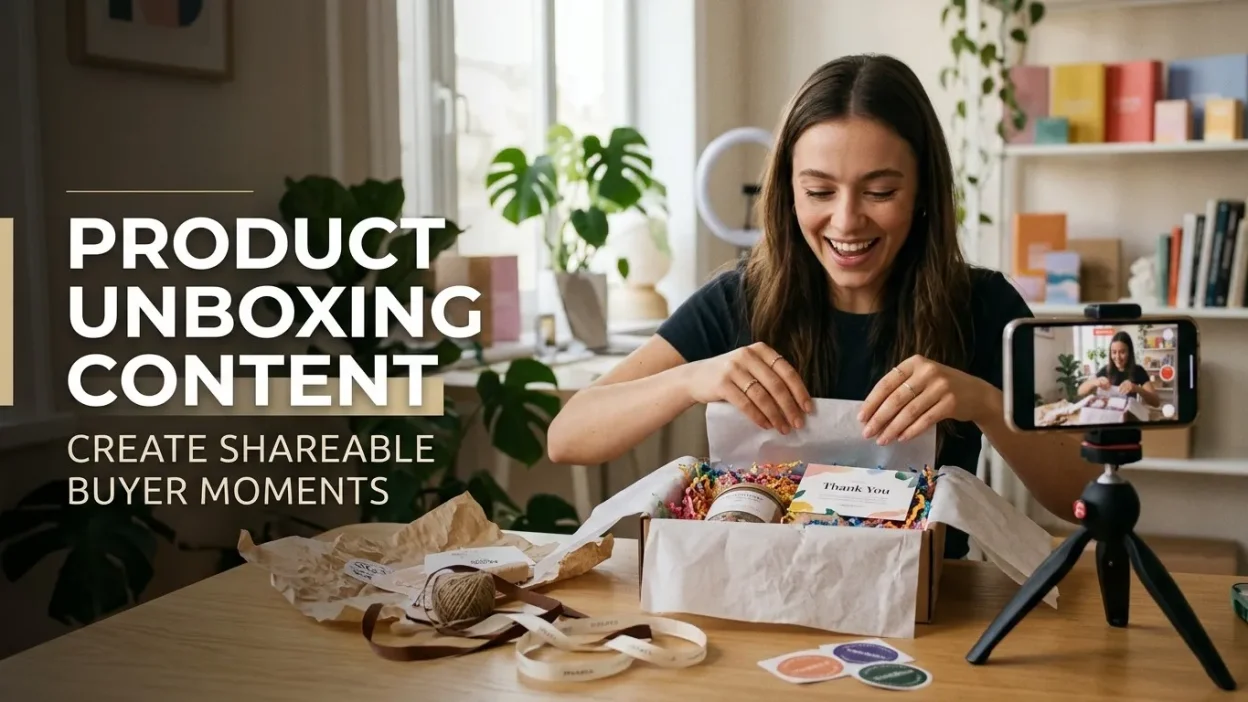
Product Unboxing Content transforms ordinary deliveries into memorable customer experiences, encouraging buyers to share authentic reactions, build brand trust, and influence future purchasing decisions.
A customer receiving a new product is experiencing something more meaningful than simply collecting a delivery. There is anticipation about what is inside the package, curiosity about its appearance, excitement about discovering its features, and the expectation that the product will deliver what the brand promised. These emotions create a valuable marketing opportunity. Product Unboxing Content turns this ordinary purchasing experience into a shareable moment that can introduce a brand to thousands of potential customers.
Modern consumers do not always make purchasing decisions based on advertisements or promotional claims. They also want to see how products look in real life, what comes inside the package, how the packaging feels, and whether the overall experience matches their expectations. Authentic unboxing experiences provide this perspective through customer reactions, demonstrations, photographs, and videos.
For brands, the opportunity goes beyond generating social media engagement. A carefully designed unboxing experience can strengthen customer relationships, encourage user-generated content, increase brand recognition, and provide additional reasons for potential buyers to trust a product. It can also turn existing customers into informal brand advocates without requiring every interaction to feel like a traditional advertisement.
However, creating an effective unboxing experience requires more than using attractive packaging or asking customers to record videos. Brands need to understand buyer psychology, identify the moments people naturally want to share, and make the entire experience feel worth remembering.
This guide explains how Product Unboxing Content works, why customers share unboxing experiences, how businesses can design memorable packaging, and how to transform customer excitement into measurable marketing opportunities.
What Is Product Unboxing Content?
Product Unboxing Content refers to photos, videos, short-form clips, reviews, and other digital materials that capture the process of opening a purchased product and discovering what comes inside its packaging.
The experience can begin when a customer receives a delivery and notices the packaging. It continues as the customer opens the box, discovers the product, examines its accessories, reads included information, and experiences the first interaction with the purchase.
Unlike conventional promotional content, unboxing experiences often focus on the actual delivery and presentation of a product. Viewers can observe the packaging quality, product arrangement, included accessories, presentation details, and initial reactions.
Product Unboxing Content is particularly valuable because it demonstrates parts of the customer experience that traditional product photographs cannot fully communicate.
For example, a professional camera advertisement may show the camera from several angles, but an unboxing video can reveal its protective packaging, included lens accessories, documentation, carrying case, and initial setup experience.
Similarly, a skincare brand may advertise a premium product through professional photography, while a real customer can show the packaging, product texture, bottle design, and first impressions.
The content does not always need a professional creator or expensive recording equipment. Authentic reactions and clear demonstrations can make an unboxing experience interesting even when the production is simple.
What Makes Unboxing Different From an Ordinary Product Review?
A product review generally focuses on evaluating performance after a customer has used an item. An unboxing experience focuses more on the initial discovery and presentation.
Both formats can influence purchasing decisions, but they serve different purposes.
| Content format | Main focus | Primary value |
|---|---|---|
| Product unboxing | Opening and discovering the product | Creates anticipation and reveals presentation |
| Product review | Evaluating actual product performance | Helps buyers understand quality and suitability |
| Product demonstration | Showing features and functionality | Explains how the product works |
| Customer testimonial | Sharing personal experience | Builds credibility and confidence |
| Comparison video | Evaluating competing products | Supports purchase decisions |
Product Unboxing Content can also become the starting point for other content formats. A creator might publish an unboxing video first, followed by a detailed review after several weeks of product usage.
This creates multiple opportunities to introduce the same product to different audiences without depending on one promotional format.
Why Product Unboxing Content Matters for Modern Brands
Customers increasingly want information that helps them understand what a purchasing experience will actually look like. Product descriptions and promotional images provide useful information, but they cannot always communicate the complete experience of receiving and opening an item.
Product Unboxing Content fills this gap by showing the product through a customer’s perspective.
It Builds Trust Through Visible Experiences
Consumers may question whether a product will look like its advertisement, whether the packaging will arrive safely, or whether the included accessories match the description.
An authentic unboxing experience can address these questions.
Viewers see the actual product, the packaging arrangement, and the materials included with the purchase. This can reduce uncertainty, especially for products that customers have never purchased before.
The most effective Product Unboxing Content does not hide every imperfection or turn every reaction into scripted praise. Credibility becomes stronger when the presentation feels honest and realistic.
It Creates Organic Brand Exposure
Every time a customer publishes an unboxing video, photograph, or social media story, the brand may reach people outside its existing customer base.
A single customer can have followers who share similar interests or purchasing preferences. When those followers watch the experience, they may discover the brand for the first time.
This creates additional exposure without requiring the company to communicate with every viewer directly.
Product Unboxing Content can therefore support organic discovery, particularly when customers publish their experiences on platforms where visual product demonstrations attract attention.
It Makes the Purchasing Experience More Memorable
People often remember experiences that generate positive emotions. Thoughtful packaging, a personalized message, or a surprising presentation detail can make a delivery feel more special.
A customer who remembers the delivery experience may be more inclined to talk about the brand, recommend it, or purchase from it again.
The objective is not to add unnecessary packaging materials or expensive gifts. It is to identify small details that make the experience feel considered and valuable.
It Encourages Customer Participation
Traditional advertising is usually controlled by the brand. Customer-created unboxing experiences introduce another perspective.
Customers can decide how to present their purchases, what details to highlight, and which reactions to share.
This participation gives buyers a reason to become part of the brand’s wider community.
A successful Product Unboxing Content strategy recognizes that customers are not simply recipients of promotional messages. They can also become contributors to the brand’s communication.
The Psychology Behind Shareable Unboxing Experiences
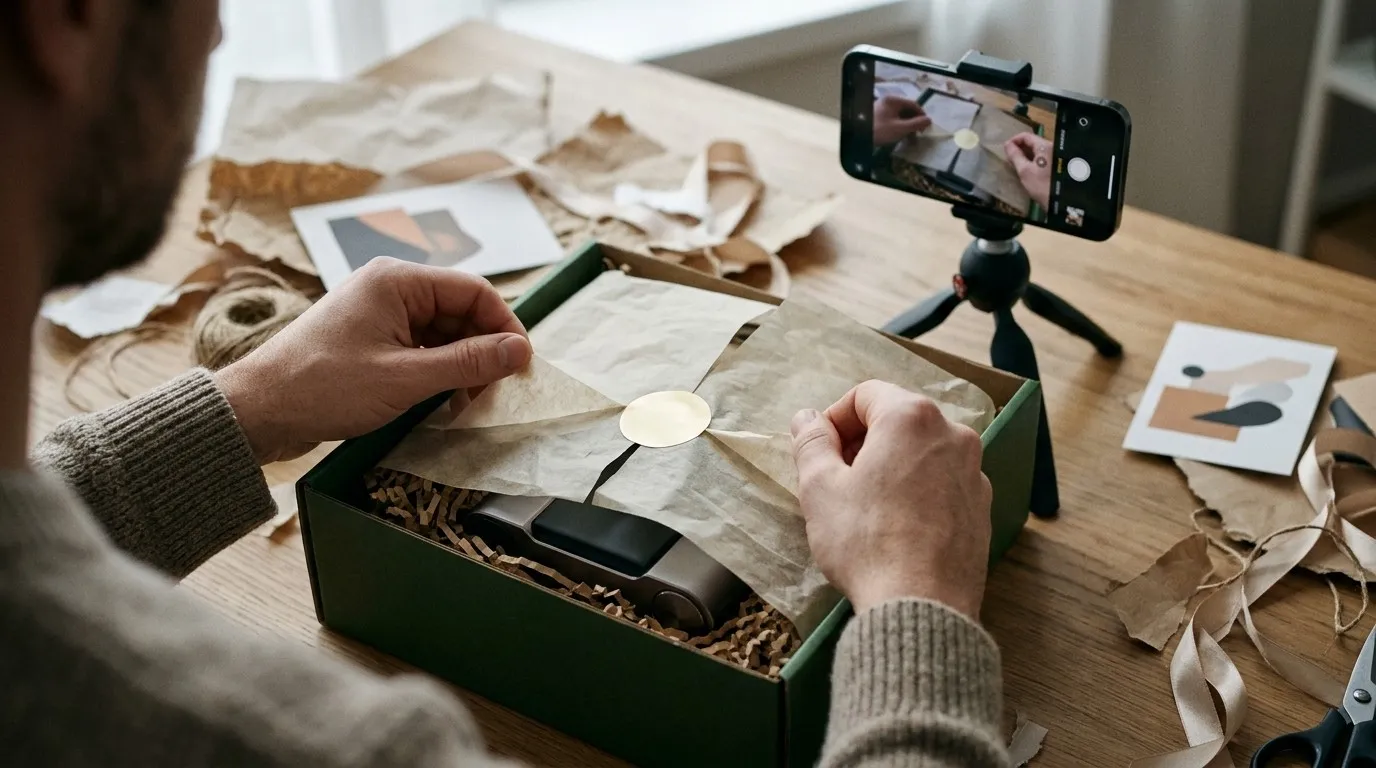
To create content that people genuinely want to share, brands need to understand what makes the unboxing process emotionally interesting.
The experience involves several psychological factors, including anticipation, curiosity, perceived value, identity, social recognition, and emotional satisfaction.
Anticipation Makes the Experience Exciting
The time between placing an order and receiving a product can create expectations.
Customers may imagine what the product will look like, how it will be presented, and whether it will meet their expectations.
Packaging becomes the first physical interaction that confirms or challenges those expectations.
Well-designed Product Unboxing Content captures the transition from anticipation to discovery. This emotional movement makes the experience interesting to watch.
Curiosity Encourages People to Keep Watching
An unboxing experience naturally contains a sequence of discoveries.
The viewer sees the outer packaging, waits for the box to open, discovers the first item, and gradually learns what else is included.
This creates a natural storytelling structure.
Brands and creators can use this sequence to maintain attention without adding artificial suspense or misleading editing.
For example, an electronics unboxing video might reveal the main product first, followed by accessories, documentation, and a quick setup demonstration.
Each reveal provides another reason to continue watching.
Surprise Strengthens Emotional Engagement
Unexpected but relevant details can make an experience memorable.
A handwritten thank-you message, a carefully arranged accessory compartment, or a useful bonus item may create a positive surprise.
However, surprises should match the brand and customer expectations. Adding irrelevant promotional materials can make the experience feel cluttered rather than thoughtful.
Product Unboxing Content becomes more interesting when the unexpected element improves the customer’s actual experience.
Social Identity Influences Sharing
People sometimes share purchases because those products represent their interests, lifestyle, hobbies, or personal achievements.
Someone purchasing professional photography equipment may enjoy sharing the setup with other photography enthusiasts. A customer buying a new skincare collection might share the experience with an audience interested in beauty and self-care.
The content becomes a way to express personal identity as well as demonstrate a purchase.
Brands can encourage this naturally by creating products and experiences that customers feel comfortable associating with their personal interests.
Recognition Can Motivate Customer Participation
Customers may appreciate being acknowledged by the brands they purchase from.
When a company features a customer’s unboxing video, responds thoughtfully to their post, or includes customer experiences in a community showcase, it can strengthen the relationship.
However, brands should always obtain appropriate permission before reusing customer-created material.
Design Packaging That People Want to Share
Packaging is one of the most important elements of the unboxing experience because it creates the first physical impression of a product.
An attractive advertisement may generate purchasing interest, but packaging determines how the brand appears when the delivery reaches the customer.
A Product Unboxing Content strategy should therefore consider the complete packaging experience rather than focusing only on its external appearance.
Start With a Strong First Impression
The outer box or delivery package should look clean, professional, and consistent with the brand’s identity.
Important considerations include:
- Appropriate packaging dimensions.
- Clear brand identification.
- Professional printing.
- Good material quality.
- Secure product protection.
- Attractive but practical presentation.
A premium brand does not necessarily need expensive materials. Consistency, attention to detail, and appropriate design can create a professional appearance without excessive costs.
Create a Thoughtful Internal Arrangement
Opening the package should feel organized rather than confusing.
Products should be positioned securely, accessories should be easy to identify, and important information should be visible.
For example, a technology brand might position the primary device centrally, place accessories in separate compartments, and include a clear setup guide.
A cosmetics company might use individual protective compartments to prevent leakage and present products in a visually organized arrangement.
The purpose is to make discovery easy and enjoyable.
Use Brand Colors Consistently
Brand colors help customers recognize the company and connect the delivery experience with its wider marketing identity.
Packaging, inserts, product labels, and thank-you cards can use coordinated design elements.
However, the design should remain readable and functional. Excessive visual decoration may distract from the product itself.
Add Personalized Touches
Personalization can make an ordinary purchase feel more thoughtful.
Some practical examples include:
- A short thank-you message.
- A customer’s name on an appropriate insert.
- A product care guide.
- A personalized recommendation.
- A message explaining the brand’s story.
Personalized elements should be accurate and genuinely useful. Incorrect names or generic messages pretending to be individually written can produce the opposite effect.
Balance Presentation With Sustainability
Beautiful packaging should not create unnecessary environmental waste.
Brands should consider recyclable materials, reusable packaging, responsible printing, and efficient package dimensions.
Product protection should remain the priority, particularly for fragile items. A damaged product creates a negative experience regardless of how attractive the original packaging looked.
Plan the Unboxing Experience Around the Customer Journey
An effective unboxing process should be designed as a sequence of connected moments.
Each stage creates an opportunity to improve customer satisfaction and provide something worth discovering.
The Delivery Moment
The experience begins before customers open the package.
Delivery condition, arrival timing, and packaging integrity influence the first impression.
Brands should maintain clear communication about order processing, dispatch, and expected delivery wherever possible.
A delayed or damaged delivery can negatively affect the experience before the customer sees the product.
The First Look Inside the Package
The initial reveal is often the most visually important stage.
Customers should be able to understand how the product is presented without removing several unnecessary layers of packaging.
A clean arrangement makes the product easier to photograph and record.
Product Unboxing Content should capture this first impression because it communicates the brand’s attention to presentation.
The Product Discovery Stage
After opening the main packaging, the customer starts examining the product and its included components.
This is an opportunity to show details that may not have been obvious in product photographs.
Accessories, labels, protective materials, instructions, and additional components can all contribute to the experience.
Brands should make sure that these elements are organized logically.
The First Interaction
The most important moment often occurs when customers first touch, assemble, activate, or use the product.
For example, a customer opening a wireless speaker may want to show its finish, buttons, accessories, and initial sound test.
A buyer receiving a fitness product might demonstrate how the device is adjusted or worn.
This stage can help potential buyers understand practical aspects of the product rather than simply seeing its packaging.
The Experience After Unboxing
A memorable experience should continue after the packaging has been removed.
Clear product instructions, accessible customer support, registration information, and helpful onboarding can reinforce the initial positive impression.
Brands should not treat unboxing as the entire customer experience. Product quality and after-sales support ultimately determine whether the excitement develops into lasting satisfaction.
Product Unboxing Content Ideas for Different Industries
Different product categories offer different opportunities for shareable experiences.
The format should match the product’s characteristics and the expectations of its target audience.
Electronics and Technology
Technology products are especially suitable for unboxing because customers often want to examine accessories, technical specifications, build quality, and initial functionality.
Potential content ideas include:
- Smartphone box opening.
- Laptop accessory presentation.
- Headphone design and first impressions.
- Gaming console setup.
- Smartwatch installation.
- Camera and lens accessories.
- Home technology demonstrations.
A creator should explain what is included without making unsupported claims about long-term performance.
Beauty and Skincare
Beauty products offer several visual storytelling opportunities.
Customers may be interested in packaging texture, bottle design, product colors, applicators, and how individual products fit into a routine.
An effective presentation can show the full collection, product consistency, and first impressions.
Brands should distinguish between showing a product during an unboxing and making claims about its performance. Results that require regular use should not be presented as immediate outcomes.
Fashion and Accessories
Clothing and fashion brands can create unboxing experiences around fabric presentation, folding, labels, product finishes, and styling suggestions.
A customer opening a new bag, pair of shoes, or clothing collection may naturally want to show how the item looks outside the packaging.
Packaging should protect the products while making them easy to remove and inspect.
Food and Subscription Boxes
Food products, snack collections, and subscription boxes often contain multiple items.
This creates opportunities for reveal-based content.
Creators can show the variety of products, packaging, flavors listed on labels, and the overall presentation.
Brands should ensure that food packaging meets applicable safety and labeling requirements and that products arrive in suitable condition.
Home and Lifestyle Products
Home accessories, furniture-related products, kitchen equipment, and decorative items can benefit from demonstrations showing assembly, included components, and placement.
The content becomes particularly useful when it helps customers understand product size, materials, setup requirements, or practical functionality.
Encourage Customers to Create Authentic Unboxing Videos
Customer participation is valuable, but people should never feel forced to produce promotional content simply because they made a purchase.
A better approach is to make sharing convenient, enjoyable, and optional.
Create a Simple Sharing Invitation
Brands can include a short message inside the package inviting customers to share their experience.
For example:
“Enjoying your new purchase? Share your unboxing experience and tag our brand. We love seeing how our products become part of your everyday life.”
The message should feel friendly rather than demanding.
Provide a Clear Brand Hashtag
A distinctive campaign hashtag can help customers find related posts and make it easier for the company to discover shared experiences.
The hashtag should be short, easy to spell, and relevant to the brand.
Avoid using several complicated hashtags that make the sharing process feel like an advertising assignment.
Make Recording Easy
Customers do not always have professional cameras, lighting equipment, or editing software.
A brand can share simple recording tips through its website or packaging insert.
For example:
- Record near a window or another well-lit area.
- Keep the product visible.
- Show the packaging before opening it.
- Capture the main product and included accessories.
- Explain the first impression naturally.
- Keep the video length appropriate for the platform.
Product Unboxing Content should not require expensive equipment to look engaging.
Reward Participation Without Buying Opinions
Some brands offer discounts, loyalty points, giveaways, or community recognition to encourage participation.
These approaches should be transparent.
A business should never require customers to provide positive reviews in exchange for rewards. Incentives, where offered, should be clearly disclosed, and the company should follow relevant platform policies and advertising rules.
Work With Creators to Expand Unboxing Reach
Influencers and content creators can help brands introduce their products to audiences that already follow their recommendations.
Their value does not come only from follower numbers. Audience relevance, credibility, content quality, and genuine interest in the product are important considerations.
Choose Creators Based on Audience Fit
A creator with a smaller but highly relevant audience may be more useful than a large account whose followers have little interest in the product category.
Before collaborating, brands should evaluate:
- Audience demographics.
- Content topics.
- Engagement quality.
- Previous brand collaborations.
- Communication style.
- Audience relevance.
- Content consistency.
Give Creators Creative Freedom
An unboxing video often performs better when the creator can communicate naturally.
Brands can provide product information, important guidelines, and required disclosures without scripting every reaction.
Authentic Product Unboxing Content should allow creators to express genuine first impressions rather than repeat promotional statements that sound unnatural.
Establish Clear Collaboration Agreements
Creator partnerships should clarify deliverables, deadlines, compensation, usage rights, disclosure requirements, and any content approval process.
Brands should also establish whether they can reuse creator videos in advertisements or on their own social channels.
Receiving a product for a collaboration does not automatically grant unrestricted rights to republish the creator’s material.
Turn Unboxing Into a Wider Creator Campaign
Instead of working with one creator, brands can develop a coordinated campaign involving creators from different audience segments.
For example, a home technology brand might collaborate with technology reviewers, home organization creators, and lifestyle publishers.
Each creator can introduce the same product from a different perspective.
The result is a broader collection of experiences that helps viewers understand how the product fits different needs.
Combine Unboxing With User-Generated Content Marketing
User-generated content (UGC) includes photos, videos, reviews, and other materials created by customers rather than directly by the brand.
Unboxing experiences provide a natural starting point for this type of marketing because customers are already interacting with a product and may want to share the experience.
Product Unboxing Content can become part of a larger UGC program when brands consistently encourage, discover, manage, and feature customer contributions.
A useful approach to UGC Product Promotion is to connect real customer experiences with the brand’s broader promotional activities.
This helps businesses move beyond traditional advertising messages by incorporating actual product experiences into their communication.
Build a Customer Content Collection
Brands should make it easy to discover relevant customer posts.
They can monitor campaign hashtags, tagged posts, customer mentions, and submissions through approved channels.
A centralized content library can help marketing teams organize content by product category, campaign, content type, and permission status.
Create a Customer Spotlight Program
Featuring selected customer experiences can encourage wider participation.
A company might publish a weekly customer spotlight highlighting an interesting unboxing video or photograph.
The selection should be based on content relevance and quality, not simply on whether the customer makes positive statements.
Obtain Permission Before Reusing Content
Customer-created content remains subject to applicable rights and platform conditions.
Brands should obtain appropriate permission before republishing videos or photographs in advertisements, websites, promotional emails, or other marketing materials.
Clear permission procedures also help businesses establish professional relationships with creators and customers.
Use Social Commerce to Turn Unboxing Attention Into Purchases
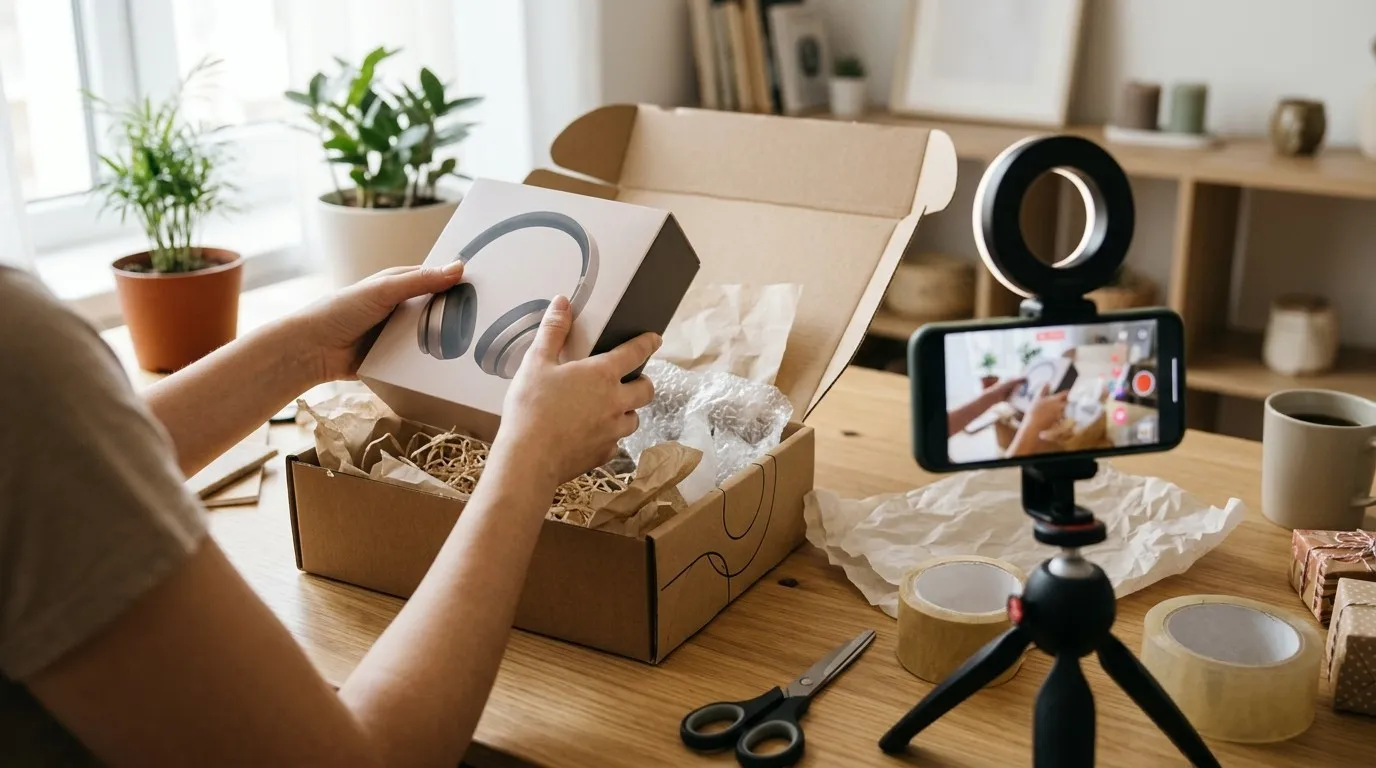
Social platforms have developed beyond simple content-sharing environments. Many now provide features that allow users to explore products, discover brands, and access purchasing opportunities.
An effective unboxing campaign can connect customer excitement with a practical path toward product discovery and purchase.
Social Commerce Marketing helps businesses connect social content with shopping experiences, making it easier for interested viewers to move from product discovery toward commercial action.
Make Products Easy to Discover
When sharing unboxing content, brands should provide accurate product names, relevant descriptions, and appropriate shopping links where supported.
Viewers should not have to search extensively to identify the product shown in a video.
Use Shoppable Content Carefully
Some social platforms support product tagging and shopping features.
These tools can make an unboxing experience more commercially useful by connecting viewers with product information.
However, tagging should remain accurate. The product shown should match the linked listing, and important pricing or availability information should be kept current.
Connect Social Engagement With Customer Questions
Comments often reveal what viewers want to know.
They may ask about dimensions, accessories, available colors, material quality, delivery, or product compatibility.
Brands should monitor these questions and provide accurate responses.
Product Unboxing Content becomes more valuable when it supports a useful buying conversation instead of generating engagement without addressing customer needs.
Promote Unboxing Campaigns Through Paid Advertising
Organic customer content can generate awareness, but its reach may vary depending on platform distribution and audience activity.
Paid promotion can help brands extend the visibility of selected unboxing experiences.
The advertising approach should match the campaign objective.
Identify the Right Audience
Brands should define who is most likely to find the product relevant.
Audience selection may involve interests, purchasing signals, demographic characteristics, geographic markets, and appropriate first-party audience information.
A relevant approach to Demand Gen Targeting can support campaigns designed to reach potential buyers beyond people actively searching for the product.
The goal is to introduce useful product experiences to audiences who may have a genuine interest in the category.
Use Visual Advertising to Support Product Discovery
Unboxing videos can demonstrate product presentation in a way that static advertisements may not communicate as clearly.
Brands can test different video openings, packaging reveals, product close-ups, and customer reactions.
For suitable campaigns, Google Display Ads may form part of a wider Google advertising approach, depending on the available campaign formats and targeting objectives.
Advertising decisions should be based on actual audience behavior, creative performance, and measurable conversion outcomes.
Promote Authentic Content Rather Than Overproduced Claims
Customer-generated videos can provide a different perspective from traditional studio advertisements.
However, brands should select content that is visually understandable, relevant to the audience, and supported by appropriate usage permissions.
The original message should remain authentic. Editing should not remove important context or make the customer appear to claim something they never said.
Create a Repeatable Unboxing Content Production Process
Businesses that want consistent results need a process for turning product experiences into usable marketing materials.
The production process should cover planning, recording, editing, publishing, and content management.
Develop a Content Brief
A content brief should define the campaign objective, product information, target audience, preferred format, mandatory disclosures, and publishing requirements.
Creators should also know which product details are important to show.
However, the brief should allow room for natural reactions and honest observations.
Structure the Video Around Important Moments
A practical unboxing video can follow this sequence:
| Video stage | What to show | Purpose |
|---|---|---|
| Opening | Product package and first impression | Establish context |
| Packaging reveal | Outer box and internal presentation | Show delivery experience |
| Product discovery | Main product and included components | Explain what customers receive |
| Detail shots | Materials, finish, and useful features | Demonstrate product quality |
| Initial interaction | First setup or basic use | Provide practical context |
| Closing | Overall first impression | Encourage further discovery |
The sequence can be adjusted according to the product and platform.
Pay Attention to Video Quality
Clear visuals and understandable audio are more important than complicated editing.
Creators should use stable camera positioning, adequate lighting, clean backgrounds, and appropriate framing.
Text overlays can help identify products or explain accessories, but the video should remain understandable without excessive visual decoration.
Produce Different Content Versions
One recording session may generate several useful assets.
For example:
- A full unboxing video.
- A short vertical clip.
- Product detail photographs.
- A behind-the-scenes story.
- A short first-impression review.
- A product setup demonstration.
This helps businesses develop a wider content library from a single customer experience.
Maintain a Consistent Publishing Schedule
Campaigns should be planned around product launches, seasonal promotions, customer deliveries, and other relevant marketing events.
An organized schedule helps teams coordinate creators, product availability, editing, approvals, and publication.
However, posting frequency should remain realistic. Consistent quality is more valuable than publishing large quantities of repetitive content.
Measure the Performance of Unboxing Campaigns
Marketing teams need to understand whether customer sharing is contributing to brand awareness, engagement, and sales.
The value of an unboxing campaign cannot be determined through view counts alone.
Product Unboxing Content should be measured using a combination of content engagement, audience behavior, and commercial indicators.
Track Reach and Awareness
Useful awareness metrics include:
- Video views.
- Unique reach.
- Impressions.
- Audience growth.
- Brand mentions.
- Hashtag usage.
These indicators show how widely the campaign is being distributed.
Measure Engagement Quality
Engagement can reveal whether viewers find the content interesting.
Relevant measurements include:
- Likes and reactions.
- Comments.
- Shares.
- Saves.
- Video completion.
- Profile visits.
- Product-related questions.
A high number of comments may be valuable when those comments demonstrate genuine interest in the product.
Monitor Website and Shopping Activity
Businesses should connect unboxing campaigns with suitable website analytics and sales reporting.
Useful indicators include:
- Referral traffic.
- Product page visits.
- Add-to-cart activity.
- Checkout initiation.
- Completed purchases.
- Campaign-assisted conversions.
Where appropriate, unique tracking links and campaign-specific landing pages can help businesses identify traffic sources.
Evaluate Customer Content Contributions
Another important indicator is the amount of usable customer-created content generated by the campaign.
Brands can monitor the number of submissions, publishing consistency, content quality, creator participation, and permission status.
A growing content library can provide additional material for future campaigns.
Measure Customer Acquisition and Revenue
The ultimate objective is to understand whether the marketing activity supports profitable business growth.
Companies should evaluate campaign expenditure alongside customer acquisition cost, conversion rates, average order value, and revenue contribution.
Not every unboxing view produces a purchase. Some content may influence brand awareness or future purchasing decisions over a longer period.
Brands should therefore use appropriate attribution methods and avoid assigning all sales to a single interaction without supporting evidence.
Common Mistakes That Make Unboxing Content Less Effective
Even well-funded campaigns can fail when businesses misunderstand what makes an unboxing experience valuable.
Recognizing common mistakes helps brands protect customer trust and create more useful content.
Prioritizing Appearance Over Product Protection
Beautiful packaging cannot compensate for damaged products.
Brands should test packaging materials, internal protection, transportation suitability, and package dimensions.
The product must arrive in the condition promised.
Making Every Unboxing Experience Look Identical
Consistency is important, but customers should not feel they are opening a promotional package designed only for cameras.
Overly repetitive arrangements, excessive branded inserts, and forced messages can make the experience feel artificial.
Product Unboxing Content should reflect genuine product discovery rather than a rigid advertising performance.
Forcing Customers to Create Content
Customers purchase products for their own needs, not to become unpaid advertising representatives.
Invitations to share should remain optional, and incentives should be transparent.
A brand that pressures customers to publish promotional content can damage the relationship it is trying to strengthen.
Using Creators Without Audience Research
Follower numbers do not automatically indicate relevance.
A creator may have a large audience but limited influence among people who are likely to purchase the product.
Brands should investigate audience quality, engagement, content history, and category relevance before arranging collaborations.
Ignoring Comments After Publishing
An unboxing video can generate useful questions that deserve attention.
Ignoring product questions or providing inconsistent answers reduces the value of the campaign.
Marketing teams should monitor responses and direct customers toward accurate product information.
Measuring Views Without Measuring Results
A video can receive considerable attention without generating relevant website visits or purchases.
Brands should connect content metrics with business objectives and evaluate the wider customer journey.
Build a 30-Day Product Unboxing Content Campaign
A practical campaign does not need to begin with hundreds of creators or a large production budget.
A focused 30-day implementation plan can help businesses test the approach and identify opportunities for improvement.
Days 1–7: Research and Campaign Planning
The first week should establish the campaign foundation.
Important activities include:
- Select the product or product category.
- Identify the target customer.
- Review competitor packaging and content.
- Define the campaign objective.
- Plan packaging presentation.
- Identify suitable customers or creators.
- Establish content guidelines.
- Determine measurement requirements.
Brands should also review whether their existing packaging protects products effectively.
Days 8–14: Packaging and Content Preparation
The second week should focus on designing and preparing the customer experience.
Activities may include:
- Finalizing packaging design.
- Organizing included materials.
- Creating a thank-you insert.
- Preparing sharing instructions.
- Developing creator briefs.
- Testing camera angles and video formats.
- Establishing content approval procedures.
A small pilot test can reveal packaging problems before the company distributes products more widely.
Days 15–21: Campaign Launch
The third week should introduce the unboxing experience to selected customers or creators.
Businesses can begin publishing approved content across relevant channels.
They should monitor customer reactions, engagement, questions, and content quality.
The purpose is to identify what viewers find interesting and which parts of the experience deserve more attention.
Days 22–30: Optimization and Promotion
The final stage should focus on learning from the initial campaign.
Marketing teams can identify the strongest content, organize customer contributions, respond to audience questions, and test suitable paid promotion.
They should also review the campaign’s performance against its original objectives.
The resulting information can guide packaging improvements, future creator partnerships, and the next unboxing campaign.
The Future of Product Unboxing Content

Customer expectations and digital content formats continue to evolve. Brands will need to adapt their unboxing experiences to changing shopping behavior, new technologies, and growing demand for authenticity.
Short-Form Video Will Continue to Support Discovery
Short-form videos provide a convenient way to reveal products, show packaging details, and capture quick reactions.
Businesses can use these formats to introduce products to audiences who may not watch longer reviews.
However, short content should still communicate something useful rather than relying entirely on visual effects.
Authentic Customer Experiences Will Remain Important
People often want to see how products appear outside professional advertising environments.
Customer experiences can provide additional context about presentation, included items, and practical first impressions.
Brands should continue prioritizing honest representation over artificial perfection.
AI Will Support Content Production
AI tools can assist marketing teams with video editing workflows, captions, content organization, performance summaries, and creative variations.
However, automated tools should not fabricate customer reactions, testimonials, or product experiences.
Product Unboxing Content should continue representing real interactions with actual products.
Personalization Will Become More Meaningful
Brands may increasingly organize customer experiences around individual preferences, purchase history, and product requirements.
Useful personalization can make packaging more relevant without creating unnecessary complexity.
The most successful efforts will combine thoughtful presentation with genuine customer value.
Unboxing Will Connect More Closely With Shopping Experiences
As social platforms continue developing product discovery and shopping features, unboxing experiences can provide a direct connection between content and purchasing decisions.
Customers may discover a product through a shared video, explore additional information, and visit a product page without searching across multiple platforms.
Brands should prepare for this opportunity by keeping product information accurate, shopping links accessible, and customer support responsive.
Conclusion
Product Unboxing Content gives brands an opportunity to transform everyday deliveries into memorable customer experiences and valuable marketing assets. Successful campaigns combine thoughtful packaging, authentic customer reactions, relevant creator partnerships, and effective content distribution. Businesses should prioritize product protection, genuine engagement, and measurable customer value rather than focusing only on visual presentation or social media views. By connecting unboxing experiences with user-generated content, social commerce, and performance measurement, brands can strengthen trust, encourage sharing, and create more meaningful purchasing relationships. Consistent improvement turns individual unboxing moments into opportunities for sustainable brand growth.
Frequently Asked Questions (FAQ)
What is Product Unboxing Content?
Product Unboxing Content includes videos, photographs, and social media posts showing customers opening products and discovering their packaging, accessories, presentation, and initial features. It helps potential buyers understand what receiving a particular product may actually look like before making a purchasing decision.
Why is product unboxing important for e-commerce brands?
Unboxing can strengthen brand perception, demonstrate packaging quality, encourage customer engagement, and create opportunities for organic exposure. For e-commerce businesses, it provides a visual representation of the delivery experience that traditional product descriptions and studio photographs may not fully communicate.
How can brands encourage customers to share unboxing videos?
Brands can encourage participation through friendly packaging inserts, simple recording suggestions, recognizable campaign hashtags, customer spotlights, and optional rewards. Invitations should remain voluntary, and businesses should never pressure customers to publish positive reviews or promotional statements.
What products are best for unboxing videos?
Electronics, beauty products, fashion accessories, subscription boxes, home products, gaming equipment, and lifestyle items are suitable for unboxing experiences. Products with interesting packaging, multiple accessories, distinctive presentation, or useful demonstrations often offer more visual storytelling opportunities.
How can small businesses create effective Product Unboxing Content?
Small businesses can start with existing packaging, natural lighting, a smartphone camera, and a simple recording structure. They should focus on product presentation, protective materials, useful accessories, and genuine first impressions. Professional equipment is not essential when the content is clear and authentic.
How long should an unboxing video be?
The ideal length depends on the product, platform, and purpose. A simple product may require a short video, while a complex electronic device may need a longer demonstration. Businesses should include the important discovery moments without unnecessary repetition or unrelated promotional material.
Does unboxing content help increase sales?
It can influence purchasing decisions by showing real product presentation, reducing uncertainty, and providing additional information. However, its commercial impact depends on audience relevance, product quality, content credibility, distribution, and the purchasing experience. Businesses should evaluate sales and conversion data rather than assuming every view produces revenue.
How can brands measure the success of unboxing campaigns?
Brands can measure reach, impressions, shares, saves, comments, video completion, customer submissions, referral traffic, product page visits, and purchases. They should also evaluate customer acquisition costs and revenue contribution to understand whether the campaign supports meaningful business objectives.
Should brands pay influencers to create unboxing content?
Paid creator collaborations can help brands reach relevant audiences and produce content consistently. The decision should depend on audience fit, creator credibility, content quality, and campaign goals. Compensation, gifted products, and other material relationships should be disclosed appropriately, and agreements should clearly establish content usage rights.
What makes Product Unboxing Content authentic and shareable?
Authenticity comes from genuine product experiences, natural reactions, transparent communication, and accurate presentation. Shareability increases when the experience is visually interesting, easy to understand, relevant to viewers, and worth discussing. Thoughtful packaging and meaningful customer participation can make an unboxing experience more memorable.