
Video Testimonials help brands replace vague marketing claims with real customer experiences, reduce buyer uncertainty, answer objections, and support more confident purchasing decisions across channels.
Customers rarely make decisions based on product claims alone. They want to know whether a product works for someone like them, whether the buying process is reliable, and what happens after payment. Video Testimonials can answer these questions in a human voice, showing a person describing an experience rather than asking the audience to accept a brand’s promises. When thoughtfully planned, Video Testimonials connect practical evidence with the emotions behind a purchase: relief, confidence, belonging, and the feeling of having made a sensible decision.
Video Testimonials are powerful, but a camera and a happy customer are not enough. Useful Video Testimonials need context, believable detail, clear permission to publish, and a place in the buying journey. Video Testimonials should not be scripted into unrealistic praise or edited until the original meaning disappears. Their purpose is to help prospective buyers understand an authentic customer experience and decide whether the same solution fits their situation.
This guide explains how to plan, record, edit, publish, and measure customer-story videos. It also covers consent, accessibility, distribution, conversion measurement, and common mistakes. Whether a company sells a physical product, a subscription, a professional service, or software, a repeatable Video Testimonials process can turn customer satisfaction into useful marketing evidence without sacrificing trust.
What Are Video Testimonials?
Video Testimonials are recorded accounts in which customers describe their experience with a product, service, business, or team. Video Testimonials can explain the problem a customer faced, how they discovered the brand, what changed after using the solution, and what they would tell someone considering the same purchase. Strong Video Testimonials are specific enough to be useful while remaining recognisably the customer’s own story.
Video Testimonials differ from traditional advertisements in emphasis. An ad usually begins with the brand’s message and frames the product around a planned selling point. Video Testimonials begin with the customer’s perspective: their needs, doubts, expectations, and results. The business still chooses the questions, context, and distribution, but the audience hears evidence delivered by a person who has actually experienced the offer.
Video Testimonials can take the form of a polished interview, a phone-recorded reflection, a short vertical clip, a case-study film, or a detailed customer walkthrough. Video Testimonials do not need expensive production to feel credible. Clear sound, understandable lighting, a relevant story, and honest editing are often more important than elaborate transitions or a cinematic background.
What makes Video Testimonials convincing?
Credibility comes from detail rather than exaggerated enthusiasm. A customer saying, “The service was amazing,” gives the audience little to evaluate. Someone explaining that the team helped them complete a difficult setup before a stated deadline provides context and a meaningful result. Strong Video Testimonials include a recognisable problem, a clear description of the experience, and an outcome that the customer can reasonably support.
The person should sound like themselves. Small pauses, natural expressions, and an ordinary speaking style can make Video Testimonials feel more trustworthy than a flawlessly rehearsed performance. The goal is not to preserve every stumble; it is to improve clarity without making the person appear to say something they did not mean.
Why Customer Stories Influence Buying Decisions

People look for evidence from people like themselves
Buyers often have limited information about the quality of a product before using it. They may therefore look at reviews, recommendations, demonstrations, and customer stories to estimate the likely experience. Video Testimonials add a face, voice, and narrative to the evidence. Viewers can hear how a customer describes the problem, see whether the explanation feels natural, and judge whether the situation resembles their own.
Similarity matters. A small business owner may pay closer attention to another small business owner than to a celebrity with a large advertising budget. A first-time buyer may value a story about onboarding and customer support, while an experienced buyer may care more about compatibility, performance, or long-term reliability. Video Testimonials become more relevant when the person, problem, and outcome reflect a clear audience segment rather than an imaginary “everyone.”
Stories make benefits easier to understand
Feature lists describe what a product includes; stories show how a feature fits into a real situation. Video Testimonials let customers explain how a tool reduced repetitive work, how a household product solved a daily frustration, or how a service helped them navigate a difficult process. Video Testimonials translate abstract benefits into outcomes a prospective buyer can picture.
Video Testimonials also make information easier to remember. A narrative gives details a sequence: the customer faced a problem, tried a solution, encountered an important moment, and reached an outcome. This does not mean every story needs dramatic transformation. A practical, ordinary improvement can be persuasive when it is relevant and honestly described. The best Video Testimonials help viewers connect the product to the decision they are trying to make.
Authenticity reduces perceived risk
Every purchase has some uncertainty. A customer may worry about wasting money, choosing the wrong supplier, struggling with setup, or receiving poor support. Video Testimonials can reduce some of that uncertainty by showing how another buyer experienced the same process. They cannot guarantee an identical result, but they can provide useful information beyond a brand’s own claims.
Avoid turning testimonials into proof that a product works for absolutely everyone. Outcomes may vary according to use, circumstances, experience, or other factors. Credible Video Testimonials explain the customer’s context and allow viewers to draw reasonable conclusions instead of promising an outcome that no single story can guarantee.
Choose the Right Testimonial Format
Different formats serve different needs. Before asking customers to record Video Testimonials, define what the audience needs to learn and how much time they are likely to spend watching them.
| Format | Best use | Main strength | Watch-out |
|---|---|---|---|
| Short customer clip | Social feeds and product pages | Quick, memorable point | Needs enough context to be credible |
| Interview | Considered purchases and services | Allows deeper explanation | Can become too long without editing |
| Case-study video | B2B, high-value products, complex services | Connects problem, process, and outcome | Claims need careful substantiation |
| Customer-recorded video | Community and ecommerce | Often feels informal and relatable | Sound and lighting may vary |
| Demonstration with customer commentary | Products that benefit from showing use | Combines an explanation with visible evidence | Avoid hiding limitations or difficult steps |
| Compilation | Broad awareness and common objections | Shows several perspectives | Individual stories can lose context |
Short-form and vertical stories
Short clips work well where viewers scroll quickly and sound may be muted. Open with a meaningful customer statement, identify the person or relevant context with permission, and use readable captions. Video Testimonials for short-form placements should deliver one clear idea rather than compressing an entire case study into twenty seconds. If viewers need more detail, link to a longer story or a page that answers the next question.
In-depth interviews and case studies
Longer stories suit expensive, complicated, or service-led decisions. They can explain the customer’s starting point, evaluation process, implementation, obstacles, and measured outcome. Video Testimonials of this kind should include enough context to make the results understandable, while avoiding unsupported causal claims. If several factors contributed to success, explain that rather than attributing every improvement to one product.
Customer-recorded content
A customer-recorded clip may be practical when customers are geographically spread out or a formal shoot would be inconvenient. Give participants a brief that covers the topic, suggested length, framing, sound, and consent process. Do not demand a memorised script. Video Testimonials should preserve the customer’s genuine language, even when the team offers gentle guidance on structure. For brands that blend customer stories with creator-led demonstrations, a useful reference is the approach to UGC Ads. Customer testimonials and user-generated advertising can overlap, but a testimonial should remain faithful to the speaker’s actual experience, and any material relationship with the brand should be disclosed when required.
Set Goals Before You Record
The first planning question is not “What should Video Testimonials look like?” It is “What decision should Video Testimonials help someone make?” Video Testimonials can introduce a brand, explain a complex feature, support a product comparison, address a common objection, or reassure someone near checkout. A single video may support more than one purpose, but choosing a primary purpose makes the interview more focused.
Define the target audience, the stage of the buying journey, the product or service being discussed, and the main uncertainty to address. Video Testimonials designed for someone who has never heard of the business should provide more background than a story placed beside a checkout button. Video Testimonials work best when their content matches the viewer’s information needs at that moment.
Agree on success measures before launch. For awareness, useful indicators might include qualified views, completion rate, or visits to a relevant page. For product-page use, monitor assisted conversions, add-to-cart behaviour, and questions asked by shoppers. For a sales team, track whether a story helps prospects progress through evaluation. Video Testimonials should be assessed against the job they were created to do, not simply by total views.
Find Customers With Stories Worth Sharing
A high customer rating can be a starting point for Video Testimonials, but it is not the only selection criterion. Someone who gives a thoughtful explanation of a real use case may offer a more useful story than someone who is enthusiastic but vague. Look for customers who can describe their original challenge, explain what mattered during the experience, and discuss a result without relying on superlatives. A selection process for Video Testimonials should prioritise relevance, clarity, and honesty.
Useful candidates may include repeat buyers, customers who successfully completed onboarding, people who overcame a specific challenge, or clients who can discuss a measurable process improvement. Seek variety across customer types, use cases, experience levels, regions, and accessibility needs when appropriate. A collection that features only one narrow type of person can leave other audiences wondering whether the product fits them.
When customer stories are also part of a word-of-mouth strategy, the programme should explain how invitations, attribution, and rewards work. A practical overview of E-Commerce Referral Marketing can help teams connect authentic recommendations with a transparent acquisition process. Keep the referral invitation separate from the customer’s editorial opinion so that compensation does not dictate what they say.
Do not pressure customers who decline. Avoid tying ordinary support, warranty coverage, or service quality to participation. If you offer a thank-you gift or compensation, disclose it where required and do not make positive sentiment a condition of receiving it. Video Testimonials retain value when participants feel free to describe their real experience, including reasonable limitations.
Ask Questions That Produce Specific Stories
The interview questions determine whether Video Testimonials contain useful evidence or generic praise. Ask open questions that encourage customers to describe situations in their own words. A good interviewer listens carefully and follows up when the response is vague. Video Testimonials should capture the customer’s perspective, not push them toward a predetermined line.
Interview questions to use
-
What problem were you trying to solve before you chose the product or service?
-
What alternatives did you consider, and what mattered most in your decision?
-
Was there anything you were unsure or concerned about before buying?
-
What was the experience of getting started like?
-
Which feature, service moment, or interaction proved most useful to you?
-
Can you describe a specific situation in which the product helped?
-
What changed after you began using it?
-
How would you explain the main benefit to someone with the same problem?
-
Was anything more difficult or different from what you expected?
-
What would you want a potential buyer to understand before making a decision?
These prompts are starting points, not a checklist to rush through. Choose a few that fit the customer and the goal for Video Testimonials. Ask for examples when a person says something broad such as “It saved time.” A follow-up like “Which task took less time, and how did you notice the difference?” can turn an unhelpful claim into a clear account. Video Testimonials should not push customers to invent numbers or disclose confidential information.
Avoid leading or loaded questions
Questions such as “How much better is our product than every competitor?” pressure a customer into an absolute claim. Instead ask what they compared, which factors influenced their choice, and what they have experienced since purchasing. Video Testimonials become more credible when they leave room for nuance and do not force customers to repeat marketing language.
If the customer mentions a result that sounds unusually strong, clarify the context and ask how it was measured. Record the explanation rather than assuming the claim is ready for publication. The team should verify factual statements and obtain permission for any customer information, company details, or confidential metrics that will appear in the finished video.
Record Clear, Natural Footage
Professional production can help, but technical simplicity is often enough. Choose a quiet location, place the camera at eye level, and use soft light that makes the customer’s face easy to see. Keep the background relevant without making it distracting. Video Testimonials should feel focused on the person’s experience, not on equipment or visual effects.
Sound quality deserves particular attention. A small microphone used in a quiet room often captures clearer speech than a distant camera microphone. Listen for ventilation, traffic, echo, and nearby conversations before recording. Ask the participant to speak naturally and pause between ideas; avoid making them repeat entire answers unnecessarily when a short clarification will do.
For remote recordings, send clear instructions in advance and test the connection, camera, and microphone. Offer a simple alternative if the customer struggles with the technology. Video Testimonials should not become a burden for the person contributing the story. When a participant prefers not to appear on camera for Video Testimonials, consider whether an audio interview or another consented format would meet the goal, while being transparent about how it will be presented.
Help customers feel comfortable
Explain where the recording may appear, how editing will work, and whether the customer can review sensitive factual details before publication. Make clear that the goal is a conversation, not a performance. Begin with easy questions and give the participant time to think. If someone is nervous while recording Video Testimonials, let them answer in their own words instead of repeatedly correcting their delivery. Natural confidence can matter more than polished speech in Video Testimonials.
Edit for Clarity Without Changing Meaning
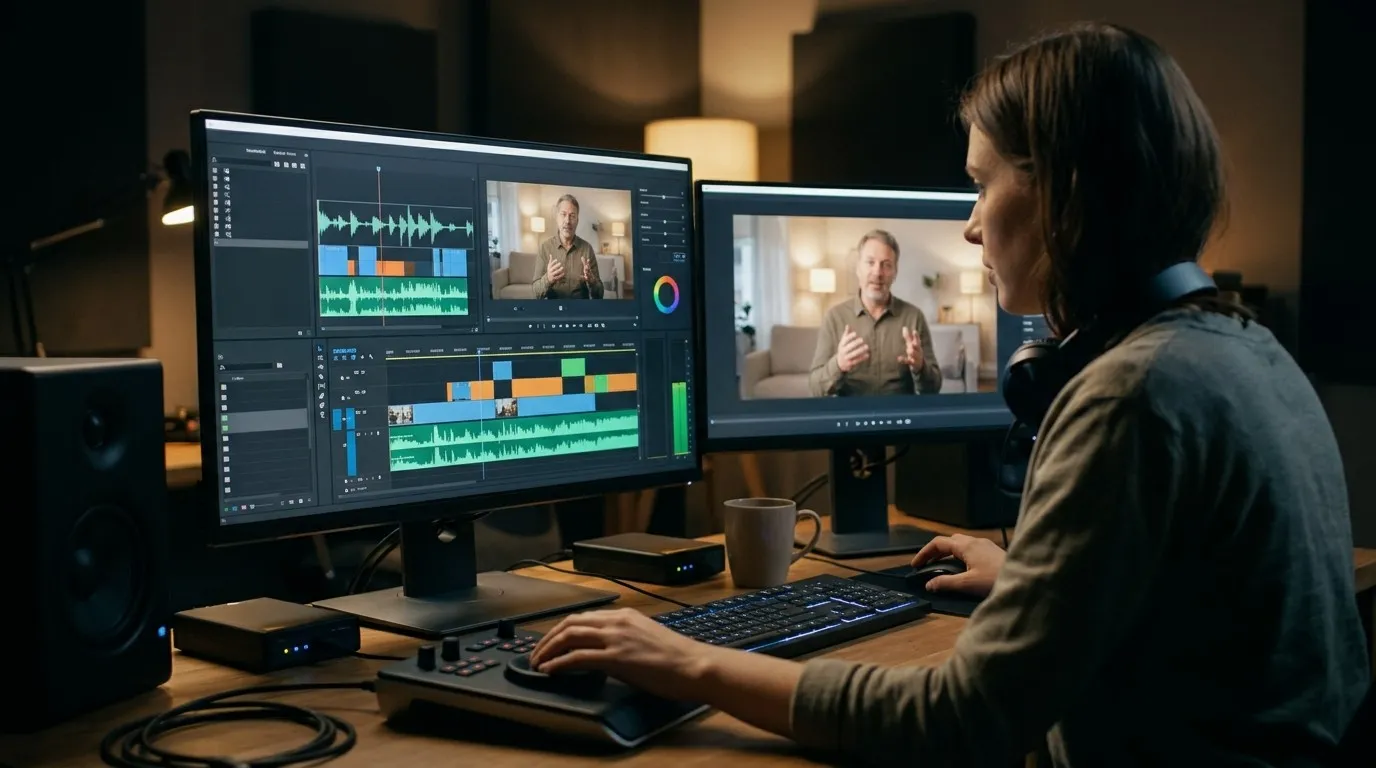
Editing should remove unnecessary repetition, long pauses, distracting errors, and irrelevant material while protecting the original meaning. A concise edit can make Video Testimonials easier to watch, but cutting a sentence from its context can make a customer appear to claim something they did not intend. Keep the full recording and an edit record so that factual questions can be resolved later.
Open Video Testimonials with the most relevant point, then provide enough context to understand it. Add a name, role, organisation, or location only when the person has consented and the detail is useful. Use captions to improve accessibility and make meaning clear when audio is off. Video Testimonials should remain understandable without relying on tiny text, fast visual changes, or music that competes with speech.
Avoid manipulative editing such as stitching separate answers into a misleading statement, changing the order to imply a false sequence, or adding graphics that exaggerate results. Music, colour correction, titles, and transitions should support Video Testimonials rather than manufacture emotion. If a quote needs substantial rewriting to fit the campaign, return to the customer for clarification or use a different part of the recording.
Captions, transcripts, and accessibility
Provide accurate captions, check names and product terms, and make sure text stays on screen long enough to read. A transcript can support search, accessibility, and people who prefer reading. Use strong text contrast and avoid placing captions where platform controls cover them. Video Testimonials should not communicate essential information through audio alone when an accessible text alternative can be provided.
Place Testimonials Where Buyers Need Reassurance
Distribution should follow the customer’s decision journey. Awareness content can show the problem and introduce the brand; comparison content can explain the experience of using a product; and purchase-stage content can address concerns about reliability, setup, service, or returns. Video Testimonials are more effective when placed near the question they answer instead of being uploaded to a channel and forgotten.
Product pages and landing pages
Place relevant Video Testimonials near the description, feature explanation, or decision point they support. Explain who the customer is and what they used, and avoid making viewers scroll past a lengthy video before they can understand the offer. Video Testimonials can support product pages when they answer real questions, but the page should remain fast, accessible, and easy to navigate.
Email and post-purchase communication
Video Testimonials can help a prospective customer who has asked for more information, while a follow-up email can point existing customers to a useful setup demonstration or support resource. Use consented and appropriate audiences, and make each message relevant to the recipient. Video Testimonials should not be inserted into every email merely because video content is available.
Social platforms and paid campaigns
Cut longer footage into platform-appropriate clips while preserving accurate context. Add readable captions, identify the customer clearly where permitted, and include a next step that matches the story. Video Testimonials can support paid campaigns, but audience targeting, disclosure, and claims still need to follow platform rules and relevant advertising law.
Connect Video With the Buying Experience
Video Testimonials can help shoppers understand a product, but the rest of the journey must make buying straightforward. Ensure the video links to the right product, shows current pricing, and does not describe features or promotions that are no longer available. Video Testimonials can lose credibility if viewers click through and find a different offer or discover that the product shown is discontinued.
For products that benefit from visual explanation, an interactive shopping format may shorten the distance between discovery and purchase. The guide to Shoppable Video explores ways to connect video viewing with product exploration. A brand should still keep the purchase controls clear, avoid accidental taps, and let customers inspect relevant details before placing an order.
Referral activity can extend the value of a positive customer story beyond the initial viewer. If a business invites satisfied customers to recommend a product, it should explain reward rules and avoid making Video Testimonials a condition of earning ordinary customer benefits. Video Testimonials should supply honest context; the referral programme should supply understandable rules.
Measure the Business Impact
Views and likes can indicate attention, but they do not automatically prove that Video Testimonials improve sales. Choose measures that match the page and objective. On a product page, examine video starts, meaningful watch time, product interactions, add-to-cart rates, checkout completion, and returns. For a sales enablement video, track whether prospects watch it and whether sales teams find it useful during a defined stage. Video Testimonials should be evaluated with a combination of behavioural and commercial evidence.
Use comparisons carefully
A simple before-and-after comparison can be misleading because traffic mix, price changes, promotion periods, and seasonality may also affect results. Where feasible, compare similar audiences or test pages with and without Video Testimonials. Make the test long enough to collect adequate data, and avoid changing several major elements at once. Video Testimonials can contribute to a purchase without being the only reason it happened, so attribution should reflect that uncertainty.
Look beyond immediate conversion
Video Testimonials can reduce support questions, help buyers choose the right product, and set realistic expectations. Monitor whether people who watch Video Testimonials return fewer items, ask more informed questions, or show stronger product understanding. A high conversion rate is not a win if the content misleads people and increases dissatisfaction later. Video Testimonials should support better decisions for customers as well as more effective marketing for the business.
Track production costs, participant incentives, editing, distribution, and maintenance when calculating return. Some videos remain useful for months; others become outdated when features, prices, or policies change. Review the content on a schedule and remove or update stories that no longer represent the offer. Video Testimonials need ongoing governance, not just a launch date.
Consent, Incentives, and Honest Claims
Before recording, obtain documented permission that describes the intended use, channels, duration where relevant, and whether the footage may be edited into shorter versions. Explain how the customer can ask questions about the use of their recording. Consent requirements vary by jurisdiction, so use an appropriate process for the markets where Video Testimonials will be shown. Video Testimonials should never be published on the assumption that agreeing to an interview means agreeing to every possible advertising use.
Disclose gifts, discounts, affiliate arrangements, employment relationships, or other material connections when required. Do not require customers to provide positive opinions in exchange for compensation. If you invite feedback from customers who have had different experiences, do not quietly publish only praise while claiming the selection represents all customers. Curated stories are acceptable marketing when presented honestly; fabricated or misleading evidence is not.
Substantiate objective claims before publishing. Statements about revenue growth, time saved, health outcomes, performance, or cost reduction may require records and context. Video Testimonials do not automatically make an otherwise unsupported claim safe to use. Video Testimonials should reflect what the customer actually experienced and should not imply that typical results are guaranteed when they are not. If results vary, make the relevant qualifications easy to notice and understand.
Respect privacy and confidentiality. Confirm that customers have authority to share any workplace information that appears in the recording. Remove visible personal details, account numbers, private dashboards, or sensitive information that is not needed for the story. Keep original files in secure storage with access limited to the people who need them. Video Testimonials are marketing assets, but the people featured in them deserve the same care as any other customer data.
Common Mistakes That Reduce Trust
Over-scripting the customer. A word-for-word script often sounds unnatural and can lead to claims the participant would not make independently. Share topics and example prompts, but let people answer in their own words. Edit for clarity rather than forcing everyone into identical phrasing.
Using only vague praise. “Great product” and “excellent team” do not explain why a buyer should care. Ask for a specific situation, decision factor, and outcome that can be supported. Useful Video Testimonials are concrete without exaggerating.
Showing the wrong customer story. A short review from an occasional low-value purchase may not answer the concerns of a buyer considering a complex enterprise service. Match Video Testimonials to the audience, product, and stage of decision-making.
Ignoring objections. A story that describes only the final success may feel incomplete if the buyer’s main concern is setup, compatibility, cost, or support. Include the questions the customer considered and how they resolved them, as long as the account remains accurate.
Making Video Testimonials difficult to watch. Poor sound, unreadable captions, slow loading, or an unclear opening can cause viewers to leave. Prioritise the basics before adding effects. Test on mobile devices and in muted playback.
Failing to refresh old footage. Video Testimonials may describe outdated packaging, an old interface, retired pricing, or a feature that has changed. Review key facts regularly and clearly date claims when context matters. A strong story can still become misleading if the offer around it changes.
A Repeatable Workflow for a Small Team

Start by collecting common customer questions from sales calls, support tickets, surveys, and product reviews. Group the questions by audience and buying stage, then identify which can be answered through Video Testimonials. Video Testimonials are easier to plan when the team knows the decision they need to support and the customer who can speak to it credibly.
For a Shopify store that wants to connect the content programme to referral tracking, a practical Shopify Referral Program Setup guide can help the team review invitation rules, attribution, and reward eligibility before launch. Make sure any referral mechanic complements the customer story rather than changing what a participant is expected to say.
Create a shortlist of participants, invite them without pressure, and explain the process before recording. Prepare a brief with the goal, likely interview topics, technical guidance, consent details, and expected review steps. Keep the schedule manageable for the customer. If an incentive is offered, document it and ensure it does not depend on a positive response.
Record more context than the final edit may need. Ask follow-up questions, clarify statements that are ambiguous, and note any claims requiring verification. After recording, create a rough transcript, select a narrative arc, and edit the footage without changing meaning. Video Testimonials should then pass factual, legal, accessibility, brand, and customer-approval checks appropriate to the use case.
Publish Video Testimonials in a relevant location, label them clearly, and add captions and a suitable next step. Track agreed success measures, gather feedback from sales and support, and revisit performance after enough time has passed. Maintain a simple library with the participant’s permission scope, recording date, key claims, product version, approved edits, and scheduled review date. This process makes Video Testimonials easier to scale without losing accountability.
Conclusion
Video Testimonials turn customer experience into practical evidence that helps prospective buyers understand a product, evaluate risks, and picture the benefits in their own lives. Their impact depends on authentic stories, thoughtful questions, clear production, accurate claims, and placement at the right decision point. Choose participants who can explain specific experiences, edit without distorting meaning, and obtain permission for every intended use. Measure commercial outcomes alongside customer understanding, and refresh content when products or policies change. When a business treats customers respectfully and communicates their stories honestly, Video Testimonials can build confidence, support better decisions, and contribute to sustainable sales growth.
Frequently Asked Questions (FAQ)
What are Video Testimonials?
Video Testimonials are recorded customer accounts about using a product, service, or brand. They share a real person’s experience, the problem they wanted to solve, and what happened, helping prospective buyers evaluate whether the same offer fits their needs.
Why are Video Testimonials effective in marketing?
They can make benefits more concrete by combining a person’s voice, context, and story. Video Testimonials may reduce uncertainty and answer common questions, especially when the customer has a relevant use case and the claims are honest and specific.
How long should Video Testimonials be?
The right length depends on the purpose and platform. A short social clip may focus on one benefit, while a detailed case study may need several minutes. Remove repetition, but keep enough context for viewers to understand the customer’s experience.
What questions should I ask customers on camera?
Ask about the original problem, alternatives considered, initial concerns, onboarding, a specific example of use, the resulting change, and what the customer would tell a similar buyer. Use follow-ups to clarify vague claims rather than suggesting answers.
Do testimonial videos need professional equipment?
No. Clear audio, steady framing, suitable light, and a quiet setting are more important than expensive equipment. A well-prepared phone recording can work, provided the video is understandable and the participant has consented to the planned use.
Where should I publish Video Testimonials?
Use relevant product and landing pages, email campaigns, sales presentations, and suitable social channels. Match the story to the question the audience needs answered, and make sure the page or next step accurately reflects the product being discussed.
Can I offer a reward for a customer testimonial?
A reward may be possible, depending on applicable rules, but it should not require a positive opinion. Disclose material connections where required and make sure Video Testimonials reflect a genuine experience. Do not misrepresent an incentivised testimonial as independent or uncompensated.
How can I measure whether testimonials increase sales?
Track meaningful video engagement and the outcomes connected to the page or sales stage. Where possible, use a fair comparison group and account for other changes. Include returns, customer satisfaction, and contribution margin rather than relying only on views or clicks.
What legal permissions do I need before publishing?
Use documented consent that covers the intended channels and use, and verify rights for any music, logos, images, or third-party information included. Requirements vary by jurisdiction, so businesses should use a process appropriate to the markets where they publish.
How often should testimonial videos be updated?
Review them whenever product features, pricing, service processes, or policies change, and schedule periodic checks even when no change is expected. Remove or revise outdated claims, confirm that permissions still cover the planned use, and keep the surrounding offer accurate.