Discover how businesses can validate product demand, build an interested audience, establish customer trust, and generate qualified buyers before officially launching a new product.
Launching a product without an existing audience is one of the biggest challenges businesses face. Companies can invest months in development, packaging, technology, inventory, and promotional activities, only to discover that potential customers are not interested enough to purchase. The problem is not necessarily the product itself. Often, the missing element is an effective strategy for creating awareness, understanding customer expectations, and building purchase confidence before the launch date.
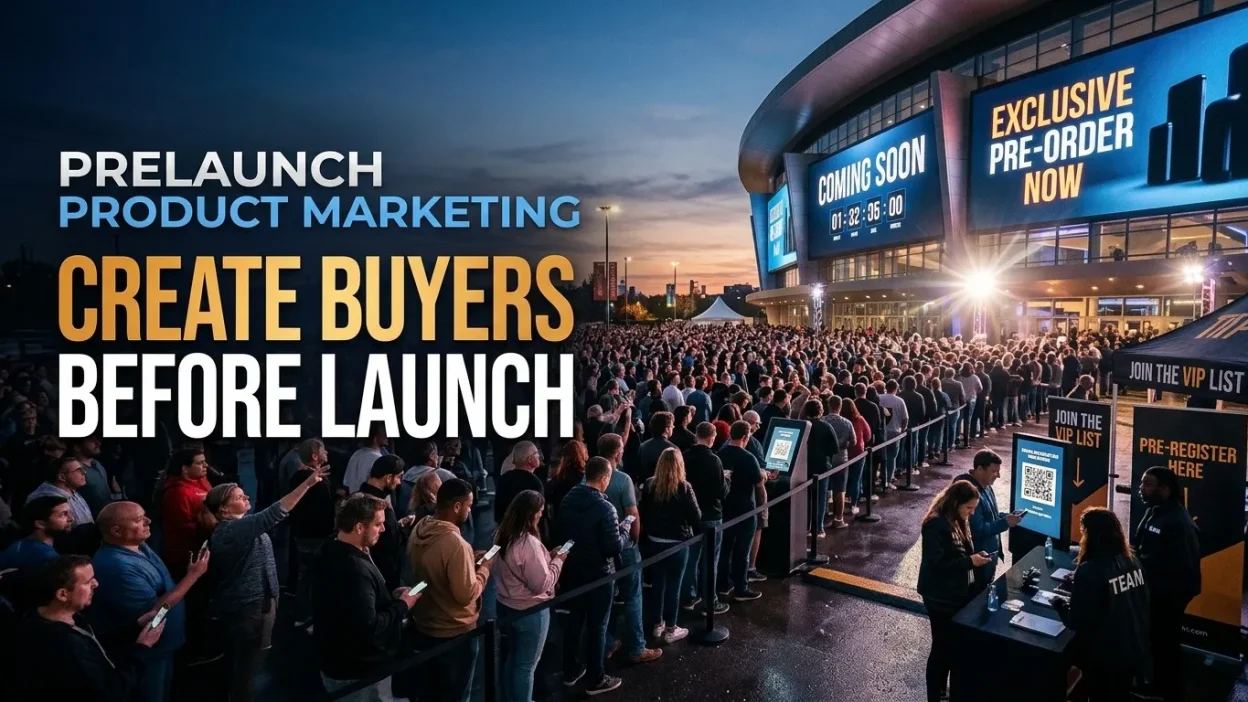
Prelaunch Product Marketing addresses this challenge by introducing a product to its intended audience before it becomes generally available. Instead of waiting until the product is ready and then beginning promotional activities, businesses start communicating earlier. They research potential customers, explain the problem their product solves, collect feedback, generate interest, and develop relationships with people who may eventually become buyers.
The objective is not simply to make people aware that something new is coming. An effective Prelaunch Product Marketing programme creates a measurable level of purchase interest and helps businesses understand whether their product has a genuine commercial opportunity.
Consider a company developing a new productivity application for small businesses. It could spend several months building the complete platform before introducing it to the market. However, a more thoughtful approach would involve speaking with business owners, sharing early product concepts, testing important features, and collecting expressions of interest. By the time the application becomes available, the company would already understand its audience and have a group of potential customers to approach.
This approach makes Prelaunch Product Marketing an important part of product development and commercial planning. It connects customer research with brand positioning, marketing communication, demand generation, and launch execution.
The ultimate goal is to reduce uncertainty before committing significant resources. Businesses should aim to understand who will buy, why they will buy, what might prevent them from purchasing, and how the product should be presented to make its value understandable.
Why Creating Buyers Before Launch Matters
Many businesses consider a product launch successful when they receive substantial attention on the launch day. Social media engagement, website visits, media coverage, and promotional impressions can create the appearance of strong demand. However, attention does not necessarily indicate purchasing intention.
People may enjoy watching a product announcement without having any interest in buying the product. Others may find the product attractive but remain uncertain about its usefulness, price, quality, or compatibility with their existing requirements.
Prelaunch Product Marketing addresses this difference by developing relationships with prospective customers before the purchasing opportunity becomes available. Instead of relying entirely on launch-day visibility, the company creates multiple opportunities for potential buyers to understand the product.
Reduce the Risk of an Unsuccessful Launch
Product development involves financial and operational commitments. Businesses may need to purchase inventory, arrange manufacturing, hire employees, prepare distribution systems, and invest in advertising.
Making all these decisions without understanding customer demand creates unnecessary risk.
A structured Prelaunch Product Marketing process can identify weak positioning, unexpected objections, and missing product features before the company makes larger commitments. It also helps management understand which audience segments demonstrate the strongest interest.
For example, a company launching an eco-friendly household product may initially expect environmentally conscious consumers to become its primary customers. During early research, it might discover that convenience, product durability, and affordability are more important purchase considerations than environmental positioning alone.
This information can influence pricing, communication, packaging, and product development.
Build Purchase Intent Before Availability
Customers rarely become ready to purchase simply because a company announces that a product is available. They usually need information, motivation, and confidence.
A well-developed Prelaunch Product Marketing strategy gradually helps prospects move through these stages.
First, they recognise a problem. Then they discover a possible solution. After that, they evaluate its advantages, compare alternatives, and decide whether the product deserves their money.
Each interaction should make the next decision easier.
A company can share educational content, provide demonstrations, invite users to explore early versions, and answer common questions. These activities create familiarity before customers are asked to purchase.
Improve the Economics of Customer Acquisition
Acquiring customers immediately after launch can require significant advertising expenditure. Businesses may need to spend heavily on brand awareness and audience education before generating meaningful sales.
Developing an interested audience beforehand can reduce some of this pressure.
When Prelaunch Product Marketing is implemented properly, companies may have access to an established email list, relevant community, early-access registrations, beta users, and people who have already expressed purchase interest.
This does not guarantee sales, but it creates a stronger starting position than launching with no existing relationships.
Define the Target Audience Before Promoting the Product
One of the most important decisions in any product launch is identifying the people who are most likely to purchase. A business cannot communicate effectively when it tries to appeal to everyone.
A broad target audience often leads to generic messaging. The company may describe numerous features without explaining why any particular customer should care.
Prelaunch Product Marketing should begin with audience definition rather than promotional design. The business needs to understand the people who experience the problem its product addresses.
Develop an Ideal Customer Profile
An ideal customer profile describes the characteristics of the customers most likely to benefit from the product.
For consumer products, these characteristics may include lifestyle, interests, purchasing behaviour, budget, location, and personal requirements.
For B2B products, research may involve company size, industry, annual revenue, employee numbers, operating model, existing technology, and purchasing responsibilities.
A company selling a financial management platform to small businesses, for example, might prioritise organisations with limited accounting resources and growing administrative requirements.
The profile should also include customer motivations. Understanding why someone might purchase a product can be more valuable than knowing their age or location.
Useful questions include:
- What problem does the customer experience regularly?
- How does the customer currently address that problem?
- What makes existing alternatives inconvenient or expensive?
- What would encourage the customer to consider a new solution?
- Which product benefits would influence a purchasing decision?
- What concerns could prevent the customer from buying?
- How much might the customer reasonably spend?
Prelaunch Product Marketing becomes more focused when these answers guide audience selection and communication.
Identify Different Customer Segments
Not every potential customer will value the same product benefits.
A premium smartphone accessory, for example, might appeal to technology enthusiasts, professionals, frequent travellers, and design-conscious consumers. Each group may have different purchasing motivations.
One segment might prioritise technical performance, while another values convenience or appearance.
Segmenting the audience allows companies to create more relevant messages rather than presenting identical promotional content to everyone.
| Customer segment | Primary motivation | Relevant marketing message |
|---|---|---|
| Early adopters | Access to innovation | Discover the product before general availability |
| Convenience-focused buyers | Saving time and effort | Make everyday activities easier |
| Budget-conscious buyers | Financial value | Understand the long-term value and pricing |
| Professionals | Productivity and reliability | Improve work efficiency and consistency |
| Enthusiasts | Features and performance | Explore product capabilities and specifications |
Understand the Customer’s Emotional Motivation
Purchasing decisions are not entirely rational. Customers also respond to confidence, convenience, identity, security, belonging, and the fear of making an unsuitable decision.
For instance, a person purchasing premium skincare may be motivated by product performance, but confidence in ingredients, brand credibility, and personal wellbeing may also influence the decision.
A Prelaunch Product Marketing campaign should identify both practical and emotional motivations.
However, emotional messaging should never replace accurate product information. The strongest campaigns connect meaningful benefits with believable evidence.
Conduct Market Research Before Investing in Promotion
A product can solve a genuine problem without having a sufficiently attractive market opportunity. Businesses must understand the existing competitive environment, customer expectations, and available alternatives.
Market research provides the information needed to evaluate these conditions.
Analyse Existing Competitors
Start by identifying direct and indirect competitors.
Direct competitors offer products that solve substantially similar problems. Indirect competitors may provide alternative methods of achieving the same outcome.
For example, a new project management application competes not only with other software platforms but potentially with spreadsheets, messaging applications, and established internal processes.
Examine competitor websites, product descriptions, pricing, customer reviews, social media discussions, and support documentation.
Look for repeated customer complaints and unmet expectations.
A company may discover that customers appreciate an existing product’s features but dislike its complicated interface. That finding could become an important positioning opportunity.
Prelaunch Product Marketing should use competitor research to identify opportunities for differentiation, not to copy competitors’ communication.
Investigate Search Behaviour
Search data can reveal how people describe their problems and what information they need before purchasing.
Research product-related queries, comparison searches, feature questions, pricing terms, and alternative solutions.
A business introducing a new standing desk, for example, may find that customers search for ergonomic desk benefits, adjustable height options, workspace comfort, and product durability.
These queries reveal useful content opportunities.
Search behaviour also helps businesses understand the customer’s level of awareness. Someone searching for a specific product model has different expectations from someone searching for ways to improve workplace comfort.
Collect Direct Customer Feedback
Interviews, surveys, demonstrations, and early-access discussions provide information that third-party research may not capture.
Ask potential customers to describe their existing experiences rather than simply asking whether they like the proposed product.
Questions such as “What is the most frustrating part of your current solution?” often reveal more useful information than “Would you buy our product?”
A good Prelaunch Product Marketing research process also investigates objections. Potential customers may be interested but unwilling to purchase because of installation requirements, switching costs, uncertainty about quality, or concerns about ongoing maintenance.
These objections should influence the launch plan.
Validate the Problem Before Promoting the Solution
A common mistake is assuming that a product idea automatically represents a strong market opportunity.
Business owners may become emotionally invested in their concepts and interpret positive comments as evidence of demand. However, people can appreciate an idea without intending to pay for it.
Problem validation establishes whether a meaningful group of customers actually experiences the issue the product is designed to solve.
Distinguish Interest From Purchase Intent
A person who likes a product announcement may simply enjoy discovering something interesting.
A person who joins an early-access list may demonstrate stronger interest. Someone willing to provide detailed feedback, attend a demonstration, request pricing, or place a refundable deposit may provide an additional commercial signal.
These actions are not equally valuable.
Prelaunch Product Marketing should classify customer interest according to the commitment demonstrated.
| Customer action | What it may indicate | Strength of signal |
|---|---|---|
| Social media like | General attention | Low |
| Content engagement | Topic interest | Low to moderate |
| Landing-page visit | Active consideration | Moderate |
| Waitlist registration | Expressed interest | Moderate |
| Product demonstration request | Evaluation intent | Strong |
| Pricing enquiry | Commercial consideration | Strong |
| Paid reservation | Financial commitment | Very strong |
The strength of a signal also depends on the context. For example, a low-cost reservation may not predict the same purchasing commitment as a substantial business deposit.
Use Minimum Viable Product Testing
A minimum viable product, or MVP, provides an opportunity to test important assumptions without completing every planned feature.
Businesses can offer early versions to selected users, allowing them to evaluate functionality, usability, and practical value.
For a software startup, this might involve granting access to a limited platform. For a consumer product, it may involve testing prototypes with a controlled group.
The objective is to discover whether the proposed solution works in real conditions.
Prelaunch Product Marketing benefits from this feedback because promotional messages can be based on observed customer experiences rather than assumptions made during development.
Consider Reservations and Preorders Carefully
Where appropriate, businesses may test purchasing interest through early reservations or preorders.
However, the terms must be transparent. Customers should understand expected availability, delivery estimates, cancellation arrangements, and what happens if the product is delayed or changed.
Do not use artificial scarcity or misleading delivery promises to create false urgency.
A reservation programme is most useful when the company can fulfil its commitments and communicate uncertainty honestly.
Develop a Strong Product Positioning Strategy
Positioning determines how customers understand a product in relation to their needs and existing alternatives.
A company may have an excellent product but struggle to sell it because customers cannot quickly understand what makes it different.
Effective positioning answers three important questions:
What is the product? Who is it designed for? Why should someone choose it instead of another option?
Identify the Main Value Proposition
A value proposition explains the most important benefit customers receive.
Avoid describing the product exclusively through technical specifications.
A software company might say that its platform includes advanced automation, cloud infrastructure, and configurable dashboards. These details explain capabilities, but they do not necessarily communicate the customer benefit.
A stronger message might explain that the platform reduces repetitive administrative work and helps teams manage operations more consistently.
Prelaunch Product Marketing should translate product capabilities into understandable outcomes.
A useful value proposition generally includes:
- The audience the product is designed to help.
- The problem or requirement it addresses.
- The primary benefit customers can expect.
- The reason the product is meaningfully different.
- Evidence that supports its main claims.
The message should remain realistic. Avoid guarantees that cannot be substantiated.
Establish Meaningful Differentiation
A product does not need to be completely revolutionary to succeed.
It may offer a better customer experience, more convenient delivery, greater reliability, simpler onboarding, stronger support, or more flexible pricing.
The important question is whether the difference matters to the intended buyer.
Research competitor limitations and identify the product characteristics that can genuinely improve the customer’s experience.
A Prelaunch Product Marketing campaign should focus on a small number of memorable benefits rather than overwhelming the audience with every available feature.
Create Consistent Brand Messaging
Product messaging should remain consistent across the website, email campaigns, advertising, social media, demonstrations, and sales materials.
Different channels can communicate different aspects of the product, but the underlying value proposition should remain recognisable.
For example, a productivity product may emphasise time savings in advertising, workflow improvements in educational content, and measurable operational benefits in a product demonstration.
This consistency helps customers build a clearer understanding of the offer.
Create an Early-Access Offer That Encourages Action
An interested prospect may still have little reason to take action before the product becomes available.
An early-access offer provides a practical reason to engage before the public launch.
It can include priority access, limited beta participation, introductory pricing, additional features, exclusive information, or an opportunity to influence product development.
Prelaunch Product Marketing should make the benefits of early participation clear without creating unnecessary pressure.
Choose the Right Early-Access Model
Different businesses require different approaches.
A software company may offer a free beta programme. A consumer brand may introduce an early reservation system. A B2B supplier may invite selected companies to participate in a pilot.
The choice should reflect the product’s maturity and the amount of commitment expected from participants.
| Early-access model | Suitable for | Main purpose |
|---|---|---|
| Waitlist | Consumer and software products | Build an interested audience |
| Private beta | Software and digital products | Gather practical feedback |
| Pilot programme | Enterprise solutions | Validate business use cases |
| Early reservation | Physical products | Measure purchase commitment |
| Founder offer | Startups and new brands | Reward early supporters |
| Preview event | Complex or premium products | Demonstrate product value |
Use Incentives Without Damaging Product Value
Discounting is not always the best way to attract early buyers.
A premium product may benefit more from exclusive access, personalised onboarding, additional support, or an extended introductory package.
Heavy discounts can create expectations that become difficult to maintain after launch.
A thoughtful Prelaunch Product Marketing offer should encourage action while protecting long-term positioning and profitability.
Build an Effective Prelaunch Landing Page
A dedicated landing page gives prospective customers a central destination for understanding the product and expressing interest.
Instead of sending every prospect to a general homepage, businesses can create a focused experience that explains the product’s value and encourages a specific action.
Write a Clear Headline
The headline should communicate the primary customer benefit.
Avoid vague statements that only announce something exciting is coming.
For example, a company introducing a new appointment management platform could focus on helping service businesses organise bookings and reduce scheduling confusion.
The headline should make the intended audience and value understandable within a few seconds.
Explain the Product Benefits
Describe the problem, how the product addresses it, and the most important features.
Use clear language that reflects customer understanding.
Prelaunch Product Marketing landing pages should not contain unsupported superlatives or exaggerated claims. A visitor should be able to distinguish confirmed capabilities from planned features.
Introduce Trust Elements
Visitors may hesitate to provide their details to an unfamiliar company.
Trust can be developed through transparent company information, founder introductions, product demonstrations, relevant qualifications, credible reviews, and clear contact details.
Where the product is still being developed, explain its current status honestly.
Do not present prototype images as completed retail products without appropriate context.
Keep the Registration Process Simple
A waitlist or early-access form should request only the information needed for the next interaction.
An initial form might include a name and email address. A B2B product may need company information and job role to qualify the account.
The purpose is to reduce unnecessary friction while gathering enough information to communicate appropriately.
Important landing-page elements include:
- Clear product positioning.
- A concise explanation of customer benefits.
- Relevant product visuals or demonstrations.
- A visible early-access call to action.
- Transparent availability information.
- Privacy information and clear communication preferences.
- A confirmation message explaining what happens next.
Prelaunch Product Marketing landing pages should be tested on mobile devices because a significant proportion of social and search visitors may reach them through smartphones.
Use Content Marketing to Educate Potential Buyers
People often need more information before they become confident enough to purchase a new product.
Content marketing gives businesses an opportunity to answer questions, demonstrate expertise, and explain why the product is relevant.
Instead of publishing promotional announcements repeatedly, companies should create educational resources that help their intended customers understand the underlying problem.
Publish Problem-Focused Educational Content
Start with the difficulties customers experience.
A company developing a personal finance application might publish educational articles about budgeting mistakes, expense tracking, financial organisation, and common money-management challenges.
This content creates relevance before the product becomes the centre of attention.
Prelaunch Product Marketing becomes more effective when educational material connects naturally to the upcoming solution without turning every article into an advertisement.
Create Comparison and Decision-Making Resources
Customers often compare alternatives before purchasing.
Businesses can publish guides explaining relevant product categories, important features, buying considerations, and common limitations.
For example, a new ergonomic chair brand may explain adjustable support, material quality, workspace requirements, and factors influencing long-term comfort.
Comparison resources should be fair and accurate.
Avoid presenting competitor products dishonestly simply to make the new offer appear superior.
Demonstrate the Product Through Visual Content
Images, product walkthroughs, demonstrations, short videos, and interactive examples help visitors understand products that are difficult to explain through text alone.
A short demonstration might show how a new application works, how a physical product is assembled, or how a particular feature addresses a common customer problem.
Visual content is especially important when customers need to understand design, functionality, usability, or product scale before purchase.
Use Influencer Partnerships and UGC Ads to Build Early Awareness
Influencer partnerships can introduce a new product to audiences that already have an interest in the relevant category.
However, follower counts alone are not a reliable measure of partnership value.
Businesses should evaluate audience relevance, engagement quality, creator credibility, content style, and the creator’s ability to explain the product naturally.
For a new skincare brand, collaborating with a creator whose audience regularly explores skincare routines may be more valuable than choosing a general lifestyle influencer with a substantially larger following.
Select Creators Based on Audience Alignment
Start by identifying creators who communicate with the intended customer segment.
Examine their previous collaborations, content quality, audience interests, and how they respond to questions.
A creator should have sufficient understanding of the product to explain its benefits accurately.
Prelaunch Product Marketing partnerships should also establish clear deliverables, usage permissions, content approval arrangements, and disclosure expectations.
Paid partnerships should be presented transparently. Businesses should not ask creators to hide commercial relationships or manufacture personal experiences.
Encourage Authentic Product Demonstrations
Product demonstrations can help audiences understand how an offer works in everyday situations.
Creators may show packaging, functionality, setup, user experience, or relevant product benefits.
Customer-style creative can also be developed through UGC Ads, particularly when brands want advertising material that communicates through relatable experiences rather than traditional promotional production.
The most effective content is relevant, honest, and easy to understand.
If the product is not yet publicly available, communicate clearly whether the creator is demonstrating a prototype, early version, or final product.
Measure Creator Campaign Contribution
Do not evaluate partnerships solely through views, likes, or follower growth.
Measure relevant website visits, qualified registrations, early-access requests, attributable enquiries, and purchases where tracking is available.
Use campaign-specific landing pages and properly configured tracking links to understand which partnerships contribute meaningful interest.
A smaller creator campaign producing highly relevant registrations may be more valuable than a larger campaign attracting broad but unsuitable attention.
Develop Credibility Through Beta Users and Product Feedback
Early users provide an important opportunity to test the product before a wider audience experiences it.
They can reveal usability problems, unclear instructions, missing features, unexpected technical issues, and customer expectations that the development team may have overlooked.
A carefully managed beta programme also helps generate credible customer evidence.
Choose the Right Beta Participants
Do not select beta users randomly.
Prioritise people who represent the intended customer profile and are willing to provide specific feedback.
A software company may select users from different business sizes to understand whether the platform works across multiple operational environments.
A consumer brand may test a product with people who have different usage patterns and expectations.
Prelaunch Product Marketing should define what the company wants to learn from each participant.
Create a Structured Feedback Process
Beta participants need a convenient way to report problems and explain their experiences.
Businesses can use surveys, interviews, feedback forms, moderated discussions, and product analytics.
Ask questions about ease of use, expected benefits, missing functionality, and barriers to continued usage.
Avoid asking only whether users like the product.
A stronger research question is: “What would make this product useful enough for you to use regularly?”
Turn Feedback Into Product Improvements
Feedback has limited value when the company collects it but makes no meaningful changes.
Organise findings according to severity, frequency, customer impact, and development requirements.
Separate individual preferences from recurring problems.
A feature requested by one participant may not justify significant development resources. However, a usability issue affecting most testers should receive more attention.
Communicate relevant changes to participants so they understand that their contribution matters.
Build Social Proof With Video Testimonials and Customer Stories
Trust is particularly important when customers are considering a new product from an unfamiliar brand.
They may question product quality, reliability, performance, delivery, and the company’s ability to provide ongoing support.
Evidence from genuine users can help address these concerns.
Collect Feedback From Real Early Users
Once beta participants or pilot customers have meaningful experience with the product, ask whether they are willing to share their feedback.
The request should be voluntary and should not imply that only positive comments are acceptable.
Useful customer stories explain the original challenge, the customer’s experience, and the practical outcome.
Avoid inventing testimonials or suggesting that every customer will achieve an identical result.
Create Useful Customer-Focused Videos
Video can communicate tone, experience, and product interaction more naturally than a short promotional statement.
For businesses developing this type of material, Video Testimonials can provide a useful reference for presenting customer experiences in a way that helps prospective buyers understand real product value.
A strong customer video should address specific questions:
- What problem existed before using the product?
- Why did the customer consider the solution?
- What was the initial experience?
- Which features or benefits proved most useful?
- Would the customer recommend it to similar users, and why?
Use Social Proof Responsibly
Customer feedback should represent genuine experiences.
Obtain permission before publishing identifiable customer stories, photographs, or recordings.
Make sure the context remains accurate and avoid editing comments in ways that change their meaning.
Prelaunch Product Marketing benefits from credibility, but credibility disappears when a company exaggerates results or presents fictional customer experiences.
Build an Email Waitlist That Maintains Purchase Interest
A waitlist provides a direct communication channel between a business and people interested in its upcoming product.
Social media platforms can help generate awareness, but businesses have limited control over who sees every organic post. An email list creates a more dependable way to share relevant information with people who have actively registered.
Offer a Clear Reason to Subscribe
People are more likely to share their details when they understand what they will receive.
The business might offer early product access, launch notifications, product-development updates, exclusive demonstrations, or a genuine introductory benefit.
Do not promise exclusive advantages that the company cannot deliver.
Prelaunch Product Marketing email campaigns should set realistic expectations about the type and frequency of future communication.
Segment the Waitlist
Not every subscriber has the same motivation.
A business may distinguish between general interest, feature-specific interest, beta participation, purchasing enquiries, and enterprise opportunities.
For a B2B product, the company may also segment subscribers according to industry, company size, and job role.
Segmentation allows the business to send more relevant messages.
A technical buyer may value integration details, while a senior decision-maker may want to understand operational benefits and financial justification.
Build a Meaningful Email Sequence
A prelaunch email sequence should create understanding and confidence over time.
| Email stage | Main purpose | Suggested content |
|---|---|---|
| Welcome | Confirm registration | Thank the subscriber and explain next steps |
| Problem awareness | Establish relevance | Explain the challenge the product addresses |
| Product introduction | Build understanding | Share benefits and core features |
| Demonstration | Reduce uncertainty | Show how the product works |
| Proof and feedback | Develop trust | Share genuine user experiences |
| Launch announcement | Encourage action | Explain availability and purchasing options |
The sequence should not become a repetitive series of promotional messages.
Each communication should offer something useful.
Respect subscribers’ communication preferences, provide appropriate unsubscribe options, and handle personal information responsibly.
Use Paid Advertising to Test and Accelerate Prelaunch Demand
Paid advertising can help businesses reach a defined audience before their products become publicly available.
It is particularly useful when the company needs to test different messages, introduce product concepts, or accelerate registrations beyond the reach of existing channels.
However, spending more money does not automatically create stronger purchase intent.
Prelaunch Product Marketing campaigns should use paid media to test commercial assumptions and understand which audiences respond to the offer.
Start With a Defined Advertising Objective
A campaign objective might focus on awareness, landing-page visits, registrations, demonstration requests, or preorder activity.
The objective should reflect the maturity of the product.
For example, a company introducing an unfamiliar product category may initially need educational reach. A brand with an established audience and validated demand may focus more directly on reservations or purchases.
Using an inappropriate objective can lead to misleading performance conclusions.
Test Creative Concepts and Messages
Create different advertisements around the product’s most important customer benefits.
One version might highlight convenience, another performance, and another a particular problem the product solves.
Test these messages with suitable audience segments.
Do not assume that the advertisement receiving the most clicks will generate the strongest buyers.
A smaller number of qualified registrations may provide more commercial value than a much larger number of low-intent visitors.
Optimise for Meaningful Business Value
As prelaunch campaigns generate more data, businesses can evaluate which audience groups and marketing messages produce the strongest commercial signals.
The focus should gradually move beyond inexpensive interactions towards meaningful actions.
For teams managing paid acquisition alongside product-launch activity, understanding Value-Based Bidding is useful when designing campaigns around the value of different customer actions rather than treating every conversion as equally important.
For example, a qualified enterprise demonstration request may have significantly greater commercial value than a general newsletter subscription.
Maintain Budget Discipline
Divide the budget into research, creative testing, audience development, and campaigns designed to generate high-intent actions.
Begin with controlled spending and increase investment only when results justify expansion.
Prelaunch Product Marketing budgets should also account for the possibility that early tests reveal weak demand.
Sometimes the most valuable result of an advertising experiment is discovering that a particular positioning or audience segment should not receive additional investment.
Combine Demand Generation and Search Intent
Different marketing channels perform different roles during the customer journey.
Some channels introduce a product to people who were not actively looking for it. Others help reach individuals who already recognise a problem and are searching for possible solutions.
Understanding this distinction helps businesses develop a more balanced acquisition plan.
Generate Interest Through Discovery Channels
Social media, video platforms, creator partnerships, display advertising, and professional communities can expose a product to relevant audiences.
These channels can help businesses introduce unfamiliar ideas and communicate benefits through visual or educational content.
However, initial awareness does not necessarily mean that someone is ready to purchase.
Prelaunch Product Marketing should therefore connect discovery activities with an opportunity for further engagement, such as a useful guide, product demonstration, or early-access registration.
Capture Existing Search Demand
Search campaigns can reach people actively looking for product-related information or alternatives.
Search behaviour can reveal customers who are already researching a category and may be closer to making a decision.
A new brand can create relevant content around product problems, buying considerations, category comparisons, and common questions.
Search marketing should be supported by landing pages that accurately answer the queries being targeted.
Choose Channels According to Customer Intent
Businesses comparing different paid acquisition approaches may benefit from understanding Google Demand Gen vs Search, particularly when deciding whether the priority is introducing a product to new audiences or reaching people already expressing active search intent.
Neither channel is automatically superior.
The appropriate choice depends on product awareness, audience behaviour, campaign maturity, and the commercial action being measured.
A balanced Prelaunch Product Marketing plan may use discovery channels to create initial interest and search-oriented campaigns to capture demand as customer awareness develops.
Create a Prelaunch Content and Communication Calendar
Consistency matters when building an interested audience over several weeks or months.
Publishing randomly can make the product disappear from customers’ attention. Publishing repetitive promotional content can create fatigue.
A communication calendar provides a practical structure for sharing information throughout the period before launch.
Organise Content Around Customer Questions
Plan content according to the concerns prospective customers may have at different stages.
Early content can explain the problem. Later material can introduce the product, demonstrate its benefits, answer objections, and present genuine customer feedback.
A useful calendar includes:
- Product-development updates.
- Educational guides.
- Product demonstrations.
- Feature explanations.
- Behind-the-scenes content.
- Customer feedback and beta experiences.
- Frequently asked questions.
- Early-access announcements.
- Launch reminders.
Prelaunch Product Marketing should prioritise consistency and usefulness rather than publishing a high volume of low-value posts.
Use a Balanced Communication Schedule
A practical schedule might include two or three useful social media updates each week, a regular email to opted-in subscribers, and a more substantial educational resource at appropriate intervals.
The exact frequency depends on the audience, product complexity, and available content resources.
Review engagement and unsubscribe trends rather than assuming that more messages automatically produce more interest.
Maintain a Recognisable Brand Experience
Use consistent visual elements, language, product positioning, and communication standards.
The objective is to help people recognise the brand across different channels.
However, consistency does not mean every message should look identical.
Different formats should suit their purpose while maintaining the same underlying brand identity.
Plan the Product Launch Timeline
A product launch becomes easier to manage when responsibilities, activities, and deadlines are established in advance.
The timeline should provide sufficient space for market validation, product testing, audience development, campaign preparation, and operational readiness.
Prelaunch Product Marketing should not be treated as a short promotional period immediately before the launch date. Its duration depends on how much education, trust, and customer preparation the product requires.
Early Research Phase
During the initial stage, concentrate on understanding the market and validating the problem.
Conduct customer interviews, investigate competitors, establish the ideal customer profile, and examine existing alternatives.
Avoid committing to extensive promotional expenditure before the commercial assumptions have been tested.
Audience Development Phase
Once the product concept and positioning are sufficiently clear, begin collecting registrations and building awareness.
Introduce educational content, creator partnerships, community discussions, early demonstrations, and waitlist campaigns.
At this stage, Prelaunch Product Marketing should focus on learning which messages generate relevant interest and which audience segments demonstrate stronger buying motivation.
Conversion Preparation Phase
As launch approaches, reduce uncertainty.
Provide clearer information about pricing, availability, product features, delivery, onboarding, and support.
Organise beta feedback, prepare customer communication, test purchasing processes, and ensure the sales or support team can respond to enquiries.
Launch Preparation Timeline
| Timeline | Primary activity | Intended outcome |
|---|---|---|
| 8–12 weeks before launch | Research and positioning | Validated audience and value proposition |
| 6–8 weeks before launch | Audience development | Initial registrations and awareness |
| 4–6 weeks before launch | Product demonstrations and testing | Feedback and stronger customer understanding |
| 2–4 weeks before launch | Campaign preparation | Qualified interest and conversion readiness |
| Final week | Communication and operational checks | Prepared launch audience and systems |
| Launch day | Public availability and activation | Purchases, reservations, or qualified enquiries |
| First 30 days after launch | Customer support and optimisation | Improved conversion and customer experience |
These periods are planning examples, not fixed requirements.
A complex enterprise solution may need a much longer preparation period than a simple consumer product.
Measure the Performance of Prelaunch Campaigns
Without measurement, businesses cannot determine whether their activities are creating genuine demand.
The right metrics depend on the product, price, audience, and buying process.
A company offering an inexpensive digital product may evaluate direct reservations and purchases. An enterprise technology provider may focus on qualified demonstrations, buying-group engagement, and pilot opportunities.
Track Audience Growth
Measure the number of relevant people entering the prelaunch ecosystem.
Useful indicators include waitlist registrations, qualified subscribers, community members, demonstration requests, and account-level engagement.
Prelaunch Product Marketing should distinguish between total audience growth and audience quality.
A list of 5,000 unrelated subscribers may have less commercial potential than a smaller group of carefully qualified prospects.
Monitor Engagement
Look beyond the number of followers and registrations.
Evaluate meaningful interactions such as product demonstration requests, feedback submissions, repeat website visits, relevant email clicks, and participation in product discussions.
For privacy reasons, email open-rate measurements should be treated cautiously because automated systems can influence them.
Use a combination of engagement indicators rather than relying on one metric.
Measure Conversion Intent
The strongest indicators often involve actions that demonstrate a willingness to evaluate or purchase the product.
Examples include:
- Requests for pricing information.
- Early-access applications.
- Qualified product demonstrations.
- Preorder or reservation activity.
- Responses to commercial offers.
- Requests for implementation information.
- Purchases after launch.
A properly designed Prelaunch Product Marketing dashboard should connect these signals to eventual commercial outcomes.
Calculate Important Performance Metrics
| Metric | Calculation | Purpose |
|---|---|---|
| Landing-page conversion rate | Registrations ÷ Unique visitors × 100 | Measures registration effectiveness |
| Cost per lead | Campaign cost ÷ Leads generated | Measures acquisition expense |
| Cost per qualified lead | Campaign cost ÷ Qualified leads | Evaluates audience quality |
| Preorder conversion rate | Preorders ÷ Relevant visitors × 100 | Measures purchase commitment |
| Email click rate | Unique clicks ÷ Delivered emails × 100 | Measures interaction |
| Customer acquisition cost | Acquisition expenditure ÷ New customers | Evaluates commercial efficiency |
Businesses should establish clear definitions for each metric.
For example, a qualified lead must meet agreed audience and purchase requirements rather than simply appearing in the CRM.
Connect Prelaunch Performance With Postlaunch Revenue
A successful waitlist does not guarantee successful sales.
Some subscribers will not purchase. Others may postpone their decisions or discover alternative products.
Track the conversion of registrations into actual customers.
Also measure average order value, customer acquisition cost, refund rates, repeat purchases, and customer feedback where relevant.
This provides a more complete view of whether the initial demand translated into sustainable business results.
Prepare the Business for Launch-Day Operations
Generating demand is only valuable when the business can fulfil what it promises.
A company that creates substantial interest but experiences checkout problems, product shortages, delayed deliveries, or poor customer support can quickly lose trust.
Operational readiness must therefore develop alongside marketing activity.
Check Product Availability
Confirm that inventory levels, production capacity, suppliers, delivery arrangements, and expected order volumes are realistic.
Avoid announcing quantities or delivery dates that the business cannot reliably support.
Test the Purchasing Experience
Check the entire customer journey.
Make sure product pages, payment processing, order confirmations, shipping information, and customer support channels work correctly.
For digital products, test account creation, onboarding, system access, and important product functionality.
Prepare Customer Support
Anticipate common questions about price, specifications, availability, compatibility, delivery, returns, and product usage.
Prepare accurate answers and make sure the support team has access to the latest product information.
Prelaunch Product Marketing should align its promises with the actual experience customers will receive after purchase.
Establish a Clear Launch-Day Communication Plan
Assign responsibilities for website updates, campaign publication, email announcements, social media responses, customer enquiries, and technical monitoring.
Have a process for communicating unexpected delays or availability problems.
Being transparent during unexpected situations helps protect customer confidence.
Common Prelaunch Marketing Mistakes That Prevent Sales
Even a carefully designed launch can underperform when the organisation misunderstands what customers value.
Recognising common mistakes helps businesses reduce unnecessary spending and improve the quality of their preparation.
Creating Awareness Without Building Intent
High impressions and social media engagement may look impressive but do not necessarily create buyers.
The campaign needs opportunities for people to take meaningful steps, such as requesting information, joining a waitlist, exploring a demonstration, or expressing purchasing interest.
A Prelaunch Product Marketing programme should measure progression rather than attention alone.
Starting Promotion Too Late
Waiting until a product is fully developed before introducing it to the audience can leave insufficient time for customer education and feedback.
The business may discover important objections only after it has committed substantial resources.
Introduce the product concept at an appropriate stage and provide clear explanations about what is currently available.
Targeting an Audience That Is Too Broad
Trying to attract every possible buyer can create irrelevant traffic and weak messaging.
Prioritise customer segments with a genuine problem and a realistic purchasing motivation.
Expand the audience when early evidence supports doing so.
Offering Unverified Claims
Businesses sometimes exaggerate performance, speed, reliability, or customer outcomes to create excitement.
Such claims can damage credibility when customers discover that the actual product experience is different.
Use realistic demonstrations and clearly distinguish verified features from planned capabilities.
Depending Entirely on Paid Advertising
Paid channels can generate quick visibility, but they do not replace customer relationships.
A balanced approach uses content, email, communities, partnerships, search, and customer feedback to create a more resilient acquisition system.
Ignoring Negative Feedback
Not every customer comment will be positive.
Some feedback may reveal usability problems, missing functionality, unclear pricing, or weak positioning.
Treat relevant criticism as research rather than something to remove from every discussion.
The purpose is to improve the product and customer experience.
Failing to Follow Up With Interested People
A person who registers for early access expects some form of communication.
Leaving the waitlist inactive until launch can reduce interest and make the eventual announcement feel unfamiliar.
Maintain relevant communication throughout the preparation period.
What Businesses Should Do After the Product Launch
The launch date is not the end of the marketing process.
The first weeks after availability provide important information about customer behaviour, purchasing objections, product satisfaction, and the difference between expressed interest and actual demand.
Prelaunch Product Marketing should therefore connect directly with postlaunch optimisation.
Compare Expected and Actual Results
Review how many waitlist members became customers, which audience segments converted, and which campaigns generated the strongest commercial outcomes.
Compare these figures with the original assumptions.
If registrations were strong but purchases were weak, investigate potential issues with pricing, product expectations, availability, or the purchasing process.
Collect Customer Experience Data
Reach out to customers after they have had enough time to use the product.
Ask about onboarding, ease of use, quality, product benefits, unexpected problems, and improvement opportunities.
This information can influence product updates and future marketing communication.
Develop Long-Term Customer Relationships
Early buyers may become repeat customers, advocates, reviewers, or referral sources.
Provide appropriate support, explain product improvements, and maintain communication based on their interests.
A successful product launch should establish a foundation for continued business relationships rather than a temporary increase in sales.
Improve Future Product Launches
Document the lessons from the campaign.
Record which messages generated strong interest, which channels attracted qualified buyers, which objections appeared repeatedly, and where customers abandoned the purchasing process.
These findings can improve the next product release.
The long-term advantage of Prelaunch Product Marketing is not limited to the initial launch. It creates a repeatable system for understanding markets, validating products, and developing audiences before new offers become publicly available.
Conclusion
Creating buyers before launch requires more than generating excitement around an upcoming product. Businesses need to understand their audience, validate demand, communicate meaningful benefits, and build confidence through useful experiences. A structured approach connects research, content, early access, customer feedback, and measurable acquisition activities. Most importantly, it reduces uncertainty before significant resources are committed. When businesses understand why customers should purchase and remove the concerns preventing them from acting, product launches become more predictable. The strongest results come from building genuine relationships before availability and continuing to improve the customer experience after launch.
Frequently Asked Questions (FAQ)
What is Prelaunch Product Marketing?
Prelaunch Product Marketing is the process of building awareness, validating demand, engaging potential customers, and generating purchasing interest before a product becomes publicly available. It involves customer research, positioning, content, early-access campaigns, and audience development. The goal is to create a stronger foundation for sales when the product officially launches.
Why is prelaunch marketing important for new products?
It helps businesses understand whether customers actually want the product before investing heavily in production and promotion. It also creates opportunities to collect feedback, improve messaging, develop an interested audience, and identify purchasing objections. This preparation can reduce launch uncertainty and improve the chances of attracting qualified buyers.
How early should businesses start prelaunch marketing?
The appropriate starting point depends on product complexity, audience awareness, development requirements, and the expected buying cycle. A simple consumer product may require several weeks of preparation, while a complex B2B solution may need several months. Research and customer validation should begin before major promotional commitments.
How can a business create buyers before launching a product?
Businesses can identify suitable customers, validate their problems, communicate product benefits, create educational content, develop waitlists, and offer genuine early-access opportunities. Product demonstrations, beta programmes, creator partnerships, and customer feedback can further strengthen purchase confidence before general availability.
What is the difference between a waitlist and a preorder?
A waitlist allows interested people to register for future updates or access without necessarily making a financial commitment. A preorder involves placing an order before the product becomes generally available, usually under specific purchasing and fulfilment terms. Preorders provide a stronger commercial signal but require clear delivery, payment, and cancellation information.
Which marketing channels work best before a product launch?
Suitable channels include email marketing, search marketing, social media, creator partnerships, educational content, professional communities, webinars, and paid advertising. The right combination depends on the target audience, product category, budget, and purchasing process. Businesses should prioritise channels that generate relevant engagement rather than selecting them solely because they are popular.
How do you measure the success of Prelaunch Product Marketing?
Measure relevant waitlist registrations, qualified enquiries, product demonstrations, early-access participation, preorder activity, acquisition costs, and postlaunch purchase conversion. Combine audience and engagement metrics with commercial indicators to understand whether the campaign is creating actual purchasing opportunities rather than simply generating awareness.
Should businesses offer discounts before launching a product?
Discounts can encourage early purchases, but they are not essential. Businesses may also offer priority access, exclusive product features, additional support, or participation in beta programmes. The right incentive should encourage engagement without damaging the product’s long-term positioning or creating unsustainable customer expectations.
How can small businesses perform prelaunch marketing with a limited budget?
Small businesses can begin with customer interviews, organic educational content, social media communities, email waitlists, product demonstrations, and partnerships with relevant creators. They can test one or two acquisition channels before expanding. Concentrating on a well-defined audience and a clear value proposition often matters more than having a large promotional budget.
What should businesses do after a product launch?
Businesses should monitor purchases, customer acquisition costs, product feedback, refund activity, and customer satisfaction. They should also follow up with early supporters, address common objections, improve product usability, and optimise marketing channels based on actual sales data. The objective is to turn initial launch interest into lasting customer relationships.