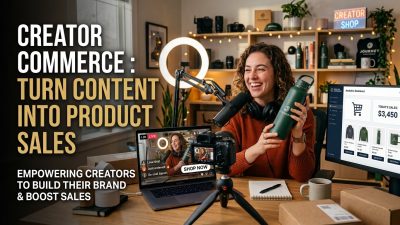
Creator Product Promotion turns audience trust into measurable revenue by combining creator fit, authentic storytelling, strategic offers, platform distribution, conversion systems, and long-term relationship building.
Influencer marketing has changed dramatically. Brands are no longer interested only in how many followers a creator has. They increasingly care about whether that creator can influence attention, build trust, shape purchasing decisions, and generate measurable business outcomes. This is why Creator Product Promotion has become a strategic discipline rather than simply a tactic for getting products mentioned on social media.
People rarely buy because a stranger tells them that a product is excellent. They buy when they understand the product, believe the recommendation, see themselves using it, and feel confident that the purchase is worth the money. Creators can accelerate that process because their audiences already have some level of familiarity and trust with them.
However, influence does not automatically become sales. A creator may generate millions of views but produce very little revenue if the audience is poorly matched, the product is difficult to understand, the content lacks authenticity, or the buying journey contains too much friction. Effective Creator Product Promotion connects content, psychology, audience intent, product positioning, and conversion mechanics.
The best campaigns therefore begin before the creator posts anything. Brands need to determine who the right creator is, what story should be told, which audience problem is being addressed, how the offer should be structured, and how success will be measured.
What Is Creator Product Promotion?
Creator Product Promotion is the strategic use of content creators to introduce, demonstrate, recommend, explain, or sell a product to an audience through trusted communication channels.
Unlike traditional advertisements, creator-led promotion often feels embedded within content that people already chose to consume. A creator may demonstrate a product during a tutorial, discuss it in a review, include it in a routine, compare it with alternatives, or explain how it solved a specific problem.
This makes Creator Product Promotion particularly powerful because the product is presented inside a context the audience already understands.
A creator is not simply distributing an advertisement.
The creator is translating the product into a language the audience recognizes.
That translation can include personal experience, visual demonstration, storytelling, humor, education, comparison, social proof, or lifestyle context.
Why Creator Product Promotion Works
The psychological foundation behind Creator Product Promotion is trust transfer.
When people regularly consume a creator’s content, they develop expectations about that person’s personality, preferences, expertise, and judgment. That relationship can influence how they evaluate recommendations.
This does not mean audiences blindly trust every recommendation. In fact, audiences have become increasingly sensitive to content that feels forced.
Authenticity matters because people can often recognize when a creator has little connection with the product.
A creator who genuinely understands a product can explain it naturally.
A creator who does not understand the product may simply repeat brand talking points.
That distinction can determine whether the content creates curiosity or skepticism.
The Psychology Behind Creator Influence
Creator Product Promotion works because several psychological mechanisms can operate simultaneously.
Familiarity
Repeated exposure makes a creator recognizable.
Social Proof
Seeing someone use a product can reduce uncertainty.
Authority
Expert creators can simplify complicated purchasing decisions.
Identification
Audiences may think, “This person is similar to me.”
Demonstration
Watching a product in real use provides evidence beyond a written claim.
Emotional Transfer
Positive feelings toward the creator can influence perception of the product.
The important point is that influence is not one psychological mechanism. It is a combination of familiarity, credibility, relevance, emotion, and context.
Audience Fit Is More Important Than Follower Count
One of the biggest mistakes in Creator Product Promotion is selecting creators based primarily on follower volume.
A creator with 100,000 highly relevant followers can outperform a celebrity with 2 million loosely relevant followers.
Suppose a company sells premium home coffee equipment.
A creator with 60,000 dedicated specialty-coffee enthusiasts may generate stronger sales than a lifestyle creator with 1 million followers whose audience has little interest in coffee.
This is why brands should evaluate:
- Audience demographics
- Audience interests
- Engagement quality
- Geographic distribution
- Content format
- Creator credibility
- Historical sponsorship performance
- Product relevance
Follower count is a distribution metric.
Audience fit is a commercial metric.
Creator Audience Quality
Before launching Creator Product Promotion, brands should examine whether the audience actually interacts with the creator.
Look beyond visible likes.
Review:
- Meaningful comments
- Saves
- Shares
- Discussion quality
- Repeat commenters
- Story engagement
- Click behavior
- Community activity
A creator with modest reach but strong conversation can have substantial influence.
The deeper question is:
Does the audience pay attention when this creator speaks?
That is much more useful than simply asking how large the audience is.
Choosing the Right Creator Type
Different creator categories can serve different commercial purposes.
| Creator Type | Typical Strength |
|---|---|
| Celebrity | Massive awareness |
| Macro creator | Broad reach |
| Mid-tier creator | Balanced reach and relevance |
| Micro creator | Strong niche trust |
| Expert creator | Authority |
| Reviewer | Product evaluation |
| Educator | Problem solving |
| Lifestyle creator | Contextual demonstration |
| Community creator | High audience intimacy |
The best Creator Product Promotion strategy often uses different creator types at different stages.
Large creators can create awareness.
Niche creators can deepen consideration.
Experts can overcome objections.
Customers can provide authentic proof.
Micro-Influencer Product Promotion
For many brands, Micro-Influencer Product Promotion can provide a strong combination of relevance, credibility, and audience interaction.
Smaller creators frequently operate inside specific communities where their audiences share particular interests.
For example:
A skincare creator may build an audience interested in acne routines.
A gaming creator may attract competitive players.
A finance creator may attract people interested in budgeting and investing.
A fitness creator may attract people with specific training goals.
This specialization can create stronger product-market alignment than broad mass exposure.
However, smaller does not automatically mean better. Brands still need to verify audience quality and commercial relevance.
Product-Creator Fit
Creator Product Promotion should feel logical to the audience.
Imagine a creator who normally discusses productivity suddenly promoting a luxury kitchen appliance.
Even if the product is excellent, the recommendation may feel disconnected.
Now imagine that same creator demonstrating a task-management application they genuinely use.
The recommendation becomes more believable.
Creator fit can be evaluated through three questions:
Does the creator naturally discuss this category?
Would the audience logically care about the product?
Can the creator demonstrate a genuine use case?
If the answer to all three is yes, the campaign has a stronger foundation.
Authenticity Without Losing Commercial Control
Brands sometimes fear that giving creators too much creative freedom will weaken the marketing message.
The opposite can happen.
When creators have freedom to communicate in their own voice, the content may feel significantly more natural.
However, creative freedom should exist within strategic boundaries.
Brands should clearly communicate:
- Product facts
- Mandatory disclosures
- Claims that can or cannot be made
- Campaign objective
- Target audience
- Offer details
- Key product differentiators
- Submission requirements
Creators can then determine how to express those ideas naturally.
This balance is central to successful Creator Product Promotion.
Product Storytelling
People remember stories more easily than specifications.
Compare two messages.
“Contains a high-efficiency filtration system.”
Versus:
“I used to replace filters constantly, but this system lasts long enough that I stopped thinking about it.”
The second statement creates context.
Creator Product Promotion becomes more persuasive when product benefits appear inside stories that audiences can recognize.
Good stories answer:
What problem existed?
What changed?
What did the creator experience?
Why should the audience care?
What practical outcome followed?
Demonstration Beats Description
One reason creator content can outperform conventional product ads is demonstration.
A creator can show:
- Before and after
- Product setup
- Real-world usage
- Results
- Comparison
- Routine integration
- Mistakes avoided
- Time saved
- Convenience gained
Showing the product reduces uncertainty.
The audience no longer has to imagine everything from a static description.
They can observe the product in action.
That makes Creator Product Promotion particularly effective for products whose value is difficult to understand through text alone.
Problem-Solution Content
One of the strongest creator content structures is:
Problem → Frustration → Discovery → Demonstration → Result
The creator starts with a problem the audience recognizes.
Then they explain the frustration.
The product enters as a potential solution.
The creator demonstrates it.
Finally, they show or explain the outcome.
This framework avoids making the content feel like an interruption.
Instead, the product becomes part of the solution narrative.
Review Content
Reviews can be highly persuasive because they address uncertainty.
A strong review does not only praise the product.
It explains:
- Who it is for
- Who it may not be for
- Strengths
- Weaknesses
- Price considerations
- Real-world performance
- Alternatives
- Personal experience
Balanced reviews can actually increase credibility.
An audience may distrust a creator who describes every product as “perfect.”
A creator who acknowledges limitations often appears more honest.
That credibility can make positive recommendations more valuable.
Tutorial-Based Promotion
Educational content creates another opportunity for Creator Product Promotion.
Suppose a creator teaches photography.
Instead of producing a generic advertisement for a camera accessory, the creator could produce a tutorial showing how to solve a specific photography problem using that accessory.
The product is present because it is useful, not because the advertisement says it must be.
This format can create both immediate interest and long-term search value.
Comparison Content
Comparison videos can capture users who are already evaluating options.
A creator might compare:
- Product A vs Product B
- Premium vs budget option
- New vs older model
- Manual vs automated method
- Brand alternatives
- Different use cases
This places the promotion closer to the bottom of the purchasing funnel.
At this stage, audiences often want evidence rather than broad awareness.
Creator Product Promotion can therefore become more effective when content format matches buyer intent.
The Customer Journey
A useful creator campaign can support several stages of the customer journey.
Awareness
The audience first discovers the product.
Interest
They learn what the product does.
Consideration
They compare options.
Evaluation
They seek proof and reviews.
Purchase
They complete the transaction.
Adoption
They begin using the product.
Advocacy
They recommend it to others.
A common mistake is designing creator content only for awareness.
A more advanced Creator Product Promotion strategy creates different content for different stages.
Creator Content and Landing Pages
The creator’s job does not end when someone clicks.
The destination must continue the same story.
Suppose a creator explains how a product solves a specific problem. The landing page should reinforce that exact benefit.
If the creator promotes speed, the landing page should demonstrate speed.
If the creator highlights affordability, pricing should be clear.
If the creator discusses a particular feature, the product page should make that feature easy to find.
Message consistency reduces psychological friction.
The Importance of the Call to Action
Weak creator campaigns often end with vague calls to action.
“Check it out.”
“Go see their website.”
“Maybe you’ll like it.”
These phrases create little urgency.
A stronger CTA tells the audience what to do and why.
For example:
“Use my link to get the launch discount.”
“Try the free version and compare your first result.”
“Use this code before the offer expires.”
The CTA should fit the content rather than appearing as a sudden sales command.
Offers and Incentives
Creator Product Promotion can become more measurable when brands use trackable offers.
Common mechanisms include:
- Creator-specific discount codes
- Affiliate links
- Personalized URLs
- Limited bundles
- Free trials
- Bonus products
- Early access
- Exclusive pricing
A good offer should create a reason to act without making the product feel artificially cheap.
Discounts are not always necessary.
Exclusive access can be equally compelling.
Affiliate Models
Affiliate partnerships can align creator incentives with performance.
Instead of paying only for exposure, the brand can compensate based on tracked sales.
The model can include:
Base fee + commission
or
Commission only
or
Flat fee + performance bonus
The correct structure depends on creator size, product economics, expected conversion, and campaign goals.
Transparency matters because the creator relationship needs to remain compliant and trustworthy.
Attribution and Tracking
Brands cannot improve what they cannot measure.
Creator Product Promotion should ideally use trackable links, codes, landing pages, or attribution systems.
At minimum, brands should know:
- Which creator generated the traffic
- How many clicks occurred
- How many purchases followed
- Revenue generated
- Conversion rate
- Average order value
- Customer acquisition cost
- Repeat purchases
For subscription products, the analysis should go further into retention and lifetime value.
Measuring Creator Campaigns
Important metrics can be grouped into four stages.
| Stage | Metrics |
|---|---|
| Reach | Views, impressions, unique viewers |
| Engagement | Likes, comments, saves, shares |
| Traffic | Clicks, visits, landing-page sessions |
| Revenue | Orders, revenue, CAC, ROAS, LTV |
But metrics should reflect the campaign objective.
A brand campaign focused on awareness should not be judged exactly like a direct-response campaign.
Likewise, an expensive product may require fewer conversions to become profitable.
Engagement Rate Is Not Everything
High engagement can look impressive but may not produce sales.
A creator might receive thousands of comments about the content itself while very few people click the product link.
This does not necessarily mean the campaign failed.
It means the campaign may have succeeded at attention but failed at commercial transition.
That is why Creator Product Promotion should separate:
Attention
from
Interest
from
Intent
from
Conversion
Each represents a different psychological stage.
Cost Per Acquisition
Cost per acquisition helps brands determine whether a campaign creates economically sustainable customer growth.
The conceptual formula is:
CPA = Total Campaign Cost ÷ Number of Acquired Customers
Suppose a campaign costs $5,000 and generates 250 new customers.
CPA is:
$5,000 ÷ 250 = $20
The next question is whether those customers generate enough contribution margin to justify the $20 acquisition cost.
That brings lifetime value into the analysis.
Lifetime Value
Creator campaigns can look unprofitable initially when customers continue purchasing.
Imagine a creator campaign generates customers who make one $25 purchase but later make several additional purchases.
Judging the campaign only on first-order revenue could lead the brand to abandon a profitable channel.
A stronger model evaluates customer lifetime value.
This is especially important for:
- Subscription businesses
- Consumables
- Beauty
- Food
- Software
- Memberships
- Repeat-purchase products
Creator Product Promotion becomes more strategic when performance is evaluated across the customer’s full relationship with the brand.
Retention After Creator Acquisition
The quality of the creator audience influences what happens after the purchase.
A highly aligned creator may send customers who understand the product better and therefore have stronger retention.
A creator who exaggerates claims may generate a burst of purchases followed by refunds and disappointment.
This is why creator selection affects not just acquisition but downstream customer quality.
For businesses with strong lifecycle programs, Creator Product Promotion should connect naturally with broader Mobile App Marketing And Retention strategies so acquired users can be onboarded, engaged, and reactivated intelligently.
Creator Product Promotion for Digital Products
Digital products can be particularly suitable for creator partnerships because creators can demonstrate workflows and outcomes.
Examples include:
- Software
- Apps
- Online courses
- Design tools
- Templates
- Memberships
- Digital subscriptions
The creator can show how the product fits into an existing process.
That makes abstract value more tangible.
Creator Product Promotion for Physical Products
Physical products offer strong opportunities for visual storytelling.
Creators can demonstrate:
- Unboxing
- Setup
- First use
- Before-and-after
- Daily routine
- Product comparison
- Durability
- Convenience
The physical nature of the product gives the audience visual evidence.
However, good content should still explain why the product matters.
A beautiful unboxing may generate views but not necessarily sales.
Short-Form Video Strategy
Short-form content is highly effective for creating rapid awareness.
The opening seconds matter enormously.
A strong hook can be:
A surprising result
A strong opinion
A problem
A mistake
A transformation
A comparison
The objective is not to manipulate.
It is to create immediate relevance.
Once attention is captured, the creator should quickly establish context and demonstrate the product.
Long-Form Content Strategy
Long-form content can support products requiring education or trust.
Examples include:
- Detailed reviews
- Tutorials
- Buying guides
- Case studies
- Comparisons
- Interviews
- Product deep dives
Long-form content can address objections that short-form content does not have enough time to explain.
A balanced Creator Product Promotion strategy can use short-form media to generate attention and long-form content to deepen consideration.
Content Repurposing
One creator collaboration can produce multiple assets.
A single long-form review may become:
- Short clips
- Quote graphics
- Educational posts
- Product demonstrations
- FAQ content
- Paid-ad creatives
- Website testimonials
This increases the economic value of a creator partnership.
With appropriate permissions, brands can use creator content beyond the original organic post.
That creates a bridge between creator marketing and paid media.
Creator Content as Advertising Creative
Brands can sometimes use creator-generated content in paid campaigns.
This can be effective because the creative may feel more native and authentic than traditional polished advertising.
However, usage rights must be clearly agreed upon.
Brands should define:
- Duration
- Platforms
- Geographic scope
- Paid usage
- Editing rights
- Whitelisting or authorization
- Exclusivity
Clear agreements prevent misunderstandings later.
Building a Creator Brief
An effective creator brief should provide strategic clarity without dictating every word.
The brief can include:
Campaign Goal
What should the campaign achieve?
Target Audience
Who should care?
Product Context
What does the product solve?
Required Facts
Which factual points must be accurate?
Desired Feeling
What should viewers think or feel?
CTA
What action should viewers take?
Restrictions
What claims, comparisons, or statements should be avoided?
A strong brief gives the creator room to be creative while protecting the commercial objective.
Negotiating Creator Partnerships
Negotiation should consider more than follower count.
Evaluate:
- Content quality
- Audience fit
- Reach
- Engagement
- Platform
- Deliverables
- Usage rights
- Exclusivity
- Production complexity
- Performance history
A creator with a lower fee may require more management.
Another creator with a higher fee may produce stronger content that can also be reused in advertising.
The lowest price is rarely the same as the lowest total cost.
Building Long-Term Creator Relationships
One-off campaigns can work.
Long-term partnerships can be even more valuable.
When a creator repeatedly works with the same brand, the audience may see the product several times.
Repeated exposure can strengthen familiarity.
The creator also becomes more knowledgeable about the product.
That can improve the quality of future content.
Brands may therefore consider ambassador programs instead of isolated sponsorships.
Creator Partnerships as Distribution Assets
A creator relationship can become a long-term distribution asset.
Instead of asking:
“How much did this sponsored post make?”
brands can ask:
“What value did this relationship create over six months?”
The creator may produce reviews, tutorials, launches, seasonal content, customer education, and recurring recommendations.
This shifts Creator Product Promotion from transactional buying toward relationship-driven growth.
Managing Negative Feedback
Not every promotion will produce positive reactions.
Some audiences may dislike sponsored content.
Others may criticize pricing.
Some viewers may challenge product claims.
This feedback should not automatically be suppressed or ignored.
Negative responses can reveal objections that future content should address.
Creators should also avoid making unsupported claims simply to protect short-term conversion.
Long-term credibility is worth more than one campaign.
Transparency and Disclosure
Sponsored relationships should be communicated clearly according to applicable platform requirements and advertising rules.
Disclosure should not be treated as something embarrassing that must be hidden.
Clear transparency can actually support trust.
The audience generally understands that creators earn money from partnerships.
The problem is not sponsorship.
The problem is deception.
Creator Product Promotion works best when commercial relationships remain compatible with authentic communication.
Using Testimonials and Social Proof
Positive creator statements can become social proof for other marketing channels.
With proper permission, brands may incorporate creator feedback into:
- Landing pages
- Product pages
- Email campaigns
- Advertisements
- Social content
- Sales materials
However, testimonials should remain accurate and representative.
Do not edit a creator’s words in a way that changes their meaning.
Creator Product Promotion and Search Discovery
Creator content can also support search behavior.
A person may watch a creator review and then search the product name.
Another user may search for the problem discussed in the video.
This means creators can influence demand beyond the original platform.
Brands should ensure that their website, marketplace listings, and product pages are prepared to capture this demand.
For apps, this ecosystem may also intersect with App Store Optimization when users move from creator discovery to app-store search.
Seasonal Creator Campaigns
Creator Product Promotion can become highly effective around relevant seasonal moments.
Potential examples include:
- New Year
- Back-to-school periods
- Holiday shopping
- Summer travel
- Fitness seasons
- Gift occasions
- Product launches
- Major cultural moments
Timing matters because customer intent changes throughout the year.
A product that feels irrelevant in March may become extremely useful in November.
Good seasonal campaigns adapt the story rather than simply adding a holiday discount.
Launch Strategy
A product launch can use creators in waves.
Phase One: Seeding
Give selected creators early access.
Phase Two: Education
Creators explain the problem and product.
Phase Three: Launch
Multiple creators publish around a coordinated period.
Phase Four: Social Proof
Customer reviews and creator reactions reinforce demand.
Phase Five: Retargeting
Brands use qualified traffic for follow-up advertising.
This creates a layered launch rather than one isolated promotional event.
Creator Product Promotion Funnel
A simplified creator funnel can look like:
Reach → Attention → Trust → Education → Proof → Offer → Click → Purchase → Repeat Purchase
Each step can have friction.
If people watch but do not click, the CTA may be weak.
If they click but do not purchase, the landing page may be weak.
If they purchase but do not return, the product or onboarding experience may need improvement.
This funnel perspective helps marketers identify the actual problem.
Common Creator Marketing Mistakes
Choosing creators by follower count
Reach without relevance often produces weak commercial outcomes.
Over-controlling the script
Creators may lose their natural voice.
Using generic talking points
Audiences recognize repetitive advertising language.
Focusing only on views
Views do not automatically create revenue.
Ignoring audience comments
Comment sections contain valuable purchase objections.
Forgetting attribution
Without tracking, campaign decisions become guesswork.
Stopping after one post
Repeated exposure can be important for consideration.
Ignoring customer experience
Marketing cannot permanently compensate for poor product quality.
Avoiding these mistakes can significantly improve Creator Product Promotion outcomes.
A Practical Creator Selection Scorecard
Brands can create a simple weighted score.
| Factor | Example Weight |
|---|---|
| Audience relevance | 25% |
| Content quality | 20% |
| Engagement quality | 15% |
| Creator credibility | 15% |
| Platform fit | 10% |
| Commercial history | 10% |
| Cost efficiency | 5% |
The exact weights should depend on the campaign.
For a niche technical product, audience relevance may matter more than raw reach.
For a mass-market launch, distribution may receive greater weight.
Building a Creator Campaign Budget
A campaign budget should include more than creator fees.
Consider:
Creator fees + product costs + shipping + management + production + usage rights + paid amplification + tracking + incentives
This produces a more realistic view of campaign economics.
A campaign that appears inexpensive at first can become costly when usage rights and paid distribution are added.
Testing Before Scaling
Never assume a creator strategy will work simply because another brand succeeded with it.
Test.
Start with several creators.
Compare:
- Audience quality
- Content format
- Hook
- Offer
- Conversion
- Revenue
- Customer quality
Then identify the strongest patterns.
Scale what works.
Stop what does not.
This controlled approach reduces risk and improves learning speed.
The Role of Data in Creator Marketing
Data should not replace creativity.
It should improve creative decision-making.
For example, if analytics show that tutorial-based content generates higher purchase intent than unboxing content, brands can recruit more creators capable of producing tutorials.
If creator-specific discounts generate more conversions than generic offers, future campaigns can use personalized codes.
Data turns creator marketing from intuition-driven promotion into an increasingly predictable system.
From Influencer Marketing to Creator Commerce
The market is also moving toward a closer connection between content and transactions.
Creator Commerce allows creators to influence not just awareness, but discovery, consideration, and purchasing directly through content ecosystems.
This can include:
- Product links
- Affiliate storefronts
- Shoppable content
- Creator bundles
- Live shopping
- Personalized offers
- Community launches
The strategic opportunity is significant because the distance between recommendation and transaction becomes shorter.
Creator-Led Community Building
The strongest creator relationships can eventually become communities.
A creator may help a brand build:
- Private groups
- Memberships
- Events
- Challenges
- Product feedback communities
- Ambassador networks
Community can increase customer loyalty because people are no longer connected only to the product.
They are connected to an ecosystem.
Turning Customers Into Creators
A strong product can generate its own creator network.
Customers may naturally post:
- Reviews
- Tutorials
- Unboxings
- Results
- Comparisons
- Before-and-after content
Brands can encourage this through referral programs, community initiatives, recognition, and customer-generated content campaigns.
Authentic customer content can become one of the most scalable forms of social proof.
A 90-Day Creator Product Promotion Strategy
A practical 90-day plan can be divided into three phases.
Days 1–30: Research and Testing
Identify the target audience.
Map creator categories.
Review competitors.
Develop campaign messaging.
Recruit a small test group.
Create tracking infrastructure.
The goal is learning.
Days 31–60: Optimization
Compare creators.
Test content structures.
Evaluate offers.
Analyze traffic and conversions.
Identify winning hooks.
Expand relationships with high-performing creators.
The goal is finding repeatable patterns.
Days 61–90: Scaling
Increase partnerships with proven creators.
Repurpose winning content.
Launch paid amplification where appropriate.
Develop ambassador relationships.
Create recurring content calendars.
The goal is turning a successful test into a sustainable acquisition channel.
Measuring Long-Term Creator ROI
Return on investment should include both direct and indirect value.
Direct value:
- Sales
- Leads
- Subscriptions
- Revenue
Indirect value:
- Brand awareness
- Search demand
- Content assets
- Social proof
- Audience growth
- Product feedback
- New creator relationships
This broader perspective prevents marketers from undervaluing creator partnerships that influence customers across multiple touchpoints.
The Future of Creator Product Promotion
Creator ecosystems are likely to become increasingly integrated with commerce, search, artificial intelligence, recommendation systems, and personalized shopping experiences.
Creators may increasingly function as:
Publisher + Reviewer + Educator + Community Leader + Affiliate + Brand Partner
This makes Creator Product Promotion strategically important across the customer journey.
The brands most likely to succeed will be those that understand creators as communication partners rather than rented advertising space.
That requires better selection, better storytelling, better measurement, and stronger long-term relationships.
Final Framework
A practical framework can be remembered as:
Right Creator
Choose relevance over vanity metrics.
Right Story
Connect the product to a real problem.
Right Demonstration
Show the value rather than simply describing it.
Right Offer
Give the audience a clear reason to act.
Right Destination
Continue the same message after the click.
Right Measurement
Track the complete customer journey.
Right Relationship
Turn successful creators into long-term partners.
This framework makes Creator Product Promotion more predictable and more scalable.
Final Checklist
Before launching a campaign, ask:
- Is the creator genuinely relevant?
- Does the audience match the product?
- Can the creator demonstrate the product naturally?
- Is the campaign objective specific?
- Is the core story easy to understand?
- Does the offer create meaningful motivation?
- Is the CTA clear?
- Is the landing experience consistent?
- Are attribution systems ready?
- Are customer comments being monitored?
- Is lifetime value considered?
- Are long-term creator partnerships possible?
- Can successful content be repurposed?
- Are disclosure requirements handled properly?
- Is there a plan for testing and scaling?
The more confidently these questions can be answered, the stronger the campaign foundation becomes.
Conclusion
Creator Product Promotion has evolved from simple sponsored posts into a sophisticated growth system built around trust, relevance, storytelling, demonstration, and measurable customer action. Successful brands do not simply pay creators for exposure; they choose creators whose audiences naturally align with the product and give them enough freedom to communicate authentically. The strongest campaigns connect creator content with clear offers, effective landing pages, accurate attribution, customer retention, and long-term relationship building. When creators genuinely understand a product and communicate its value in a way their audience recognizes, influence can move beyond awareness into consideration, purchase, loyalty, and advocacy. That is what makes creator-led marketing a powerful long-term commercial channel.
Frequently Asked Questions (FAQ)
1. What is Creator Product Promotion?
Creator Product Promotion is a marketing approach where brands collaborate with content creators to introduce, explain, demonstrate, recommend, or sell products to an engaged audience.
2. Why does Creator Product Promotion work?
It can work because creators have established familiarity, credibility, and relationships with their audiences. Their demonstrations and personal experiences can reduce uncertainty around a product.
3. Is follower count the most important factor when choosing a creator?
No. Audience relevance, engagement quality, credibility, content quality, and product-category alignment can be more important than follower volume.
4. Are smaller creators effective for product promotion?
Yes. Smaller niche creators can be highly effective when their audiences are strongly aligned with the product and actively trust their recommendations.
5. How should brands measure creator campaign performance?
Brands can measure reach, engagement, clicks, conversions, revenue, acquisition cost, average order value, repeat purchases, and lifetime value depending on the campaign objective.
6. Should creators follow a strict script?
A detailed script is not always ideal. Strategic guidelines and required facts should be clear, but creators often perform better when they can communicate in their natural voice.
7. Can creator content be used in paid advertising?
It can be, provided the brand and creator have clearly agreed on the necessary usage rights, platforms, duration, geographic scope, and other commercial terms.
8. What type of content works best for creator product promotion?
There is no universal format. Tutorials, demonstrations, reviews, comparisons, before-and-after content, routines, case studies, and problem-solution videos can all work depending on audience intent.
9. How can brands make creator campaigns more profitable?
Brands can improve profitability by selecting better-fit creators, improving offers, optimizing conversion paths, tracking performance, repurposing high-performing content, and evaluating customers based on lifetime value rather than first purchases alone.
10. What is the biggest mistake brands make with creator marketing?
One of the biggest mistakes is treating creators like traditional advertising placements. Creator marketing works best when brands respect creator-audience relationships and build campaigns around genuine relevance, useful storytelling, and measurable customer value.