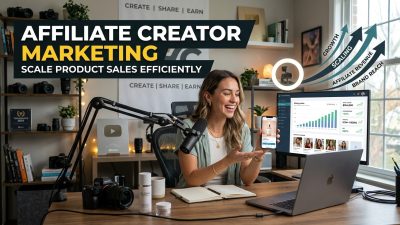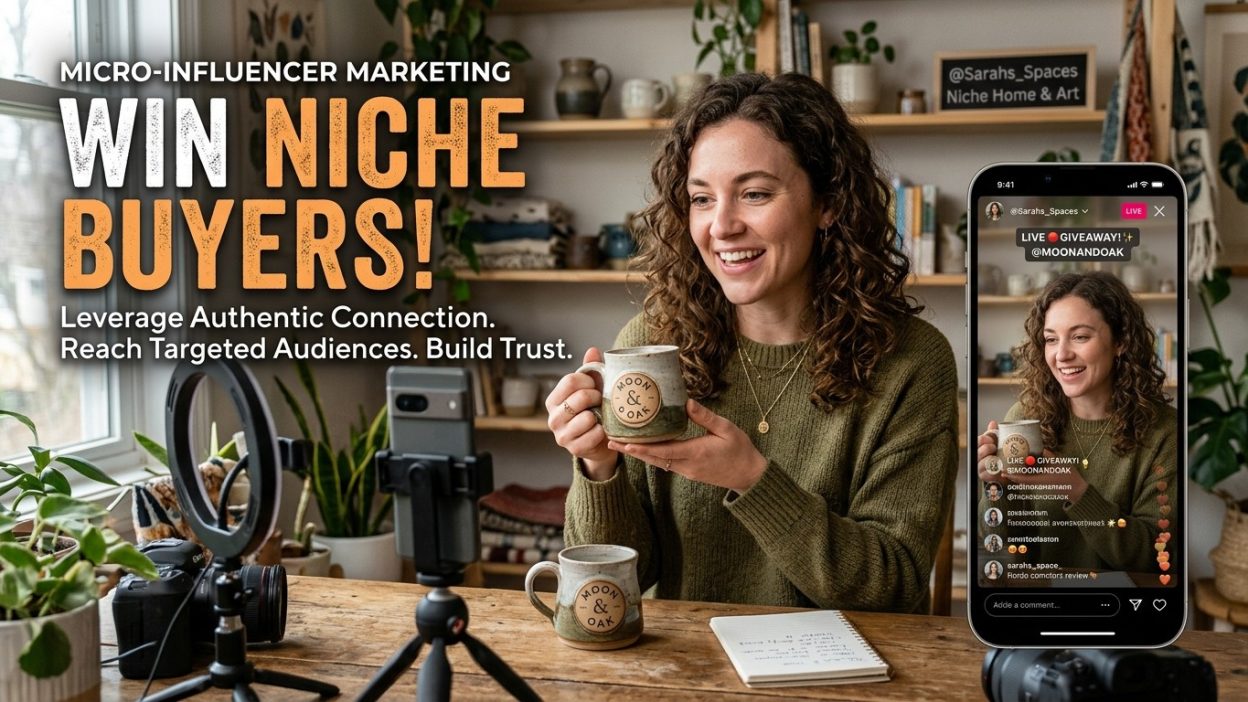
Micro-Influencer Product Promotion helps brands reach focused communities through trusted creators, stronger relevance, authentic recommendations, and measurable paths from niche attention to purchase.
Modern buyers do not simply purchase because a product is advertised repeatedly. They purchase when the offer feels relevant, credible, understandable, and appropriate for their particular situation. This is especially true inside specialized markets where audiences often know exactly what they want, understand product differences, and actively distrust generic advertising. That is where Micro-Influencer Product Promotion can create a meaningful strategic advantage.
Unlike celebrity campaigns designed around massive reach, Micro-Influencer Product Promotion focuses on smaller creators whose audiences usually gather around a specific interest, lifestyle, profession, problem, or category. Their communities may be considerably smaller, but the relationship between the creator and audience can be more specific and conversational.
A creator discussing minimalist home offices, specialty coffee equipment, trail-running accessories, skincare for sensitive skin, budget travel gear, productivity software, or photography tools is speaking to an audience with a recognizable interest. The recommendation therefore enters an environment where context already exists. Instead of interrupting an unrelated audience, the product appears inside a conversation people voluntarily chose to follow.
This makes Micro-Influencer Product Promotion particularly useful for brands selling products that need education before conversion. A specialized buyer may want demonstrations, comparisons, real-world use cases, setup instructions, limitations, opinions, and proof. A creator can present those details in a way that feels easier to consume than a conventional advertisement.
The strongest campaigns do not treat a creator as a billboard. They treat the creator as a trusted interpreter between the product and a defined audience.
That distinction changes everything.
What Is Micro-Influencer Product Promotion?
Micro-Influencer Product Promotion is a marketing approach where brands collaborate with creators who have relatively small but highly focused audiences to introduce, explain, demonstrate, recommend, or validate a product.
The defining characteristic is not simply follower count. It is audience relevance.
A creator with 15,000 followers interested in professional cameras may be more valuable for a niche camera accessory than a lifestyle creator with 500,000 followers whose audience has very little interest in photography.
In practical terms, Micro-Influencer Product Promotion works when four conditions align:
| Factor | What It Means | Why It Matters |
|---|---|---|
| Audience relevance | Followers match the target buyer | Improves message fit |
| Creator trust | Audience believes the creator | Reduces skepticism |
| Content quality | Product is explained naturally | Increases understanding |
| Measurement | Results can be tracked | Improves decision-making |
A useful way to think about Micro-Influencer Product Promotion is as a relevance engine rather than a pure reach engine.
The objective is not to make the largest possible number of people see the product. The objective is to make the right people pay attention, understand the value, believe the recommendation, and take an appropriate next step.
That can mean purchasing immediately, visiting a product page, saving the content, joining an email list, requesting additional information, downloading something, or discussing the product with others.
Micro-Influencers vs. Larger Influencers
The word “micro” can create the wrong impression. Smaller creators are not necessarily less influential. Their influence is simply distributed differently.
A large creator often provides broad awareness. A micro-influencer often provides focused relevance.
Imagine two campaigns for a premium running hydration vest. One reaches 800,000 general lifestyle followers, while the other reaches 18,000 dedicated trail runners who regularly discuss hydration, race preparation, footwear, recovery, and equipment.
The second audience may be much more commercially useful.
This is one reason Micro-Influencer Product Promotion can work particularly well for niche products. A specialized product does not need universal appeal. It needs strong appeal among a group with a genuine problem or desire.
Larger creators can still be powerful when awareness is the main objective. However, specialized products often benefit from creators who understand the category deeply enough to answer the questions a serious buyer is already asking.
Reach Is Not the Same as Influence
Follower count is visible. Influence is harder to see.
Consider the following signals:
- Do followers ask detailed questions?
- Do people request recommendations?
- Does the creator receive meaningful replies?
- Are product discussions specific rather than superficial?
- Does the creator regularly demonstrate expertise?
- Do followers mention trying previous recommendations?
- Is there evidence of community trust?
A creator with modest reach and high audience participation may outperform a larger account with passive followers.
This is why Micro-Influencer Product Promotion should be evaluated using business outcomes and audience quality rather than vanity metrics alone.
The Psychology Behind Niche-Buyer Decisions

Good creator campaigns are built around psychology, not just exposure.
Niche buyers usually experience a mixture of desire, uncertainty, comparison, and risk. They may already know several competitors. They may have researched specifications. They may have read reviews. They may be waiting for enough confidence to justify the purchase.
The creator becomes valuable because they can reduce uncertainty.
When a trusted creator shows how a product actually works, explains what they like, admits a limitation, or compares the product against familiar alternatives, the buyer’s perceived risk decreases.
This is a central strength of Micro-Influencer Product Promotion.
Trust Transfer
When an audience trusts a creator, some of that trust can transfer to the brands and products the creator genuinely recommends.
It does not happen automatically. The recommendation must remain consistent with the creator’s identity.
A fitness coach promoting a protein product makes contextual sense. A mechanical engineer discussing workshop equipment feels relevant. A photographer recommending a lens fits naturally into the audience’s expectations.
The closer the connection between creator expertise and product category, the stronger the potential trust transfer.
Social Proof
People often use other people’s behavior as evidence when they are uncertain.
A product shown repeatedly in credible niche communities can feel less risky than a product that appears only through polished brand advertising.
Micro-Influencer Product Promotion can strengthen social proof because the recommendation appears inside a visible community. Comments, questions, discussions, follow-up content, and other users sharing their experiences can create an expanding trust loop.
Specificity Creates Credibility
Generic praise often sounds like advertising.
Statements such as “This product is amazing” or “Everyone needs this” provide little evidence.
Specific observations are more persuasive.
For example, “The battery lasted through three full shooting sessions” gives the audience something concrete to evaluate.
Likewise, explaining what the product does well, what type of person should buy it, and who may not need it demonstrates judgment.
That kind of specificity makes Micro-Influencer Product Promotion feel more like useful advice than promotional interruption.
How to Find the Right Micro-Influencers
Finding creators should begin with the customer, not the platform.
Before searching for creators, define the buyer.
Identify their problem, goals, interests, purchasing triggers, objections, typical content consumption habits, and preferred communities.
Then search for creators who naturally operate inside those spaces.
Build a Creator-Relevance Profile
A useful creator profile includes:
Audience: Who follows the creator?
Expertise: Why should those followers listen?
Content format: What type of content performs best?
Engagement quality: Are followers actually participating?
Brand compatibility: Would your product make sense in the creator’s normal content?
Commercial history: Have previous partnerships looked authentic?
Audience geography: Does the creator reach the markets you can serve?
Buyer intent: Are followers curious, aspirational, educational, or commercially active?
This framework makes Micro-Influencer Product Promotion more strategic because selection is based on buyer alignment rather than follower size.
Avoid Fake Relevance
A creator can look relevant on paper and still be wrong for the campaign.
For example, a creator may post about technology but focus almost entirely on smartphones while you sell specialized enterprise cybersecurity software.
Category overlap is not enough.
The product must fit the conversation.
Strong Micro-Influencer Product Promotion happens when the product solves a problem the creator already discusses.
Choosing Between Creator Niches
Different creator types can serve different stages of the customer journey.
| Creator Type | Best Use | Typical Buyer Stage |
|---|---|---|
| Educator | Explain concepts | Awareness |
| Reviewer | Compare products | Consideration |
| Specialist | Demonstrate expertise | Evaluation |
| Lifestyle creator | Show practical use | Desire |
| Community creator | Encourage discussion | Trust |
| Expert practitioner | Validate performance | Decision |
A brand does not necessarily need one creator type.
A sophisticated campaign may combine several.
An educator can introduce the category. A specialist can demonstrate the product. A reviewer can compare it. A community creator can discuss user experiences.
Together, these touchpoints create a stronger path from discovery to action.
Designing the Offer Before the Campaign
Many creator campaigns underperform because the brand starts with content and forgets the offer.
Before Micro-Influencer Product Promotion begins, determine what the audience is actually being asked to do.
Possible objectives include:
- Purchase a product
- Claim a limited discount
- Register for a demo
- Download a guide
- Join a waitlist
- Subscribe to email
- Visit a product page
- Request a consultation
- Try a free version
- Attend an event
The call to action should match the buyer’s readiness.
A cold audience may not immediately purchase a complex $2,000 product simply because a creator mentioned it once.
The better move may be to invite viewers to explore a detailed comparison, watch a demonstration, or download a practical guide.
This buyer-stage alignment improves Micro-Influencer Product Promotion because it avoids forcing conversion before trust has developed.
How to Brief Creators Without Killing Authenticity
One of the biggest mistakes brands make is writing creator briefs like television commercials.
Creators understand their audience better than most brand managers do.
The brief should provide strategic boundaries rather than dictate every sentence.
Give the creator:
- Campaign objective
- Product facts
- Target audience
- Core value proposition
- Required disclosures
- Key claims that can be supported
- Prohibited claims
- Tracking information
- CTA
- Deadlines
- Usage rights
Then allow the creator to decide how the story should be told.
This is where Micro-Influencer Product Promotion becomes more powerful than rigid scripted advertising. Authenticity usually comes from the creator maintaining their normal communication style.
The Content Formats That Work Best
Not every platform or creator requires the same content format.
Product Demonstrations
Demonstrations are powerful because they reduce abstraction.
Instead of saying what a tool can do, show it.
A skincare creator can apply it. A software creator can build something with it. A cooking creator can use it in a recipe. A photographer can take sample images using the product.
The closer the content gets to actual use, the easier it becomes for the buyer to imagine ownership.
Tutorials
Tutorials work particularly well when a product solves a difficult problem.
The creator teaches something useful while naturally incorporating the product into the process.
This creates a stronger value exchange.
The viewer receives knowledge first and promotion second.
Reviews
Reviews work when they are honest.
Allowing creators to mention both strengths and limitations can increase credibility. Buyers understand that no product is perfect.
A balanced review can make Micro-Influencer Product Promotion more persuasive because skepticism decreases when the recommendation feels independent.
Comparison Content
Comparison content helps buyers evaluate alternatives.
Instead of simply saying “buy this,” the creator can explain who should choose product A, who should choose product B, and where each option performs best.
This is extremely useful for audiences already in the consideration stage.
Before-and-After Content
Where appropriate, before-and-after content creates visible evidence.
The format can work for productivity systems, beauty products, home organization, fitness equipment, software workflows, and many other categories.
However, claims must remain honest and supportable.
Using Storytelling to Sell Without Sounding Like Selling
People remember stories better than specifications.
A creator can introduce a problem, describe their previous frustration, explain what they tried, show what changed, and then present the product as part of that solution.
This creates narrative tension.
For example:
“I kept losing track of client revisions.”
Then the creator shows the old workflow.
Next:
“I switched to this project management system.”
The viewer sees the new workflow.
Finally:
“Here is what changed after three weeks.”
Now the product is part of a transformation rather than the center of an advertisement.
This is one of the most effective storytelling structures for Micro-Influencer Product Promotion.
Creator Commerce and the New Buying Journey
Creator Commerce is changing how audiences discover products because the creator can become part of the discovery, education, evaluation, and recommendation process.
The buyer may see a product in a short-form video, visit the creator’s profile, watch a longer review, click a tracked link, read comments, compare alternatives, and return days later to purchase.
That means the campaign should not be evaluated only by immediate clicks.
Some buyers need several interactions before conversion.
Micro-Influencer Product Promotion therefore benefits from tracking the full customer path rather than one isolated metric.
Building a Multi-Stage Creator Funnel
A useful creator funnel can contain five stages.
Stage 1: Discovery
The creator introduces the product to people who may not know the brand.
Objective: attention and awareness.
Stage 2: Education
The creator explains the problem and demonstrates the product.
Objective: understanding.
Stage 3: Validation
The creator reviews, tests, compares, or documents usage.
Objective: credibility.
Stage 4: Conversion
The audience receives a clear offer, landing page, discount, trial, or purchase opportunity.
Objective: action.
Stage 5: Advocacy
Existing customers share experiences and creators continue discussing results.
Objective: retention and social proof.
Strong Micro-Influencer Product Promotion campaigns can use multiple pieces of content across these stages rather than expecting one post to accomplish everything.
AI and Human Judgment in Creator Campaigns
Technology can make creator marketing more efficient, but automation should not replace audience understanding.
AI Content Briefs, for example, can help marketers organize objectives, audience insights, messaging priorities, FAQs, content structures, and creative angles before approaching creators.
The important distinction is that AI can accelerate preparation while human judgment determines whether the message actually fits the creator.
A machine can suggest ten content ideas.
The creator knows which one their audience will actually care about.
That human layer remains essential.
Human-Led Content Creates Better Creator Partnerships
Human-Led Blogging is built around genuine experience, context, originality, and audience usefulness. The same principles apply to creator campaigns.
The most effective partnership is not necessarily the one with the most polished production.
It is the one where the content feels like something the creator would have made even without the partnership.
That does not mean brands should become invisible.
Brands should provide accurate product information, strong assets, positioning guidance, compliance rules, and conversion infrastructure.
But they should avoid turning creators into robotic spokespersons.
For Micro-Influencer Product Promotion, the goal is collaboration rather than control.
Creating the Perfect Creator Campaign Message
A strong creator message generally answers six questions:
What problem exists?
The audience needs to recognize the problem.
Why does it matter?
The problem must have emotional or practical importance.
What changed?
The creator introduces the product or solution.
Why trust this recommendation?
The creator provides evidence.
Who is it for?
Audience members should know whether the product applies to them.
What should happen next?
The CTA makes the next step obvious.
This structure gives creators enough strategic direction without forcing them to copy brand language.
Personalization for Niche Audiences
Niche audiences appreciate specificity.
Instead of targeting “people who like fitness,” a campaign might target:
- Marathon runners training for long-distance events
- New parents rebuilding exercise routines
- Busy professionals using home workouts
- Strength athletes optimizing recovery
- Beginners purchasing their first training equipment
Micro-Influencer Product Promotion becomes stronger as the audience definition becomes more precise.
However, excessive segmentation can create operational complexity. The ideal level depends on campaign size, product economics, and available creative resources.
How to Use Discount Codes Without Cheapening the Brand
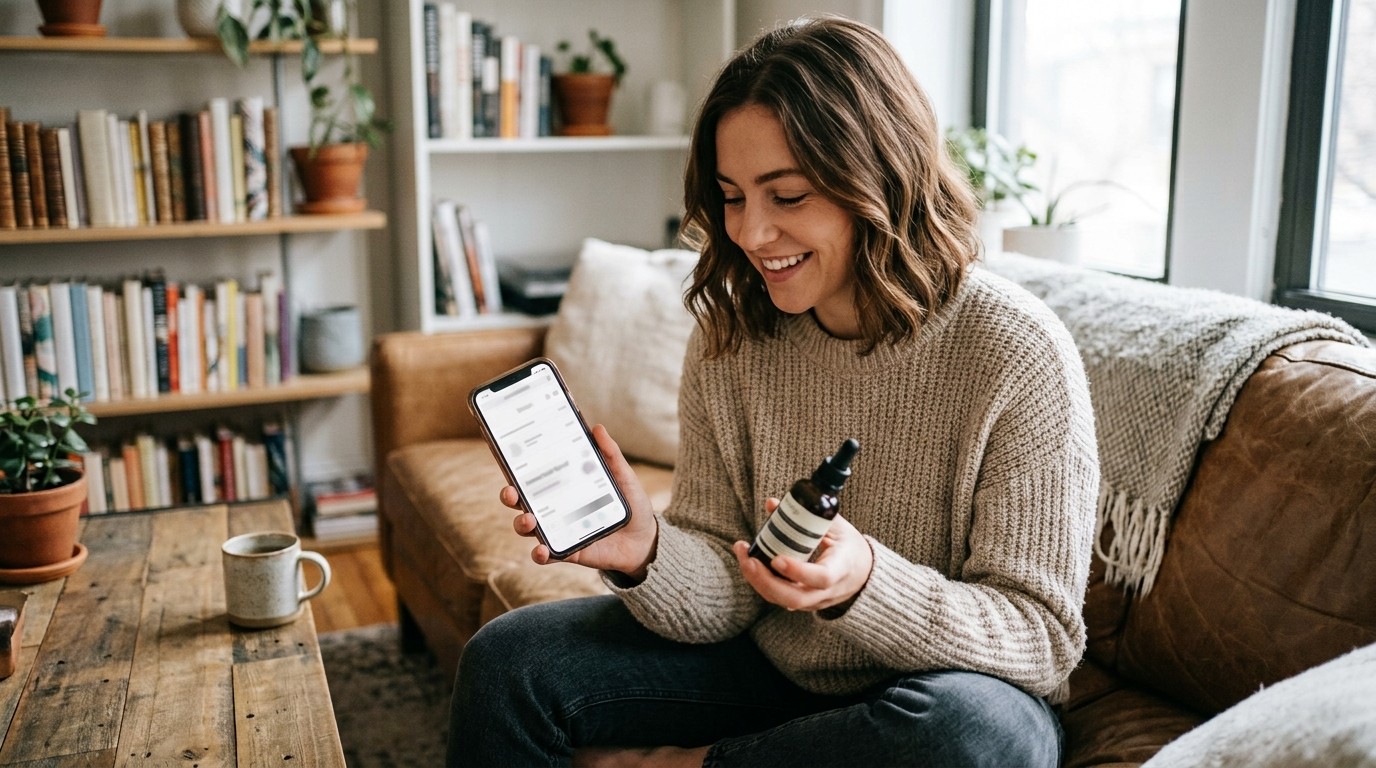
Discount codes can be useful, but they should not become the entire strategy.
A unique code helps attribute conversions. It can also give buyers a reason to act.
But constantly leading with discounts may train audiences to wait for promotions.
A better strategy is to combine value and urgency.
For example, the creator can explain why the product matters, show the product in use, identify the ideal buyer, and then mention a limited benefit for their audience.
The discount becomes the final nudge instead of the entire argument.
Tracking Micro-Influencer Product Promotion
Tracking is essential because creator marketing can look successful while generating weak economics.
Use unique links, campaign-specific landing pages, discount codes, or platform analytics wherever possible.
Important metrics include:
| Metric | What It Tells You |
|---|---|
| Reach | How many people were exposed |
| Engagement rate | How actively audiences responded |
| Saves | Potential long-term interest |
| Shares | Content usefulness or relevance |
| Link clicks | Initial commercial intent |
| Conversion rate | Ability to produce action |
| Revenue | Direct financial outcome |
| CAC | Acquisition efficiency |
| ROAS | Revenue efficiency |
| Repeat purchases | Long-term customer quality |
Do not judge Micro-Influencer Product Promotion entirely on engagement rate.
A post can receive thousands of likes and generate almost no revenue.
Another post can receive modest engagement and produce highly valuable customers.
The commercial outcome matters.
Calculating Campaign Economics
Suppose a creator partnership costs $750.
The campaign generates $3,000 in attributed revenue.
The initial ROAS is:
$3,000 ÷ $750 = 4.0
That means every $1 of creator spend generated $4 in attributed revenue.
But the actual business result depends on margin.
If gross profit is only $900, a $750 campaign may not be particularly attractive.
Therefore, Micro-Influencer Product Promotion should eventually be evaluated against contribution margin, customer lifetime value, and retention rather than revenue alone.
Customer Lifetime Value Changes the Equation
Imagine a campaign produces only $2,000 in first-purchase revenue from a $1,000 investment.
That looks like a 2.0 ROAS.
But if those customers repeatedly purchase over the next twelve months, the campaign could be much more valuable than the initial transaction suggests.
This is especially relevant to subscriptions, consumables, memberships, software, and reorder-based products.
Testing Before Scaling
Do not scale a creator strategy because one post performed well.
Test patterns.
Compare:
- Different creator sizes
- Different content styles
- Different CTAs
- Different product angles
- Different landing pages
- Different offers
- Different audience segments
The objective is to discover repeatable relationships.
For example, you may learn that specialist creators produce better conversion rates while lifestyle creators produce better reach.
That insight can inform campaign allocation.
Micro-Influencer Product Promotion and Long-Term Partnerships
One-off campaigns can generate useful results, but long-term creator relationships often create deeper trust.
When a creator uses the same product repeatedly, the recommendation feels more credible because the audience sees consistency.
Imagine a creator mentioning a product once.
Now imagine the creator using it six months later, answering questions about it, creating a follow-up tutorial, and mentioning how their experience evolved.
The second scenario can create significantly more credibility.
Long-term Micro-Influencer Product Promotion should therefore be considered as relationship marketing rather than a sequence of isolated sponsored posts.
Turning Creators Into Product Feedback Channels
Creators can provide valuable product insights.
They hear customer objections.
They see recurring questions.
They know which features excite audiences.
They can identify confusing product language.
They often discover use cases that the internal marketing team never considered.
A smart brand captures this information systematically.
After every creator campaign, collect:
- Common audience questions
- Objections
- Product complaints
- Feature requests
- Messaging that performed well
- Content angles that failed
- Unexpected use cases
- Conversion barriers
This transforms creator marketing into a market-research engine.
Common Mistakes That Reduce Campaign Performance
Choosing Based on Followers Alone
Large numbers do not automatically mean high commercial relevance.
Forcing Brand Scripts
Creators lose authenticity when every word sounds corporate.
Promoting to Everyone
Niche products perform better when campaigns respect audience specificity.
Measuring Vanity Metrics Only
Likes and views are not enough for performance decisions.
Giving Weak Creative Assets
A creator cannot explain a confusing product effectively without clear information.
Over-Editing Content
Excessive polishing can remove the personality that made the creator effective.
Ignoring Landing Pages
Good creator content cannot compensate for a confusing product page.
Using Generic CTAs
The audience needs a clear next action.
Ending the Partnership Too Early
Some audiences require multiple exposures before acting.
Avoiding these mistakes helps Micro-Influencer Product Promotion produce more consistent results.
Building a Creator Landing Page
When possible, send traffic to a page designed specifically for creator audiences.
It can include:
- A short creator-specific headline
- Product benefits
- Demonstration content
- Social proof
- FAQs
- Relevant comparisons
- Unique offer
- Clear CTA
The page should continue the story started in the creator’s content.
If the creator explains a product as a simple solution for beginners but the landing page immediately presents advanced technical language, the buyer may feel that something is inconsistent.
Message continuity improves conversion.
The Role of Comments in Conversion
Marketers often ignore comments, but comments can contain high-intent signals.
Questions such as:
“Does this work with X?”
“Would this fit a beginner?”
“How long does shipping take?”
“Does it work internationally?”
“What is the difference between this and Y?”
show what buyers need to know before purchase.
Creators can answer these questions directly, while brands can use recurring questions to improve product pages, FAQs, support resources, and future content.
This makes the comment section part of Micro-Influencer Product Promotion rather than merely a social engagement area.
Using Creator Content Across Other Channels
A high-performing creator asset should not necessarily remain on one platform.
With appropriate usage rights, strong content can support:
- Paid social advertising
- Product pages
- Email campaigns
- Search landing pages
- Blog content
- Retargeting
- Sales presentations
- Online communities
- Marketplace listings
This creates a multiplier effect.
The brand invests in creator production once but extracts value across multiple customer touchpoints.
However, brands should agree on content usage rights before repurposing creator materials.
Combining Creator Content With Search
Search and creator marketing can reinforce each other.
A buyer may discover the product through a creator and later search for the brand, product category, comparison, reviews, or creator name.
Another buyer may discover a product through search and then look for creator reviews before purchasing.
This creates a powerful relationship between demand capture and trust creation.
Micro-Influencer Product Promotion can therefore support search visibility indirectly by increasing branded searches, product interest, discussions, and content discovery.
Micro-Influencer Product Promotion for Different Product Types
The strategy can work across many categories, but the execution should change.
Physical Products
Demonstrations, unboxing, comparisons, tutorials, and long-term usage content work well.
Software
Screen recordings, workflows, feature explanations, integrations, and case examples can reduce uncertainty.
Professional Services
Creators can discuss use cases, experiences, results, decision criteria, and questions buyers should ask.
Education
Creators can explain learning outcomes, course structure, study methods, or practical benefits.
Subscription Products
Long-term usage stories and ongoing results can strengthen retention-focused acquisition.
The key is to match the content format with the product’s buying complexity.
How to Scale Without Losing Relevance
Scaling Micro-Influencer Product Promotion does not mean simply recruiting hundreds of creators.
Scale should come from repeatability.
Start with a small group.
Find the creators, messages, formats, offers, and audiences that consistently perform.
Then expand around the winning patterns.
For example, if specialist tutorial creators repeatedly produce high-quality customers, recruit more creators within adjacent specialist communities.
This is much stronger than randomly increasing creator volume.
Building a Creator Scorecard
A simple scorecard can improve consistency.
Rate each creator from 1 to 5 for:
| Category | Score |
|---|---|
| Audience relevance | /5 |
| Content quality | /5 |
| Engagement quality | /5 |
| Expertise | /5 |
| Brand alignment | /5 |
| Audience geography | /5 |
| Conversion potential | /5 |
| Professionalism | /5 |
The total helps prioritize creators.
However, the score should support judgment rather than replace it.
A creator scoring 34/40 may still be unsuitable if their audience rarely purchases products in your category.
Negotiating Creator Partnerships
Compensation models vary.
Common structures include:
- Fixed fee
- Affiliate commission
- Product plus commission
- Performance bonus
- Long-term retainer
- Hybrid compensation
A hybrid model can sometimes balance creator security with brand performance goals.
The exact commercial structure should account for audience quality, content requirements, usage rights, exclusivity, production effort, and expected business value.
A $300 creator may not actually be cheaper than a $1,000 creator if the first requires extensive brand management and produces little conversion.
Creating an Authentic Product Narrative
The brand should answer one central question:
Why would this creator genuinely care about this product?
That answer should become the campaign narrative.
Perhaps the creator has struggled with the problem personally.
Perhaps they frequently receive questions about it.
Perhaps they have been using similar tools and can explain why this one is different.
Perhaps the creator’s audience has been requesting a solution.
That narrative makes Micro-Influencer Product Promotion much more believable.
The Future of Niche Creator Marketing
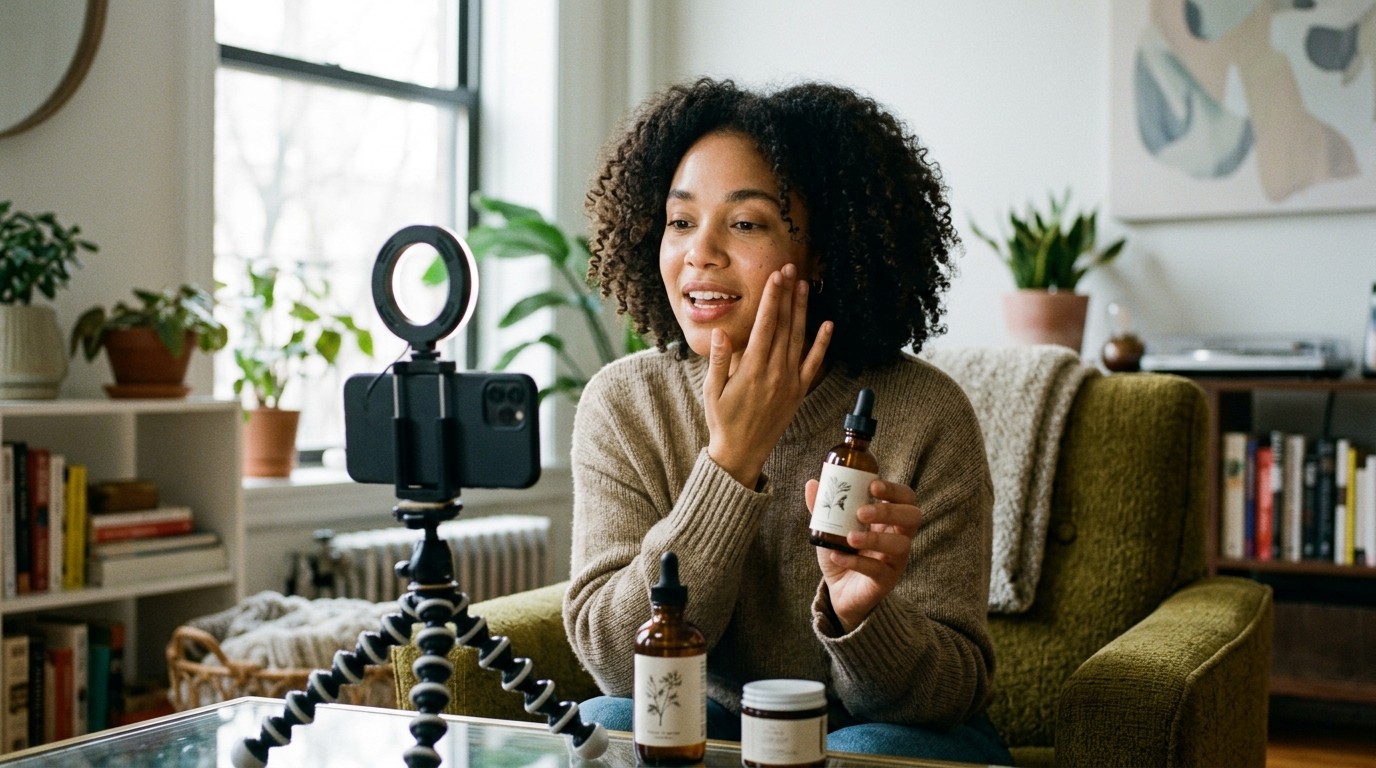
Creator marketing is becoming more integrated with commerce, content, community, and search.
The strongest creator relationships will likely become less transactional.
Brands will increasingly look for creators who can contribute to product education, audience research, community development, content production, and long-term advocacy.
Creators, meanwhile, will increasingly evaluate partnerships based on relevance, product quality, audience trust, and whether the brand fits their identity.
This creates an environment where authenticity is not simply a creative preference. It becomes an operational advantage.
A Practical 30-Day Micro-Influencer Product Promotion Plan
Days 1–5: Research
Define the ideal customer, target communities, creator categories, primary pain points, and campaign objective.
Build a shortlist of relevant creators.
Days 6–10: Evaluation
Review audience quality, content history, engagement patterns, creator credibility, and commercial fit.
Remove creators who have weak category relevance.
Days 11–15: Outreach
Approach creators with personalized messages.
Explain why the collaboration makes sense for their audience.
Avoid sending generic mass pitches.
Days 16–20: Briefing
Provide campaign goals, product information, key claims, tracking links, creative boundaries, deadlines, and usage requirements.
Allow creators to shape the presentation.
Days 21–25: Publishing
Launch content in coordinated waves rather than posting everything simultaneously.
Monitor engagement, comments, clicks, sentiment, and audience questions.
Days 26–30: Analysis
Compare performance.
Identify winning creators, winning messages, strongest content formats, conversion barriers, and opportunities for improvement.
Then use those insights to build the next campaign.
A Complete Campaign Framework
A strong Micro-Influencer Product Promotion campaign can follow this sequence:
Research → Match → Brief → Create → Publish → Measure → Learn → Optimize → Scale
Every stage affects the next.
Weak research creates poor creator selection.
Poor creator selection creates irrelevant content.
Irrelevant content creates weak engagement.
Weak engagement creates inefficient traffic.
Inefficient traffic produces poor economics.
That is why successful creator marketing is a system rather than a single promotional tactic.
Final Strategic Takeaway
The central lesson is simple: specialized audiences reward relevance.
People do not need another generic advertisement.
They need someone they trust to help them make a decision.
A well-selected creator can explain the problem, demonstrate the product, address objections, provide context, and make the purchase feel less risky.
That is the strategic value of Micro-Influencer Product Promotion.
The best campaigns do not attempt to manufacture trust. They borrow from relationships that already exist.
They also respect creator expertise, measure business outcomes, improve based on audience feedback, and develop partnerships over time.
When relevance, authenticity, content quality, and conversion infrastructure work together, Micro-Influencer Product Promotion can become a powerful way to reach niche buyers without depending entirely on mass-market advertising.
Conclusion
Micro-Influencer Product Promotion gives brands a practical way to reach highly relevant buyers through trusted voices and focused communities. Its strength comes from combining audience specificity, authentic storytelling, product education, social proof, and measurable conversion paths. The most successful programs do not judge creators by follower count alone; they evaluate audience fit, credibility, content quality, buyer intent, and long-term commercial value. Brands that give creators strategic clarity without destroying their natural voice can build stronger relationships and more persuasive campaigns. By testing carefully, measuring real business outcomes, learning from audience feedback, and scaling proven partnerships, brands can turn niche creator influence into a repeatable growth engine.
Frequently Asked Questions (FAQ)
What is Micro-Influencer Product Promotion?
Micro-Influencer Product Promotion is a marketing strategy where brands collaborate with smaller creators who have focused, engaged audiences to educate, recommend, demonstrate, or promote products.
Why is Micro-Influencer Product Promotion effective for niche products?
It works well because niche creators often have audiences built around specific interests, problems, professions, lifestyles, or categories. This makes the product recommendation more relevant.
How many followers should a micro-influencer have?
There is no universal follower threshold. Audience relevance, engagement quality, trust, expertise, and buyer alignment are generally more important than follower volume alone.
How do brands find the right micro-influencers?
Brands should identify their ideal buyers first and then find creators whose audience, expertise, content style, and community discussions closely match those buyers.
What type of content works best for creator product campaigns?
Demonstrations, tutorials, reviews, comparisons, real-world usage stories, before-and-after content, and problem-solving videos can perform strongly when aligned with the product and audience.
Should brands give creators a script?
A strategic brief is usually more useful than a rigid word-for-word script. Creators should understand the objective and product details while retaining their natural communication style.
How can brands measure Micro-Influencer Product Promotion?
Brands can use unique tracking links, discount codes, landing pages, platform analytics, conversion tracking, revenue data, CAC, ROAS, and customer lifetime value to evaluate performance.
Is creator engagement more important than follower count?
Often, yes. High-quality engagement can indicate stronger audience attention and trust. However, engagement should still be evaluated alongside audience relevance and actual business results.
Can creator content be reused in paid advertising?
Yes, provided the brand has the necessary content usage rights. High-performing creator content can potentially be reused across paid ads, websites, email campaigns, product pages, and other marketing channels.
How can brands scale Micro-Influencer Product Promotion?
The strongest approach is to identify repeatable winning patterns first, including creator types, audience segments, formats, offers, and messages, then expand using those proven patterns rather than simply recruiting more creators.