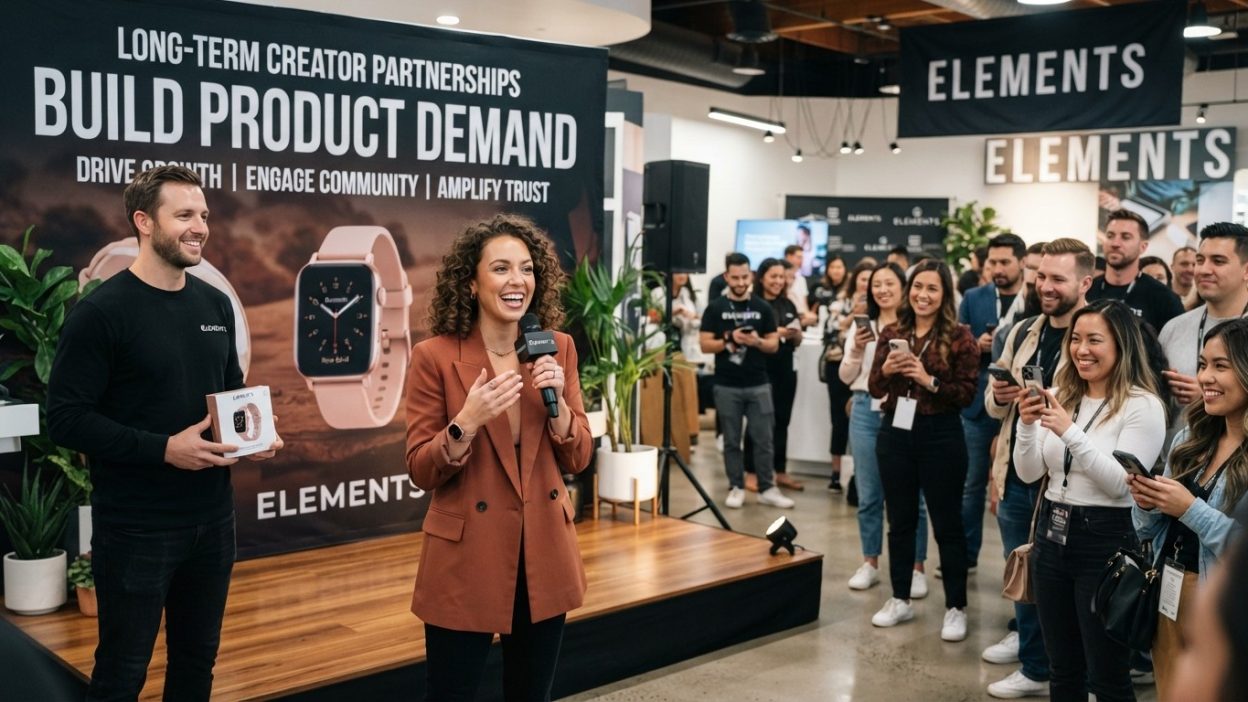
Long-term creator relationships turn one-off promotion into sustained product demand by combining trust, repeated exposure, authentic storytelling, measurable performance, and strategic audience alignment.
Modern audiences are surrounded by recommendations, advertisements, sponsored posts, product reviews, short-form videos, and promotional messages. Because consumers see so many commercial messages every day, a single creator mention often creates awareness without creating enough confidence to trigger action. This is where Long-Term Creator Partnerships become strategically valuable.
A creator who repeatedly works with the same brand can develop deeper product knowledge, communicate the product more naturally, and build a recognizable connection between the product and their audience. Instead of treating creators as temporary advertising placements, brands can treat them as long-term demand-building partners.
The strongest Long-Term Creator Partnerships are not based on how many posts a creator can publish. They are based on how effectively the creator can influence perception over time. Repeated exposure can help audiences move through a psychological sequence: recognition, curiosity, consideration, trust, trial, adoption, and eventually advocacy.
For brands, Long-Term Creator Partnerships also create consistency. The creator understands the brand voice, product strengths, customer objections, and campaign goals more deeply with every collaboration. This makes future content more relevant and often reduces the friction associated with starting every campaign from zero.
Instead of asking, “How can we get this product promoted today?” marketers should increasingly ask, “Which creator can help us build demand for this product for the next six, twelve, or twenty-four months?” That change in thinking completely reshapes creator strategy.
What Are Long-Term Creator Partnerships?
Long-Term Creator Partnerships are structured relationships in which a brand works with the same creator or group of creators repeatedly over an extended period rather than relying primarily on isolated sponsorships.
The relationship may include monthly content, quarterly campaigns, product launches, affiliate activity, live streams, tutorials, product education, social storytelling, community engagement, and feedback sessions. The exact structure depends on the business model, audience, product category, and creator.
Long-Term Creator Partnerships work especially well when the product requires explanation, trust, repeated consideration, or behavioral change. Software, apps, beauty products, financial services, education platforms, consumer electronics, wellness brands, and subscription businesses can all benefit from ongoing creator relationships.
A one-time campaign often asks a creator to understand the product quickly, produce content immediately, and generate results within a short window. Long-Term Creator Partnerships give the creator enough time to learn the product, use it personally, identify realistic benefits, and develop stronger stories around genuine experiences.
That difference matters because audiences are highly sensitive to promotional inconsistency. When a creator suddenly promotes an unfamiliar product and never mentions it again, viewers may interpret the collaboration as transactional. Continued relationships can produce the opposite effect.
Repeated product appearances can create familiarity. Familiarity can lower psychological resistance. When audiences repeatedly see a creator discussing the same solution from different angles, the product can become mentally available when a related need appears.
Why Long-Term Creator Partnerships Build Stronger Demand
Demand does not usually appear because someone sees a product one time. Demand grows when consumers understand a problem, recognize a solution, trust the messenger, believe the product fits their needs, and feel confident enough to act.
Long-Term Creator Partnerships support each part of this process.
A creator can first introduce a problem. Later, they can demonstrate the product. In another piece of content, they can explain an overlooked feature. Months later, they can share an update based on real use. Each interaction adds another layer of meaning.
This creates cumulative influence rather than isolated exposure.
Repetition Creates Familiarity
Repeated exposure is one of the most important advantages of Long-Term Creator Partnerships. A product that appears consistently in useful and relevant content becomes easier for audiences to recognize and remember.
Suppose a creator discusses productivity every week. In the first month, they introduce a software tool. The next month, they demonstrate a workflow using the tool. Later, they compare it with another solution. Eventually, audiences begin associating that creator’s productivity expertise with the product.
The product no longer exists as a random sponsored item. It becomes part of the creator’s content ecosystem.
Long-Term Creator Partnerships can therefore strengthen mental availability. When viewers later encounter the problem addressed by the product, the creator’s previous recommendation may come to mind.
Trust Grows Through Consistency
Trust is difficult to build instantly. A creator can have millions of followers and still lack strong influence within a specific product category.
Long-Term Creator Partnerships create repeated opportunities for the audience to observe whether the creator’s recommendations are consistent with their usual standards.
When creators disclose partnerships properly, use products realistically, discuss limitations honestly, and avoid exaggerated claims, repeated collaboration can make commercial recommendations feel more credible.
Trust becomes especially important for products with high consideration cycles. Consumers may need days or months before purchasing expensive software, technology, education programs, subscriptions, or professional services.
A single sponsored post may introduce the brand. Long-Term Creator Partnerships can keep the brand present during the longer decision process.
The Psychology Behind Long-Term Creator Partnerships
Successful creator strategy is fundamentally a psychology strategy.
Consumers rarely make decisions using information alone. They also rely on social proof, familiarity, authority, identity, emotion, convenience, perceived risk, and anticipated outcomes.
Long-Term Creator Partnerships can activate several of these psychological mechanisms simultaneously.
Familiarity Reduces Resistance
An unfamiliar brand creates uncertainty. Consumers naturally ask questions such as:
“Is this legitimate?”
“Does this actually work?”
“Will this suit me?”
“Is the creator recommending it because they genuinely like it?”
Repeated exposure does not automatically prove quality, but it can reduce the psychological distance between the consumer and the brand.
Long-Term Creator Partnerships allow brands to answer these questions gradually rather than forcing everything into one campaign.
Social Proof Becomes Stronger
When a creator continuously demonstrates a product, audiences gain more opportunities to observe how it fits real situations.
A creator might show how a product works before purchase, during implementation, after several weeks of use, and during a specific problem-solving scenario. This creates richer social proof than a single promotional statement.
Long-Term Creator Partnerships are particularly effective when creators show process rather than simply praising outcomes.
Identity Alignment Influences Purchase Decisions
People often buy products that fit the identity they want to express or reinforce.
A fitness creator can make certain products feel connected to an active identity. A technology creator can make tools feel associated with innovation. A parenting creator can make household products feel practical and trustworthy.
Long-Term Creator Partnerships can strengthen this association because the creator repeatedly connects the product to the lifestyle represented by their content.
Long-Term Creator Partnerships vs One-Time Influencer Campaigns
Both approaches have value, but they serve different strategic purposes.
| Factor | One-Time Campaign | Long-Term Creator Partnerships |
|---|---|---|
| Primary goal | Awareness or launch | Sustainable demand |
| Relationship | Transactional | Strategic |
| Product knowledge | Limited | Deep |
| Audience exposure | Short burst | Repeated |
| Trust development | Lower | Higher potential |
| Content consistency | Variable | Stronger |
| Optimization | Campaign-level | Continuous |
| Feedback | Limited | Ongoing |
| Brand association | Temporary | Stronger |
| Measurement | Short-term | Long-term + cumulative |
One-time campaigns can make sense for launches, events, seasonal promotions, or rapid awareness objectives. However, Long-Term Creator Partnerships are generally better suited to brands that want sustained category presence and repeated consumer consideration.
The key is not choosing one approach for every situation. Smart marketers determine whether the objective requires immediate reach, ongoing influence, or both.
How to Select the Right Creator
The creator with the largest audience is not necessarily the best partner.
Long-Term Creator Partnerships depend heavily on audience compatibility. A smaller creator whose community strongly matches the product’s ideal customer may generate more meaningful demand than a celebrity with broad but weak relevance.
Evaluate Audience Fit
Analyze:
- Audience demographics
- Geographic relevance
- Interests
- Purchasing behavior
- Engagement quality
- Content preferences
- Audience pain points
- Product-category relevance
Look beyond follower count. A creator with 75,000 highly relevant followers may outperform a creator with 750,000 loosely connected viewers.
Examine Content Credibility
Review the creator’s historical content before negotiating.
Look at whether the creator explains products carefully, answers audience questions, uses products naturally, and maintains a recognizable voice. Long-Term Creator Partnerships require sustained authenticity, so creators who constantly promote unrelated products may create credibility problems.
Analyze Engagement Quality
Numbers can be misleading.
A creator may have strong engagement rates but weak commercial intent. Another may have moderate engagement but receive comments such as:
“Where can I buy this?”
“Which version do you recommend?”
“Does this work for beginners?”
Those questions can reveal stronger purchasing consideration.
Brands should evaluate the quality of conversations, not simply the percentage shown on an analytics dashboard.
Build a Strategic Partnership Framework
Long-Term Creator Partnerships perform better when both sides understand what the relationship is designed to achieve.
A strong framework should establish the business objective, audience, product positioning, content responsibilities, timelines, compensation, measurement, disclosure requirements, usage rights, and review process.
Define the Commercial Objective
Start with a clear business goal.
Possible goals include:
- Building product awareness
- Generating qualified traffic
- Increasing conversions
- Improving app adoption
- Growing subscriptions
- Supporting a product launch
- Increasing repeat purchases
- Building category authority
- Generating user-generated content
Avoid a vague objective such as “get more exposure.”
Long-Term Creator Partnerships should connect creator activity to measurable business outcomes.
Define the Creator’s Role
Creators can serve different strategic roles.
Some are educators. Some are demonstrators. Some are reviewers. Others are storytellers, community leaders, entertainers, experts, or product users.
A creator should not be forced into a content style that conflicts with their established audience relationship.
When brands respect the creator’s native communication style, Long-Term Creator Partnerships often produce stronger content because the creator can remain recognizable while still communicating brand value.
Give Creators Enough Product Experience
One of the biggest mistakes brands make is asking creators to promote products before they understand them.
Send products early. Provide onboarding materials. Answer questions. Give creators access to important features. Let them experience the product without immediately demanding promotional content.
Long-Term Creator Partnerships become more effective when creators can speak from knowledge rather than memorized talking points.
Create a Product Immersion Phase
Before the first major campaign, establish a product immersion phase.
The creator should understand:
- What problem the product solves
- Who benefits most
- Who may not benefit
- Main differentiators
- Pricing logic
- Common objections
- Customer experience
- Important features
- Appropriate use cases
- Realistic outcomes
This foundation allows creators to create more sophisticated stories later.
Content Strategy for Long-Term Creator Partnerships
Repeated collaboration does not mean repeating the same promotional message.
Audiences need fresh reasons to pay attention.
The best Long-Term Creator Partnerships use multiple content angles throughout the relationship.
Stage One: Introduction
The creator introduces the product and explains why it is relevant to their audience.
The objective is recognition, not aggressive conversion.
At this stage, content might focus on the problem, the creator’s first impression, or the context in which the product becomes useful.
Stage Two: Demonstration
Next, the creator shows the product in action.
Demonstrations reduce abstraction. Instead of saying “this tool saves time,” the creator can show exactly how a task is completed.
This is where product complexity can become easier to understand.
Stage Three: Experience
After real usage, creators can discuss what changed, what worked well, and what required adjustment.
This is one of the strongest phases of Long-Term Creator Partnerships because the content can become more experiential and less promotional.
Stage Four: Comparison and Objection Handling
Consumers often hesitate because of uncertainty.
Creators can answer questions about:
- Alternatives
- Pricing
- Setup
- Difficulty
- Compatibility
- Learning curve
- Features
- Value
- Appropriate customer types
This content can remove friction for people already considering the product.
Stage Five: Advanced Use
Once the audience recognizes the product, creators can demonstrate advanced applications.
Advanced content can attract more experienced buyers while also reinforcing product authority.
Stage Six: Advocacy
The final stage is where Long-Term Creator Partnerships can become especially powerful.
Creators who genuinely become enthusiastic users may naturally recommend the product even outside contractual deliverables.
This can transform sponsorship into advocacy.
Use Storytelling Instead of Constant Selling
Audiences do not want every creator post to feel like an advertisement.
Storytelling makes commercial communication easier to consume.
A creator might share a problem they experienced, explain how they discovered a solution, demonstrate their workflow, show progress, and describe what they would do differently next time.
The product becomes part of the story rather than the entire story.
Long-Term Creator Partnerships give creators enough time to tell multiple stories rather than forcing every benefit into a single post.
Integrate Affiliate Models Carefully
Performance-based structures can add accountability to creator programs.
Affiliate Creator Marketing can be introduced alongside fixed creator fees when brands want to reward direct performance.
However, commissions should not become the only measure of creator value.
Creators can influence consumers who purchase later through direct search, branded traffic, stores, or other channels. Last-click affiliate reporting may underestimate this influence.
Long-Term Creator Partnerships work best when brands evaluate the full customer journey rather than relying on one attribution model.
Connect Creators With Paid Media
Organic creator content can become more valuable when top-performing assets are reused strategically in paid campaigns.
A creator video that performs well organically may contain messaging, hooks, demonstrations, or objections that resonate with the audience.
Brands can test creator assets as paid creative, subject to proper permissions and usage rights.
For mobile products, the creator ecosystem can also complement channels such as App Install Ads by providing stronger pre-install context and trust.
The combination can create a progression from awareness to action rather than relying on paid traffic alone.
Connect Creator Content With Product Experience
The journey should not end when users click.
For digital products, the post-click experience matters enormously.
A creator may generate high-quality demand, but poor landing pages, confusing registration, slow setup, or weak App Onboarding can destroy conversion potential.
Therefore, Long-Term Creator Partnerships should be evaluated across the customer journey.
The brand should ask:
Did people understand the offer?
Did visitors reach the correct page?
Did they sign up?
Did they activate the product?
Did they return?
Did they recommend it?
This broader approach helps separate traffic generation from genuine demand creation.
Build a Creator Content Calendar
Long-Term Creator Partnerships need rhythm.
Without a structured calendar, collaboration can become inconsistent. With too much content, audiences may feel overwhelmed or commercially pressured.
A balanced calendar can mix:
- Educational content
- Product demonstrations
- Personal experience
- Tutorials
- Reviews
- Comparisons
- Problem-solving content
- Community Q&A
- Launch content
- Seasonal content
- Behind-the-scenes stories
The objective is continuity without repetition.
Example Quarterly Structure
| Month | Primary Content | Secondary Content | Business Goal |
|---|---|---|---|
| Month 1 | Product introduction | Educational post | Awareness |
| Month 2 | Demonstration | FAQ content | Consideration |
| Month 3 | Experience story | Comparison | Conversion |
The same structure can then evolve in the next quarter based on performance.
Measure Long-Term Creator Partnerships Correctly
Measurement is one of the most important parts of the strategy.
Brands should avoid evaluating the entire relationship through immediate sales alone.
Track a combination of metrics.
Awareness Metrics
Look at:
- Reach
- Impressions
- Video views
- Unique viewers
- Brand searches
- Share of voice
- New audience exposure
These metrics reveal whether the creator is expanding product visibility.
Consideration Metrics
Useful signals include:
- Profile visits
- Website visits
- Product page views
- Content saves
- Comments
- Direct messages
- Search behavior
- Time on page
Consideration indicators can show whether audiences are becoming more interested.
Conversion Metrics
Track:
- Purchases
- Sign-ups
- Leads
- Subscriptions
- Trial starts
- Qualified inquiries
- Affiliate revenue
- Conversion rate
These should be evaluated alongside campaign costs.
Retention Metrics
For long-term demand, retention can matter more than initial conversion.
Track:
- Repeat purchases
- Subscription retention
- Activation
- Product usage
- Churn
- Referral activity
- Customer lifetime value
Long-Term Creator Partnerships can produce customers who remain valuable after the initial conversion.
Measure Incrementality, Not Just Attribution
Attribution tells you which channel received credit.
Incrementality asks a deeper question:
“Did the creator relationship cause additional business that would not have happened otherwise?”
This distinction matters.
A consumer may discover a creator’s recommendation, later search the brand independently, and finally purchase through a different device or channel.
Traditional last-click reporting could assign the sale elsewhere.
Long-Term Creator Partnerships therefore benefit from experiments such as geographic tests, controlled creator groups, holdout audiences, branded search analysis, and post-purchase surveys.
Compensation Models
The right compensation model depends on the creator, platform, product, audience, and campaign objective.
Common structures include:
Flat Fee
The creator receives a fixed amount per deliverable or campaign.
This approach provides predictability for both parties.
Performance Bonus
A creator can receive an additional payment when predefined performance thresholds are achieved.
This can encourage optimization without making income entirely dependent on uncertain attribution.
Affiliate Commission
The creator earns a percentage of revenue from tracked actions.
Affiliate Creator Marketing can work well for measurable products with clear customer journeys.
Hybrid Model
A base fee plus performance incentives can provide stability while aligning both sides around outcomes.
For mature Long-Term Creator Partnerships, hybrid arrangements are often more flexible than rigid one-dimensional models.
Protect Authenticity
Authenticity should not mean “let the creator do anything.”
Brands still need strategic guardrails.
Provide mandatory facts, legal requirements, brand safety rules, disclosure guidance, restricted claims, and essential product messages.
At the same time, allow creators to decide how those facts should be communicated.
The best Long-Term Creator Partnerships create a framework where brand objectives and creator personality can coexist.
Give Creators Creative Freedom
Overly scripted content often sounds unnatural.
Instead of requiring every sentence, provide:
- Key messages
- Required facts
- Product claims
- Visual requirements
- Prohibited claims
- Calls to action
- Brand positioning
Then let the creator translate the information into their own communication style.
Creators understand their communities better than most internal marketing teams. That knowledge is one of the main reasons the partnership exists.
Turn Creator Feedback Into Product Intelligence
A strong partnership is not only a marketing channel.
Creators can become an informal source of market intelligence.
They may discover:
- Confusing product features
- Frequently asked questions
- Pricing objections
- Missing features
- Competitor perceptions
- Audience misconceptions
- New use cases
Long-Term Creator Partnerships provide repeated access to this feedback.
Brands should document these observations and share them with product, sales, customer service, and growth teams.
Common Mistakes to Avoid
Even promising creator programs can fail because of poor execution.
Choosing Reach Over Relevance
Large audiences look impressive but may not produce qualified demand.
Treating Every Creator the Same
Different creators require different strategies.
Over-Scripting Content
Excessive control can remove the creator’s natural voice.
Measuring Only Immediate Sales
Demand often develops over time.
Changing Creators Too Frequently
Constantly rotating partners can prevent meaningful audience association from developing.
Ignoring Post-Click Experience
Creator influence cannot compensate for a weak customer journey.
Overloading Audiences With Promotions
Too many sponsored posts can weaken audience trust.
Failing to Communicate
Long-term relationships require regular communication, feedback, and expectations management.
How to Build Long-Term Creator Partnerships at Scale
Once the model works with a few creators, brands can create a scalable creator ecosystem.
Start with a small group of strategically chosen partners.
Study what works.
Document successful content patterns.
Identify which creator profiles generate the strongest business outcomes.
Then expand gradually.
A scalable creator program may include:
- Tier 1 strategic creators
- Tier 2 growth creators
- Emerging creators
- Affiliate partners
- Product specialists
- Community creators
Each group can receive different compensation, content expectations, and access levels.
Create a Creator Relationship System
A CRM-style system can help brands manage Long-Term Creator Partnerships more effectively.
Track:
| Field | Purpose |
|---|---|
| Creator profile | Understand partner background |
| Audience fit | Confirm strategic relevance |
| Content history | Monitor previous activity |
| Performance | Evaluate business outcomes |
| Product experience | Understand familiarity |
| Relationship status | Manage collaboration stage |
| Compensation | Maintain financial visibility |
| Usage rights | Track content permissions |
| Feedback | Capture market insights |
This turns creator management from scattered communication into an organized growth system.
Use Different Creators at Different Funnel Stages
One creator does not need to perform every role.
Some creators are excellent at awareness. Others are better at technical education. Some excel at tutorials, while others are strong at conversion storytelling.
Long-Term Creator Partnerships become more powerful when each creator’s strengths are mapped to a specific customer journey stage.
For example, an educational creator can introduce the problem. A technical creator can demonstrate the product. A community creator can provide social proof. A specialist can handle advanced objections.
This creates a creator ecosystem rather than an isolated sponsorship program.
Repurpose Creator Content Strategically
High-performing creator content can generate value across multiple channels.
With appropriate permissions, brands can transform creator material into:
- Paid social ads
- Website testimonials
- Product-page assets
- Email content
- Sales enablement material
- Short-form clips
- Educational resources
- Landing-page sections
Long-Term Creator Partnerships become more efficient when each content asset has multiple useful applications.
Seasonal and Product Launch Opportunities
Long-term relationships are particularly valuable during launches.
Because the creator already understands the brand, they can communicate a launch more quickly and naturally.
Instead of searching for creators at the beginning of a product launch, brands can activate existing partners who already have trust with relevant audiences.
Long-Term Creator Partnerships also help brands prepare for seasonal demand because audiences are already familiar with the creator-product relationship.
Building Emotional Product Association
Products become memorable when attached to stories and emotions.
A creator might connect a product with:
- Saving time
- Reducing stress
- Achieving a goal
- Becoming more confident
- Improving productivity
- Making life easier
- Supporting a personal transformation
Long-Term Creator Partnerships create repeated opportunities for these emotional associations to develop.
The strongest relationships eventually make the product feel like part of a creator’s world.
Creator Partnerships and Customer Advocacy
The final objective is not simply to have creators publish more content.
It is to create a network of credible people who genuinely understand and support the product.
When creators become authentic users, they can generate content beyond contractual deliverables. They may answer questions, recommend features, mention the product in unrelated discussions, or introduce it to peers.
This type of earned influence can be significantly more valuable than repetitive sponsored placements.
A Practical Framework for Long-Term Creator Partnerships
A simple framework can help marketers operationalize the strategy.
Step 1: Identify Demand Gaps
Determine where customers lack awareness, understanding, trust, or confidence.
Step 2: Map Creator Strengths
Identify creators whose audiences naturally experience those gaps.
Step 3: Establish Relationship Economics
Determine fees, commissions, bonuses, usage rights, and expected deliverables.
Step 4: Create a Six- to Twelve-Month Calendar
Plan content themes without making every deliverable overly rigid.
Step 5: Measure Continuously
Track awareness, consideration, conversion, retention, and qualitative feedback.
Step 6: Optimize the Relationship
Keep what works, remove what does not, and experiment with new content formats.
Step 7: Develop Advocates
Identify creators who genuinely use and recommend the product and deepen those relationships.
A 90-Day Implementation Plan
| Period | Priority | Actions |
|---|---|---|
| Days 1–30 | Research | Identify creators, assess audiences, define goals |
| Days 31–60 | Activation | Product immersion, first content, audience feedback |
| Days 61–90 | Optimization | Analyze results, refine messaging, expand winners |
After ninety days, the brand should have enough information to identify which creators deserve deeper investment.
How Small Brands Can Use Long-Term Creator Partnerships
Smaller companies do not need massive creator budgets.
They can start with micro and mid-sized creators who have strong community relevance.
Instead of paying for ten unrelated posts, a brand might establish deeper relationships with two or three carefully selected creators.
The creators can receive early product access, exclusive features, personalized support, commissions, and long-term collaboration opportunities.
This creates stronger mutual incentives.
How Large Brands Can Improve Their Creator Programs
Enterprise brands often have the opposite problem: too many creators and too little consistency.
The solution is not simply adding more partners.
Large organizations should establish centralized guidelines while allowing local teams and creators enough flexibility to remain authentic.
A tiered system, shared analytics framework, standardized contracts, creator databases, and clear performance benchmarks can help coordinate the program.
Long-Term Creator Partnerships and Competitive Advantage
Competitors can copy advertisements quickly.
They can replicate a headline, redesign an offer, or bid on similar keywords.
Relationships are harder to copy.
When a brand develops meaningful Long-Term Creator Partnerships, it creates a network of people who understand the product, category, customers, and brand story.
That relationship capital can become a competitive advantage.
A competitor might reproduce the same product message tomorrow, but it cannot instantly reproduce years of credibility between a creator and their community.
Future-Proofing Creator Strategy
Creator marketing will continue evolving across platforms, formats, and technologies.
Short-form video, live commerce, community channels, affiliate systems, AI-assisted production, social search, and emerging content formats will influence how consumers discover products.
However, the underlying principle remains stable: people trust relevant people more when communication feels useful, credible, and consistent.
Long-Term Creator Partnerships are positioned around that durable principle.
Brands should therefore focus less on chasing every new content format and more on building creator relationships that can adapt as consumer behavior changes.
Frequently Asked Questions (FAQ)
1. What are Long-Term Creator Partnerships?
Long-Term Creator Partnerships are ongoing collaborations between brands and creators designed to build trust, familiarity, engagement, and sustained product demand through repeated strategic interactions.
2. Why are Long-Term Creator Partnerships better than one-time sponsorships?
Long-Term Creator Partnerships can create stronger familiarity, deeper product knowledge, more consistent storytelling, and greater trust than isolated promotional campaigns.
3. How long should a creator partnership last?
There is no universal duration, but six to twelve months can provide enough time to test content, understand performance, build familiarity, and optimize the relationship.
4. How should brands choose creators?
Brands should evaluate audience relevance, engagement quality, credibility, content style, product-category alignment, geographic suitability, and historical performance rather than relying only on follower counts.
5. Can small businesses use Long-Term Creator Partnerships?
Yes. Small businesses can begin with a few highly relevant micro or mid-sized creators and build deeper relationships instead of attempting expensive mass influencer campaigns.
6. Should creators receive free products?
Providing products can help creators develop authentic product knowledge. However, product access should not replace appropriate compensation when professional content production is expected.
7. How can brands measure creator partnership success?
Measurement should include awareness, engagement, consideration, conversions, retention, revenue, customer lifetime value, brand searches, qualitative feedback, and incremental impact where possible.
8. Should brands use affiliate commissions?
Affiliate commissions can work well when conversions are measurable. They can also be combined with fixed fees or performance bonuses to create a balanced compensation structure.
9. How can brands preserve creator authenticity?
Brands should define necessary facts, legal requirements, claims, and strategic objectives while allowing creators reasonable freedom to communicate in their established voice.
10. What is the biggest benefit of Long-Term Creator Partnerships?
The biggest benefit is cumulative influence. Repeated credible exposure can transform a creator from a temporary promotional channel into a trusted source of product awareness, education, consideration, and advocacy.