TikTok Product Promotion helps brands turn viral trends, creative videos, and authentic recommendations into meaningful product discovery, customer engagement, and measurable sales growth.
Social media has changed how people discover products, evaluate brands, and make purchasing decisions. Instead of relying entirely on traditional advertisements or searching through online stores, consumers increasingly discover new products while watching entertaining videos, following creators, and exploring content related to their interests. Among the platforms supporting this behavior, TikTok has become an important channel for businesses that want to introduce products through short-form video and creative storytelling.
The opportunity behind TikTok Product Promotion is not simply reaching people through viral videos. It is understanding why certain content attracts attention, how trends influence consumer behavior, and how brands can turn that attention into purchasing interest. A product demonstration, an entertaining problem-solving video, a relatable customer experience, or a creator recommendation can introduce an unfamiliar product to an audience that may never have discovered it through traditional advertising.
However, getting views does not automatically generate sales. A video can receive thousands of impressions while producing very few product inquiries or purchases. Successful promotion requires more than copying popular sounds, participating in every challenge, or publishing random product videos. Businesses need a clear understanding of their audience, a compelling product message, and content that naturally connects entertainment with commercial value.
An effective TikTok Product Promotion approach combines creative storytelling, audience psychology, trend research, creator collaborations, user-generated content, and performance measurement. It also recognizes that people generally engage with content because they find it interesting or useful, not because a company wants to sell something.
This guide explains how businesses can use TikTok trends, content formats, creators, advertising opportunities, and social shopping experiences to generate product interest and build a more effective marketing strategy.
What Is TikTok Product Promotion?
TikTok Product Promotion refers to the use of TikTok videos, creator collaborations, product demonstrations, community engagement, live content, and paid advertising to introduce products to potential customers and encourage purchasing decisions.
Unlike conventional promotional campaigns that often prioritize direct sales messages, successful TikTok marketing places greater emphasis on how products fit into people’s everyday interests and experiences.
A skincare brand might demonstrate a simple skincare routine, a technology company might show how a useful device solves a daily problem, and a clothing business might create styling videos featuring different ways to wear a particular product.
Each example presents the product through an experience rather than relying entirely on a promotional statement.
An effective TikTok Product Promotion campaign generally includes several connected activities:
- Identifying audiences that are likely to find the product relevant.
- Understanding popular content formats and emerging trends.
- Creating short, engaging videos around specific customer interests.
- Demonstrating product benefits through practical situations.
- Collaborating with relevant creators.
- Encouraging genuine customer participation.
- Connecting content engagement with appropriate purchasing opportunities.
- Measuring campaign performance and improving creative decisions.
The platform is particularly interesting for brands because a business does not necessarily need an enormous existing audience to create discovery opportunities. A well-designed video can reach viewers beyond an account’s existing followers, although distribution and results are never guaranteed.
The main objective is to make the product relevant to the viewer’s interests while giving them a clear reason to explore it further.
Why TikTok Has Become an Important Product Marketing Channel
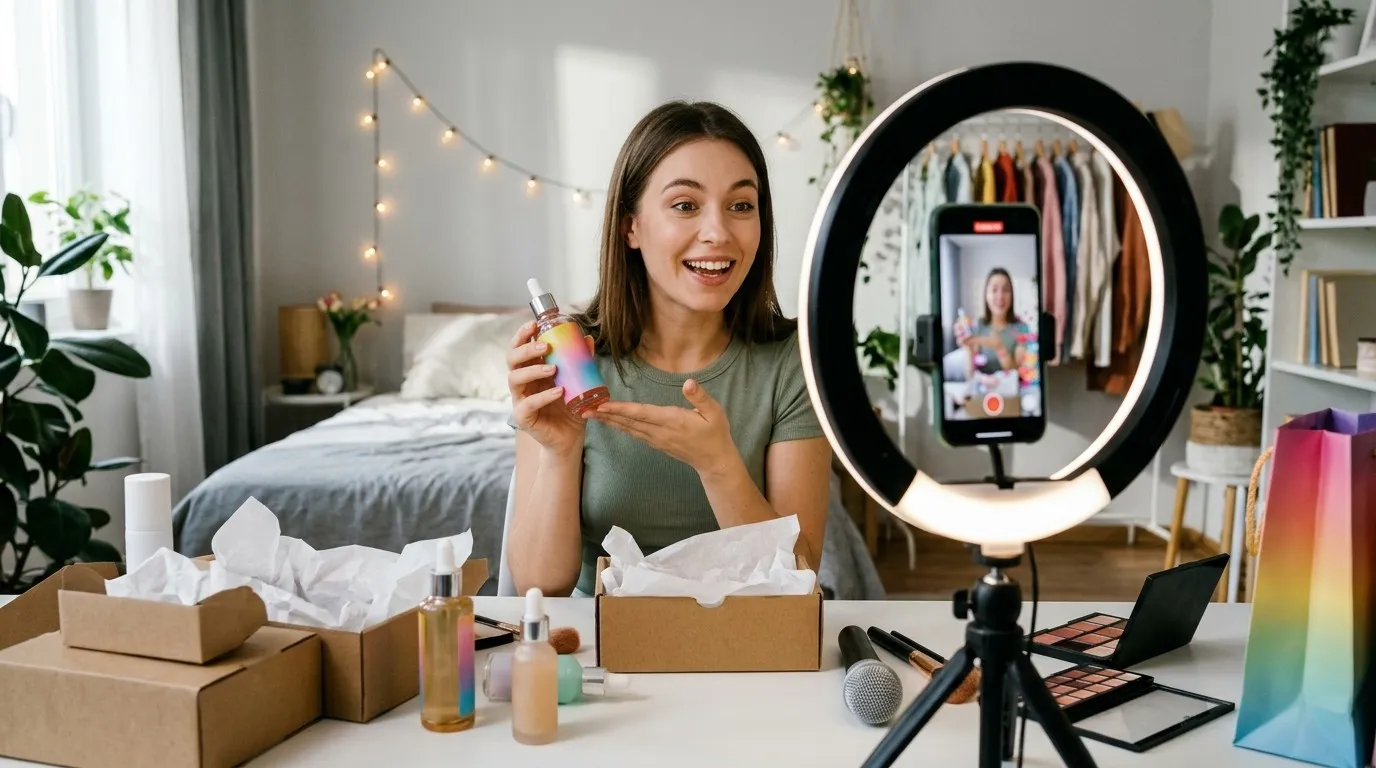
Consumer purchasing journeys are no longer limited to traditional search engines, physical stores, or brand advertisements. People discover products through friends, online communities, creator recommendations, and short-form videos.
TikTok creates opportunities for businesses to participate in these discovery moments.
Product Discovery Happens Through Entertainment
People generally open entertainment platforms to watch content, explore interests, or relax. They are not necessarily looking for advertisements.
This creates an opportunity for businesses to introduce products through entertaining or educational experiences.
For example, a kitchen accessories brand could publish a video showing a common cooking frustration and then demonstrate how one of its products makes the task easier.
The viewer initially watches because the situation is relatable. Product discovery happens naturally within the content.
An effective TikTok Product Promotion campaign understands that entertainment can create the first connection, while product value gives viewers a reason to take the next step.
Short Videos Make Product Demonstrations Easier
Some products are difficult to understand through photographs or written descriptions.
A video can show how an item works, how it looks from different angles, and how it fits into everyday activities.
For example, a portable cleaning device can be demonstrated by showing its operation on different surfaces. A clothing brand can show how a particular outfit looks when styled in multiple ways.
These demonstrations give viewers practical information without requiring them to read lengthy product descriptions.
Creator Recommendations Can Strengthen Credibility
Consumers often appreciate recommendations from people whose interests, experiences, or content they recognize.
Creators can introduce products through their own communication styles, making promotional messages feel more natural than conventional advertising.
This does not mean every creator recommendation will generate sales. Audience relevance, product suitability, credibility, and disclosure all influence the outcome.
A successful TikTok Product Promotion strategy evaluates creators based on the quality of their audience and the relevance of their content rather than follower numbers alone.
Trends Create Opportunities for Wider Visibility
Trending sounds, challenges, visual formats, and recurring content themes can provide businesses with creative opportunities.
A company can adapt an appropriate trend to demonstrate its product in a familiar format.
However, the most successful approach is not copying every popular video. Brands should identify trends that make sense for their products and audiences.
Communities Influence Purchasing Decisions
TikTok contains communities built around specific interests, hobbies, lifestyles, and product categories.
These communities can help businesses understand what customers discuss, which problems they experience, and what types of content they find useful.
For example, fitness enthusiasts may engage with workout equipment demonstrations, while technology communities may be interested in practical device comparisons.
Understanding these interests makes product communication more relevant.
Understand the Psychology Behind Product Discovery on TikTok
Creating engaging content requires an understanding of why people stop scrolling, continue watching, interact with a video, and consider purchasing a product.
An effective TikTok Product Promotion strategy should address these psychological stages rather than focusing exclusively on video production.
Curiosity Encourages People to Stop Scrolling
Users move quickly through their feeds. A video needs to establish an interesting reason to watch within its opening moments.
Curiosity can be created through a recognizable problem, a surprising demonstration, an unusual visual, or an intriguing question.
For example:
“Why does this small kitchen tool save so much preparation time?”
“Three things I wish I knew before buying this gadget.”
“This is what happens when you use the wrong storage solution.”
These openings introduce a subject that viewers may want to understand.
The objective is to create genuine curiosity, not misleading clickbait.
Relatable Problems Make Products Relevant
People are more likely to consider a product when they understand how it connects with their lives.
A product demonstration becomes more persuasive when it starts with a recognizable problem.
A travel accessories brand might show the difficulty of organizing luggage, while a home improvement company might demonstrate an easy solution for limited storage space.
TikTok Product Promotion works particularly well when the content focuses on customer situations instead of repeatedly describing product specifications.
Visual Proof Reduces Uncertainty
Potential buyers often want to see a product working before spending money.
A demonstration provides visible evidence that helps viewers understand what they are considering.
For example, a cleaning product should be shown in a realistic cleaning situation. A storage product should be demonstrated with suitable items, while a clothing product should be presented through natural movement and accurate styling.
Visual proof can make promotional communication easier to evaluate.
Social Validation Influences Confidence
People sometimes look at customer comments, creator experiences, and other users’ reactions before making a purchasing decision.
When multiple relevant customers demonstrate how they use a product, potential buyers gain additional perspectives.
However, social validation should remain genuine. Artificial reviews, fabricated testimonials, and undisclosed incentives can damage credibility.
Immediate Value Encourages Engagement
Content that teaches something useful gives viewers a reason to interact.
A video might show a practical shortcut, explain a common mistake, or demonstrate an unexpected product application.
This helps a brand become associated with useful information rather than constant advertising.
Emotional Connection Creates Memorability
Humor, excitement, satisfaction, surprise, and relatability can make content memorable.
A brand does not need to make every video emotional or funny. It needs to understand which emotional responses naturally fit its product and audience.
An effective TikTok Product Promotion campaign uses emotions to communicate value rather than manipulating viewers through unrealistic expectations.
Define Your TikTok Product Promotion Goals Before Creating Content
Before recording videos, businesses should establish what they want the campaign to accomplish.
A company launching a new product may prioritize awareness, while an established e-commerce brand may focus on product page visits or completed purchases.
Different objectives require different creative approaches and measurement systems.
Brand Awareness
Awareness campaigns introduce products to people who may not know the brand.
Their content can focus on product demonstrations, entertaining situations, category education, and memorable brand characteristics.
The objective is to make the product recognizable and relevant.
Product Consideration
Consideration campaigns provide information that helps people evaluate a product.
Useful formats include:
- Product demonstrations.
- Feature explanations.
- Comparison videos.
- Frequently asked questions.
- Customer experiences.
- Practical tutorials.
This type of TikTok Product Promotion helps viewers understand whether the product fits their requirements.
Website Traffic
Traffic-focused campaigns encourage interested viewers to explore additional product information.
The destination should provide consistent messaging, accurate pricing, useful product photographs, and a clear purchasing path.
Sending viewers to an unrelated homepage can create unnecessary friction.
Direct Sales
Sales-focused campaigns communicate product value more directly and provide a suitable opportunity to purchase.
The creative should address the buyer’s problem, demonstrate relevant benefits, establish credibility, and explain the next step.
Businesses should distinguish between video engagement and actual purchase performance.
Customer Retention
TikTok can also support existing customers through product tutorials, usage tips, maintenance advice, new product announcements, and community discussions.
This creates opportunities to strengthen customer relationships after the initial purchase.
Identify the Right Target Audience for Your Products
A product can be valuable without being relevant to every TikTok user.
Businesses should define the audience most likely to benefit from the product before developing a content strategy.
Build an Ideal Customer Profile
An Ideal Customer Profile describes the characteristics of the people most likely to purchase a product.
Important factors include:
| Audience factor | What to understand |
|---|---|
| Age group | Relevant age range of intended buyers |
| Location | Countries, cities, or service areas |
| Interests | Hobbies, lifestyle, and category preferences |
| Problems | Challenges the product can solve |
| Purchasing power | Expected price sensitivity |
| Buying motivation | Convenience, quality, appearance, performance |
| Content preferences | Tutorials, entertainment, reviews, demonstrations |
| Purchase barriers | Price, trust, delivery, suitability |
This information helps brands produce more relevant campaigns.
Research Audience Interests
Businesses can study the types of videos their target customers already enjoy.
Look for recurring questions, product discussions, common frustrations, content formats, and themes that attract genuine participation.
For example, an organization selling home accessories might discover that its audience frequently watches home organization videos.
That observation can guide content development without requiring the company to imitate another creator.
Understand Different Buyer Motivations
Different customers may purchase the same product for different reasons.
One person may purchase a water bottle because of its design, another because of convenience, and another because it helps maintain hydration during travel.
A strong TikTok Product Promotion approach identifies these motivations and creates distinct messages around them.
Use Comments as Research Material
Comment sections can provide valuable insights into audience questions and objections.
Potential customers may ask about size, durability, available colors, installation, delivery, or product compatibility.
These questions can become future video topics.
Rather than guessing what audiences want to know, businesses can use real discussions to create more useful content.
Discover TikTok Trends and Identify Which Ones Suit Your Brand
Trends can help businesses connect their products with existing audience interests. However, not every trend creates a meaningful marketing opportunity.
A company should evaluate whether a trend matches its audience, product category, communication style, and campaign objective.
Monitor Emerging Content Formats
Trends are not limited to popular songs or dance challenges.
They can include:
- Product comparison formats.
- Before-and-after demonstrations.
- Short tutorials.
- Relatable workplace situations.
- Storytelling formats.
- Unexpected product uses.
- Customer reaction videos.
- Common problem-and-solution sequences.
- Recurring editing styles.
An effective TikTok Product Promotion strategy identifies the underlying content pattern rather than simply copying its surface appearance.
Research Relevant Hashtags
Hashtags can help businesses discover content connected to specific topics and communities.
A useful research process involves examining industry-related keywords, product category discussions, audience questions, and niche content themes.
Brands should avoid assuming that a hashtag is valuable simply because it appears frequently.
The content and audience behind the conversation matter more than the apparent popularity of the label.
Evaluate a Trend Before Participating
Before adapting a popular format, ask:
- Does the trend relate to the product?
- Will the target audience understand the reference?
- Can the product appear naturally?
- Does the trend support the campaign objective?
- Can the company execute it without appearing forced?
- Are there any copyright, licensing, or brand safety concerns?
These questions help prevent wasted production effort.
Adapt Trends Instead of Copying Them
Copying another business’s content without modification rarely establishes a distinctive brand identity.
Instead, identify the reason a format attracts attention and reinterpret it.
For example, if a product comparison format becomes popular, a skincare brand might compare different product textures, while a technology brand might compare two practical device features.
The structure remains familiar, but the content provides category-specific value.
Use Trends While They Are Relevant
Some trends lose relevance quickly.
Businesses should develop a simple approval process that allows suitable ideas to move from research to production without unnecessary delays.
However, speed should never come at the expense of product accuracy or brand suitability.
Create TikTok Videos That Naturally Promote Products
Creative execution determines whether a product message becomes interesting enough to watch.
A strong video should provide a reason to stop scrolling, communicate an idea clearly, and establish an appropriate next step.
Start With a Strong Hook
The hook is the opening element that gives viewers a reason to continue watching.
Examples include:
“Here is a simple solution for a problem many people face.”
“I tested this product to see whether it actually makes a difference.”
“Three features that make this product useful for everyday work.”
“Before buying another storage box, watch this.”
An effective TikTok Product Promotion video uses a hook connected to the content that follows.
Unrelated opening statements may attract temporary attention but can cause viewers to leave when the video fails to deliver.
Demonstrate the Product
The product should be visible and understandable.
Show how it works, what makes it useful, and how it fits into a real situation.
Avoid spending too much time introducing the company before viewers understand the product’s value.
Highlight One Main Benefit
A short video usually works better when it communicates one central idea rather than trying to explain everything.
A company can produce separate videos addressing different features or customer problems.
For example, one video can explain convenience, another can demonstrate durability, and a third can answer a common purchasing question.
Use Clear Visual Storytelling
Short-form video relies heavily on visual communication.
Useful techniques include close-up shots, product movement, simple demonstrations, relevant transitions, and clear framing.
The presentation should make it easy to understand what is happening, even when the viewer watches without sound.
Add Captions and Supporting Text
Captions can improve accessibility and help viewers follow the demonstration.
Text overlays can highlight important points, identify product components, or summarize a benefit.
However, excessive text can distract from the product.
Finish With a Relevant Call to Action
A call to action should match the video’s objective.
Examples include:
- Explore the full product collection.
- Visit the product page.
- Check the available colors.
- Save this tutorial for later.
- Share your experience.
- Learn more about the product.
A good TikTok Product Promotion video avoids overwhelming viewers with several competing actions.
High-Performing TikTok Product Promotion Content Ideas
Different content formats can help businesses communicate product value from multiple perspectives.
Instead of publishing the same promotional video repeatedly, brands should develop a content library that addresses awareness, consideration, and purchase decisions.
Problem-and-Solution Videos
These videos begin with a recognizable problem and introduce the product as a possible solution.
For example, a kitchen accessories company might show the difficulty of organizing small kitchen spaces before demonstrating a suitable storage product.
This format works because the viewer understands the problem before learning about the product.
Before-and-After Demonstrations
Before-and-after videos visually compare a situation before using a product with the resulting condition.
They can work well for home organization, cleaning, beauty, and other categories where a legitimate visual comparison is possible.
Businesses should represent results accurately and avoid misleading editing.
Product Testing Videos
Testing content demonstrates how a product performs under realistic conditions.
For example, a technology creator could test a device’s setup process, while a travel accessories brand could demonstrate how much equipment fits inside a bag.
The content should clearly distinguish personal experience from independently verified claims.
Frequently Asked Questions Videos
Customer questions create opportunities for simple, useful videos.
A brand can respond to questions about size, material, functionality, compatibility, maintenance, and delivery.
These videos help reduce uncertainty while developing a searchable collection of product information.
Product Comparison Videos
Comparison videos help potential buyers understand differences between product options.
A company might compare two product sizes, explain different configurations, or discuss which option suits different customer requirements.
The comparisons should be balanced and accurate.
Behind-the-Scenes Videos
Behind-the-scenes content can show product preparation, packaging, design decisions, manufacturing processes, or order fulfillment.
This makes the business more visible and gives audiences an opportunity to understand how products are developed and delivered.
Customer Experience Videos
Customer-created videos can show real product experiences and explain how buyers use items in their everyday lives.
A structured approach to UGC Product Promotion can help brands make customer experiences part of their wider product marketing strategy.
Rather than relying only on company-created promotional claims, businesses can incorporate authentic customer perspectives into their content planning.
Unboxing and First-Impression Videos
Opening a product package creates a natural sequence of visual discoveries.
Customers and creators can show packaging, included accessories, product design, and initial impressions.
These experiences can help potential buyers understand what they receive after making a purchase.
Lifestyle Integration Videos
Lifestyle content demonstrates how a product fits into everyday activities.
For example, a fitness accessories brand might show how a product is used during a normal workout, while a travel brand might demonstrate how an accessory supports an organized journey.
This helps buyers imagine how the product could fit their own routines.
Work With TikTok Creators to Reach Relevant Buyers
Creators provide access to established audiences and can present products through recognizable communication styles.
A good collaboration should be based on audience relevance, creative quality, and trust.
Select Creators Based on Audience Relevance
A creator with 15,000 highly interested followers may offer greater commercial value than an account with several hundred thousand unrelated followers.
Businesses should examine content topics, audience engagement, comment quality, and the relationship between the creator’s interests and the product category.
Evaluate Creator Authenticity
The creator should have a natural connection with the product.
For example, a fitness creator may be suitable for workout equipment, while a home organization creator may be more relevant for storage accessories.
Audiences often recognize when a recommendation appears disconnected from the creator’s usual content.
Provide a Creative Brief Without Controlling Every Detail
Businesses should give creators accurate product information, campaign objectives, key messages, and relevant disclosure requirements.
However, they should allow creators to communicate naturally.
A video that sounds like a repeated corporate script may fail to connect with the audience.
Establish Clear Deliverables
Creator agreements should define:
| Agreement element | Details to establish |
|---|---|
| Content format | Short video, review, demonstration, or LIVE |
| Deliverables | Number and type of assets |
| Publication timeline | Agreed posting dates |
| Compensation | Payment, gifted product, or other benefits |
| Disclosure | Required commercial relationship disclosures |
| Usage rights | Where and how the brand may reuse content |
| Approval | Accuracy and agreed compliance checks |
| Reporting | Which performance information will be shared |
A well-managed TikTok Product Promotion campaign should build professional relationships rather than treating creators as interchangeable advertising placements.
Develop Long-Term Creator Relationships
Repeated collaboration can help audiences become familiar with a product and its benefits.
Businesses can work with creators who understand their products and consistently communicate with the relevant audience.
Long-term partnerships also provide opportunities to test different creative approaches and develop more natural brand integration.
Use TikTok LIVE and Interactive Product Demonstrations
LIVE content creates opportunities for real-time communication between businesses, creators, and audiences.
Instead of presenting a pre-recorded video, the host can demonstrate products, answer questions, compare features, and respond to customer concerns.
Depending on account eligibility and regional feature availability, shopping integrations may also allow viewers to explore products during supported LIVE experiences.
Prepare a Clear LIVE Demonstration Plan
A useful session should have a defined structure.
The host can introduce the product, explain its main benefits, demonstrate practical features, answer common questions, and explain where viewers can find more information.
Encourage Meaningful Interaction
Questions and audience participation make live sessions more useful.
For example, customers may ask about product dimensions, available colors, compatibility, or maintenance.
Hosts should provide clear answers and acknowledge when they need to verify information.
TikTok’s official seller education guidance emphasizes active demonstrations and natural audience interaction in high-quality product videos and LIVE sessions. TikTok Shop video and LIVE guidance.
Make Product Information Easy to Access
The audience should know exactly which product is being demonstrated.
Where relevant features are available, brands can use supported shopping links or product discovery tools. Otherwise, they should provide an accurate route to the relevant product page.
Connect TikTok Product Promotion With Social Commerce
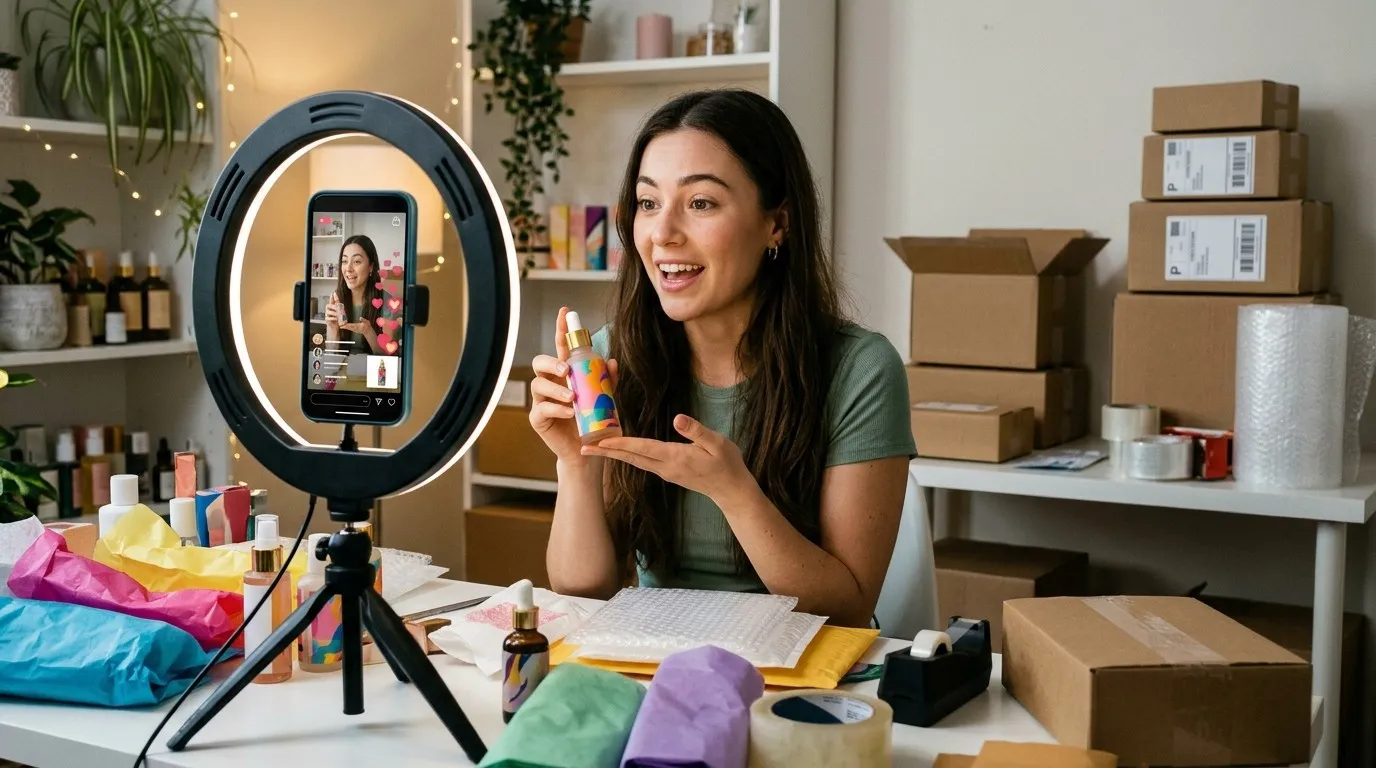
Product discovery becomes more valuable when interested viewers can move toward product evaluation and purchasing without unnecessary confusion.
Social commerce connects social content, product information, and shopping opportunities.
A broader Social Commerce Marketing approach can help businesses connect content engagement with their wider online shopping experience.
Build a Consistent Product Discovery Journey
A viewer may discover a product through a creator video, visit the company profile, explore additional demonstrations, and then open the product page.
Every stage should communicate consistent information.
The product shown in the video should match the product listing, and important information such as pricing, specifications, availability, and delivery conditions should remain accurate.
Optimize the Product Landing Page
The destination page should help visitors make an informed decision.
Important elements include:
- Clear product photographs.
- Accurate descriptions.
- Important specifications.
- Transparent pricing.
- Available product variations.
- Delivery information.
- Return and refund details.
- Customer support information.
- Relevant reviews where available.
A compelling TikTok Product Promotion campaign can lose commercial value when the landing page creates uncertainty or makes purchasing unnecessarily difficult.
Understand Regional Shopping Availability
TikTok Shop and other shopping integrations depend on market availability, account eligibility, and applicable platform requirements.
Businesses operating across multiple countries should not assume that every TikTok shopping feature is available everywhere.
Where direct in-app purchasing is unavailable, companies can use permitted website links and other suitable discovery routes.
Reduce Friction Between Interest and Purchase
Customers should not have to search extensively to understand how to buy a product.
A clear path from video to product information helps reduce unnecessary steps.
Businesses should also maintain consistency between advertising messages and the actual purchase experience.
Use TikTok Advertising to Expand Product Reach
Organic content can create awareness and engagement, but businesses may also use paid advertising to introduce their products to carefully selected audiences.
A combination of organic and paid promotion can support different stages of product discovery.
Understand the Role of Paid Promotion
Paid promotion allows businesses to allocate budget toward specific campaign objectives.
Depending on account eligibility, campaign configuration, and regional availability, advertising options may support reach, video engagement, website visits, lead generation, or sales-related objectives.
Businesses should select the objective that matches the purpose of the campaign.
Promote Videos That Already Demonstrate Value
Before increasing advertising investment, businesses can evaluate organic content to understand which videos generate meaningful engagement.
A video that attracts relevant questions, saves, shares, or product interest may provide a useful starting point for further testing.
However, organic performance alone does not guarantee profitable paid results.
Use Relevant Audience Targeting
Audience selection should be based on customer characteristics, interests, business objectives, and the targeting options currently available.
A broader approach to Demand Gen Targeting can also help businesses understand how to introduce products to relevant audiences beyond existing search demand.
The principle is to reach people who have a reasonable chance of finding the product valuable.
Combine TikTok With Other Advertising Channels
A product may first attract attention through TikTok and then become familiar through other advertising channels.
For example, a company might use video content for initial discovery and complementary Google Display Ads to support further awareness through suitable Google advertising placements.
The purpose of multichannel promotion is to maintain consistent messaging while reaching relevant audiences through different opportunities.
Businesses should use appropriate consent, privacy, and tracking practices when connecting advertising activity across platforms.
Optimize TikTok Profiles for Product Discovery
A successful campaign should not end when a viewer finishes watching a video.
Interested users may visit the business profile to understand the company, explore other content, and determine whether the brand appears credible.
Use a Clear Profile Description
The business profile should explain what the brand offers and who it serves.
Avoid vague statements that do not communicate the product category or value.
Maintain Consistent Branding
Profile photographs, video presentation, messaging, and product information should create a recognizable identity.
Consistency helps viewers understand that the content belongs to the same business.
Organize Important Content
Businesses should make their most useful information easy to discover.
This may include product demonstrations, tutorials, frequently asked questions, customer experiences, and introductory brand videos.
Provide a Clear Next Step
Where the relevant account features permit, businesses can use profile links and other approved discovery routes to guide visitors toward their websites or shopping destinations.
The destination should match the expectations created by the video.
Build a Consistent TikTok Content Calendar
Publishing randomly makes it difficult to maintain a recognizable brand presence or evaluate the performance of different content formats.
A content calendar helps businesses plan around product launches, trends, customer questions, and seasonal opportunities.
Create Content Categories
A balanced content calendar can include:
| Content category | Main objective | Example |
|---|---|---|
| Educational | Build product understanding | How-to demonstrations |
| Entertaining | Increase discovery | Relevant trend adaptations |
| Promotional | Communicate product value | Feature-focused videos |
| Community | Encourage participation | Customer questions and replies |
| Social proof | Build confidence | Customer experiences |
| Behind the scenes | Humanize the brand | Packaging and preparation |
A strong TikTok Product Promotion schedule should distribute these categories according to audience interests and business goals.
Plan Around Product Campaigns
A new product launch may require several different videos rather than one promotional announcement.
For example:
- An introductory product reveal.
- A problem-and-solution demonstration.
- A creator collaboration.
- A frequently asked questions video.
- An unboxing experience.
- A customer reaction.
- A reminder about product availability.
These videos provide multiple ways to understand the same product.
Maintain a Realistic Publishing Schedule
Publishing frequency should reflect available resources and the ability to maintain content quality.
Businesses should begin with a manageable schedule and adjust according to performance and production capacity.
Consistency matters, but unnecessary repetition can reduce audience interest.
Measure TikTok Product Promotion Performance
Views alone do not explain whether a campaign is commercially successful.
Businesses need a measurement framework connecting content performance with audience behavior and purchasing outcomes.
Video Reach and Awareness Metrics
Important awareness indicators include:
- Video views.
- Unique viewers or reach, where available.
- Impressions.
- Profile visits.
- Follower growth.
- Audience demographics.
These metrics help businesses understand how widely content is being distributed.
Engagement Metrics
Engagement reveals how people interact with videos.
Useful indicators include:
- Likes.
- Comments.
- Shares.
- Saves.
- Average watch time.
- Video completion rate.
A high number of shares may indicate that viewers consider the content useful, entertaining, or relevant to their communities.
Traffic Metrics
Businesses directing viewers to an external website should monitor:
- Link clicks.
- Referral sessions.
- Product page visits.
- Landing page engagement.
- Add-to-cart activity.
- Checkout initiation.
These indicators reveal whether video engagement is creating meaningful website activity.
Sales Metrics
Commercial performance should be evaluated through:
- Number of purchases.
- Conversion rate.
- Average order value.
- Customer acquisition cost.
- Revenue generated.
- Return on advertising spend.
A simple conversion rate formula is:
Conversion Rate = (Number of Purchases ÷ Number of Visitors) × 100
For example, if 1,000 relevant visitors reach a product page and 30 complete a purchase, the conversion rate is 3%.
Another useful calculation is return on ad spend:
ROAS = Revenue Attributed to Advertising ÷ Advertising Spend
If a campaign generates $5,000 in attributed revenue from $1,000 in advertising expenditure, its ROAS is 5.
These calculations should be interpreted carefully. Revenue does not equal profit, and different attribution methods can produce different results.
Analyze Results Beyond Individual Videos
An effective TikTok Product Promotion reporting process evaluates performance across content categories, audience segments, creators, and campaign objectives.
A video with fewer views may produce more valuable customers than a viral video that attracts an unrelated audience.
Businesses should therefore prioritize commercially relevant engagement over vanity metrics.
Optimize Campaigns Through Continuous Testing
Marketing performance improves when businesses use campaign evidence to guide creative decisions.
Instead of assuming that one content format will always work, brands should test different approaches and compare their outcomes.
Test Different Video Hooks
The same product can be introduced through several opening messages.
For example:
- A problem-focused opening.
- A curiosity-based opening.
- A product demonstration.
- A customer experience.
- A surprising but accurate observation.
Testing helps identify which opening communicates the product’s value most effectively.
Test Different Content Formats
Businesses can compare tutorials, product demonstrations, creator videos, customer reviews, and lifestyle content.
Each format may attract different audience responses.
A well-managed TikTok Product Promotion campaign records the purpose and performance of each test instead of publishing content without a clear evaluation process.
Study Comments and Customer Objections
Comments can reveal why potential buyers hesitate.
A customer may be uncertain about product size, pricing, durability, compatibility, or delivery.
Businesses should turn recurring questions into additional content and improve product information where necessary.
Test Calls to Action
Different campaigns may require different actions.
A discovery video may encourage viewers to visit a profile, while a product comparison video may direct interested users toward a detailed product page.
The best call to action is the one that supports the intended objective without making the video feel unnecessarily promotional.
Common Mistakes That Reduce TikTok Product Promotion Results
Even businesses with attractive products and creative teams can struggle when they misunderstand the platform or their audience.
Following Every Trend Without a Clear Strategy
Not every viral format suits every product.
Participating in unrelated trends can make a brand appear inconsistent and waste production resources.
Focusing on Views Instead of Buyers
Viral reach may include people who have no interest in purchasing the product.
A company should evaluate audience relevance, product inquiries, website behavior, and conversion results.
Making Every Video an Advertisement
People generally watch TikTok for content rather than continuous sales pitches.
A feed filled with repeated promotional messages can make the brand less interesting.
Educational, entertaining, and useful videos should complement direct product promotion.
Creating Weak Video Openings
If a video takes too long to introduce its subject, viewers may leave before understanding its value.
The first moments should communicate an interesting idea.
Ignoring Product Information
Attractive creative cannot compensate for incomplete or misleading product descriptions.
Price, product features, compatibility, and other important details should be accurate.
Copying Competitors
Competitor research can reveal useful formats and market opportunities, but direct imitation makes it difficult to establish a distinctive brand.
Businesses should develop recognizable creative approaches that match their own products and audiences.
Ignoring Commercial Disclosure
Paid creator collaborations, incentivized recommendations, and promotional content require transparency.
TikTok requires creators and businesses to use its content disclosure setting when posting content that promotes a brand, product, or service. The platform distinguishes between promotional content for one’s own business and paid partnership content for another business. Incorrect disclosure may result in content restrictions. See TikTok’s official commercial content disclosure guidance.
Failing to Improve After Publishing
Publishing videos without reviewing their performance limits learning opportunities.
Businesses should analyze results, identify recurring patterns, and adjust future campaigns accordingly.
Legal, Ethical, and Platform Compliance Considerations
Responsible marketing protects customer trust and helps businesses maintain sustainable campaigns.
Companies should understand the advertising and consumer protection requirements that apply to their target markets.
Important considerations include:
Commercial disclosure: Clearly identify paid partnerships, sponsored content, gifted products, and other relevant commercial relationships. Use TikTok’s required disclosure functionality where applicable.
Honest product claims: Demonstrations and promotional statements should accurately represent product features and expected results.
Copyright: Businesses should use music, footage, images, and other creative assets only when they have the necessary rights or permissions. Commercial music usage may be subject to additional restrictions.
Creator agreements: Written agreements should clarify compensation, deliverables, content ownership, usage permissions, and disclosure responsibilities.
Privacy: Customer information and tracking data should be collected and used according to applicable laws and platform requirements.
Restricted products: Certain products and industries are subject to additional advertising restrictions or may not be eligible for promotion.
A reliable TikTok Product Promotion strategy should include compliance checks before content publication, especially when operating across multiple countries.
Create a 30-Day TikTok Product Promotion Action Plan
Businesses do not need to launch a large campaign immediately.
A focused 30-day plan can help establish the content process, identify audience preferences, and evaluate early results.
Days 1–7: Research and Preparation
The first week should focus on understanding the market and preparing the campaign.
Activities include:
- Select the products to promote.
- Define the target audience.
- Research relevant TikTok communities.
- Analyze competitor content.
- Identify suitable content trends.
- Establish campaign objectives.
- Optimize the business profile.
- Prepare initial video concepts.
The objective is to develop a clear direction before investing heavily in content production.
Days 8–14: Content Creation and Publishing
The second week should focus on creating and testing different video formats.
Produce a combination of educational videos, problem-and-solution demonstrations, product showcases, and relevant trend adaptations.
Maintain consistent branding and clear product information.
Record audience reactions and identify which concepts deserve further development.
Days 15–21: Creator and Community Engagement
The third week can introduce customer participation and creator collaborations.
Activities may include:
- Identifying suitable creators.
- Sending collaboration proposals.
- Collecting permitted customer content.
- Responding to product questions.
- Publishing creator demonstrations.
- Testing different calls to action.
The objective is to expand the content’s perspectives and strengthen audience confidence.
Days 22–30: Performance Review and Optimization
The final week should focus on analyzing results.
Review video engagement, profile visits, website traffic, product inquiries, and purchases.
Identify the strongest audience segments and creative formats.
Businesses can then refine the content calendar, improve weak videos, and allocate further investment to the most promising activities.
A properly executed TikTok Product Promotion plan should produce useful marketing insights even when an individual campaign does not immediately achieve its sales target.
How to Scale TikTok Product Promotion for Long-Term Growth
Once a business understands which audiences and content formats produce meaningful results, it can begin expanding its activities.
Scaling should focus on repeatable performance rather than simply publishing more videos.
Develop a Reusable Content System
A documented production process makes it easier to maintain consistency.
Businesses should create content templates, video briefs, product information sheets, editing guidelines, and publishing procedures.
Expand Successful Creator Partnerships
Creators who understand the brand and communicate effectively with relevant audiences may become valuable long-term partners.
Businesses can develop ongoing relationships rather than relying exclusively on occasional sponsored posts.
Build a Library of Customer Experiences
Customer-generated photographs, demonstrations, testimonials, and product experiences can become useful marketing resources when appropriate permissions are obtained.
A growing content library also gives brands more creative options for different campaign objectives.
Connect Marketing With Sales Operations
Marketing teams should share campaign insights with sales and customer support teams.
Questions raised in comments, objections received through messages, and frequently requested product information can improve sales communication.
Increase Budget Based on Evidence
Businesses should expand advertising expenditure when they understand which campaigns generate profitable outcomes.
Strong engagement alone is not enough to justify unlimited spending.
A sustainable growth process considers acquisition costs, revenue, product margins, repeat purchases, and customer lifetime value.
The Future of TikTok Product Promotion

Short-form video marketing continues to evolve as consumer preferences, advertising technology, and social shopping experiences change.
Businesses should remain flexible and focus on the principles that create lasting marketing value.
AI-Assisted Content Creation
Artificial intelligence can help teams generate creative ideas, organize research, develop video scripts, create captions, and analyze campaign reports.
However, automated content should still be reviewed for accuracy and brand suitability.
AI-generated product demonstrations or testimonials should never misrepresent actual customer experiences.
Greater Importance of Authentic Experiences
Audiences increasingly encounter large amounts of promotional content.
Realistic demonstrations, honest opinions, and relatable customer situations can help brands create more meaningful relationships.
Faster Creative Testing
Businesses can develop several creative variations around the same product benefit and compare their performance.
This can help teams understand which communication approaches generate the strongest audience response.
More Connected Shopping Experiences
Social content, creator recommendations, product information, and shopping destinations are becoming increasingly connected.
Brands should create consistent product discovery journeys that make it easy to move from initial interest toward informed purchasing decisions.
Community-Led Product Discovery
Niche communities and creator networks can influence how people discover products.
Brands that listen to these communities and participate with relevant information may develop stronger relationships than companies relying exclusively on promotional campaigns.
The long-term opportunity is to build a recognizable brand presence through useful content, consistent communication, and genuine customer value.
Conclusion
TikTok provides businesses with opportunities to turn creative trends, short-form videos, and authentic product experiences into meaningful purchasing interest. Successful promotion requires more than viral content; it depends on audience understanding, compelling demonstrations, relevant creator partnerships, and a clear customer journey. By combining organic content, social commerce, paid advertising, and continuous performance measurement, brands can develop a repeatable product marketing system. The strongest results come from balancing entertainment with practical value, maintaining transparency, and scaling campaigns based on genuine customer response. Consistency and relevance ultimately turn attention into sustainable product sales.
Frequently Asked Questions (FAQ)
What is TikTok Product Promotion?
TikTok Product Promotion is the practice of using short-form videos, creator partnerships, product demonstrations, community engagement, and advertising to introduce products to potential customers. It helps businesses increase product awareness, demonstrate value, build trust, and encourage purchasing decisions through relevant content.
How can businesses promote products on TikTok?
Businesses can promote products through educational videos, product demonstrations, trend-based content, customer experiences, creator collaborations, and paid advertising. A suitable strategy should combine audience research, creative storytelling, accurate product information, and clear purchasing opportunities.
Do TikTok trends help increase product sales?
Relevant trends can improve product discovery by connecting promotional messages with content formats that audiences already recognize. However, trends do not guarantee sales. Their commercial value depends on product relevance, audience quality, creative execution, and the effectiveness of the purchasing journey.
How often should a business post product promotion videos?
There is no universal posting frequency that guarantees results. Businesses should establish a realistic publishing schedule based on their production capacity and audience behavior. Consistent, useful videos are generally more valuable than frequent repetitive advertisements.
Can small businesses use TikTok for product marketing?
Yes. Small businesses can begin with smartphones, simple video demonstrations, customer questions, and relevant content trends. They can also collaborate with smaller creators whose audiences closely match their products. A focused approach helps control costs while identifying effective promotional formats.
What types of TikTok videos generate product interest?
Product demonstrations, problem-and-solution videos, tutorials, comparisons, unboxing experiences, customer testimonials, and lifestyle demonstrations can generate product interest. The most suitable format depends on the product category and the questions potential buyers need answered before purchasing.
How do influencers help with TikTok product promotion?
Influencers introduce products to audiences that already follow their content and interests. They can demonstrate product usage, share experiences, and communicate benefits in a familiar style. Effective partnerships depend on audience relevance, creator credibility, content quality, transparent disclosures, and clear collaboration agreements.
Does TikTok advertising guarantee product sales?
No. Paid advertising can increase exposure and support specific marketing objectives, but sales depend on several factors, including product suitability, audience targeting, creative quality, pricing, and website experience. Businesses should test campaigns and evaluate actual conversion and revenue performance before increasing budgets.
How can businesses measure TikTok product promotion success?
Businesses can track video views, reach, engagement, shares, saves, profile visits, link clicks, product page visits, purchases, customer acquisition cost, and advertising return. These metrics help distinguish general content popularity from meaningful commercial performance.
Is TikTok suitable for every product category?
TikTok can support many product categories, particularly those that benefit from visual demonstrations, education, entertainment, or creator recommendations. However, businesses should consider audience suitability, platform restrictions, regional availability, and whether the product can be communicated effectively through short-form content.